
In the world of high-precision polymer molding, there is zero margin for error during the forming and setting stages. The combination of high-temperature environments, chemical media, and intense molding/curing cycles demands absolute excellence from product surfaces.
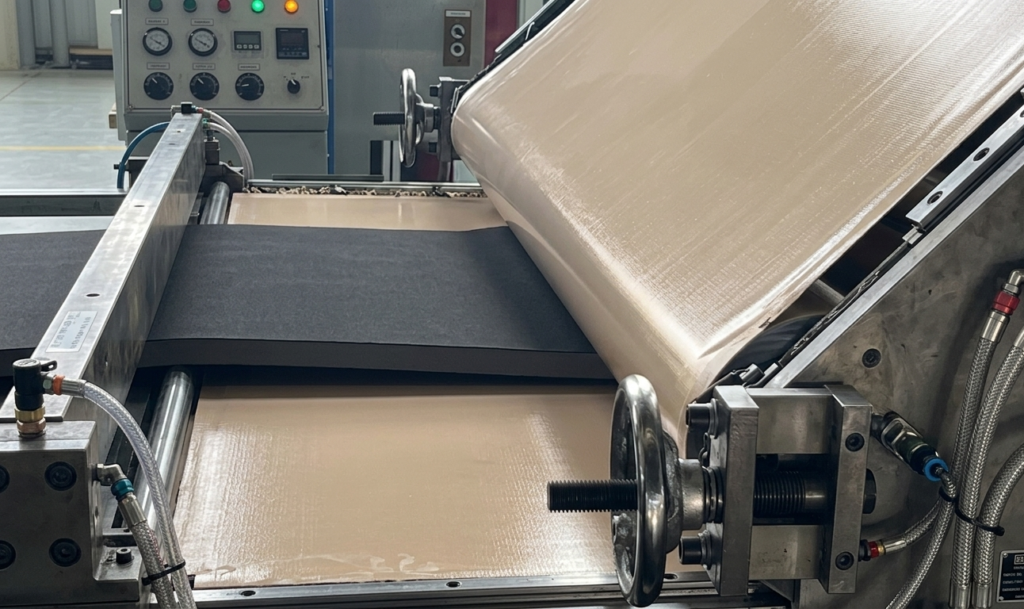
FOAM PRODUCTION & CURING
High-Precision Conveyor Belt Solutions for Polymer Processing
During the critical phases of full cross-linking and mold filling of polymer materials, PTFE conveyor belts must maintain ultimate surface stability under high-temperature and curing conditions—ensuring zero deformation and zero interference with product precision.
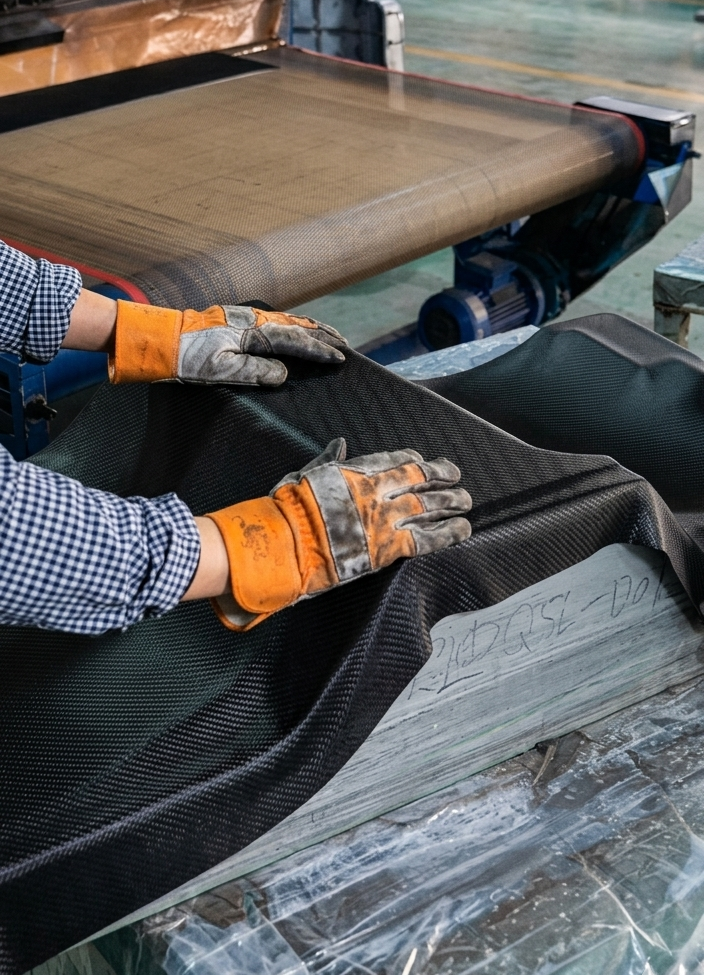
Heat Shrink Packaging
High-Performance Conveyor Solutions for Rubber Casting & Vulcanization
Throughout the entire process of rubber casting and vulcanization molding, mold components require a supporting surface that remains stable, flat, and non-stick—even when subjected to high temperatures, chemical media, and complex operating conditions.
The core of our PTFE fiberglass fabric lies in the high-twist E-glass yarn substrate. Unlike lower-grade alternatives, our fabric undergoes a proprietary heat-setting process that eliminates residual stress in the fibers. This ensures that even when exposed to continuous temperatures up to 260°C, the material maintains a near-zero thermal expansion coefficient.
For foam and rubber curing, this means your product dimensions remain precise from the first meter to the last, eliminating the "wavy edges" or thickness variations that typically plague lesser-quality belts. We provide a surface that is not just heat-resistant, but thermally "inert."
We utilize a multi-stage dipping process rather than a simple spray coating. By building up the PTFE layers incrementally, we create a non-porous, "closed" surface that is impervious to the oils, resins, and aggressive curing agents found in rubber casting.
Our PTFE content is optimized for the highest weight-to-fabric ratio in the industry, specifically designed to prevent "pinholing"—the microscopic gaps where chemicals can reach the glass fibers and cause delamination. This ensures a 100% non-stick release, reducing downtime for cleaning and preventing expensive casting defects or surface contamination.
The Persuasive Answer:
The longevity of a belt is determined by its flex-life, not just its thickness. Our PTFE belts are engineered with specialized aramid (Kevlar) or reinforced glass edges and high-frequency welded seams that distribute mechanical stress evenly.
Furthermore, the PTFE dispersion we use contains specific additives that enhance the "suppleness" of the fabric. This prevents the glass fibers from becoming brittle under the constant "back-and-forth" bending over pulleys. By choosing our belting, you are investing in a product that typically delivers a 20-30% longer service life in high-speed production lines compared to standard industrial-grade PTFE fabrics.