
MEACOR PTFE open-mesh conveyor belts are consistently reliable partners in critical processes such as non-woven thermal bonding and setting, fabric drying or cooling, garment heat-press cladding, and screen printing.
Whether handling bulky non-woven materials, completing delicate mesh drying, managing rigorous heat-press cladding procedures, or transporting freshly printed products for ink leveling, our belts operate with seamless stability. They are fully compatible with woven, knitted, and a wide variety of flexible materials. Furthermore, our matching high-performance non-stick release liners provide smooth, easy-to-peel support for hot-melt lamination and coating processes, ensuring an efficient, clean, and worry-free workflow from start to finish.
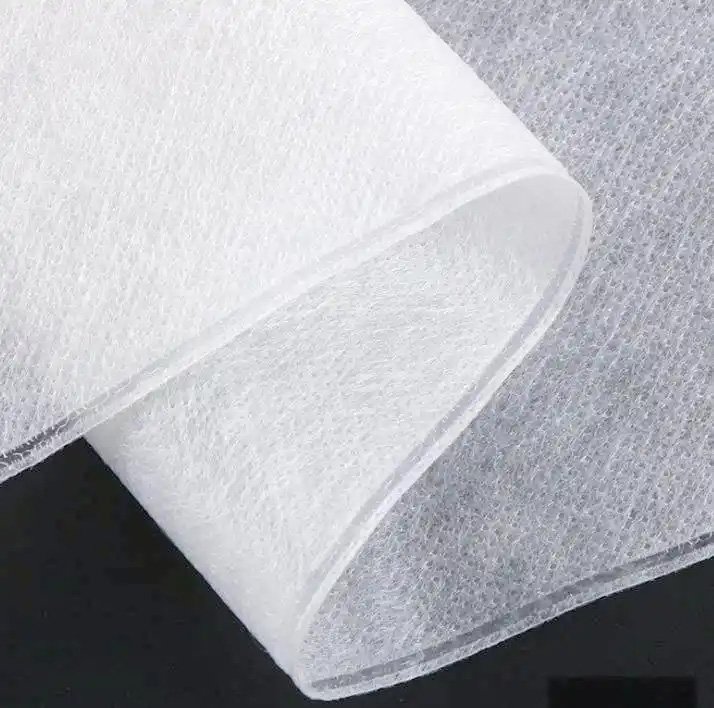
THERMAL BONDING OF NONWOVENS
In the hot-rolling and heat-setting process of non-woven fabrics, our PTFE coated open-mesh fiberglass conveyor belts offer exceptional high-temperature resistance, excellent air permeability, and a smooth, easy-release surface.
This ensures stable material transport and perfect shaping during high-temperature production, effectively enhancing both product quality and manufacturing stability.
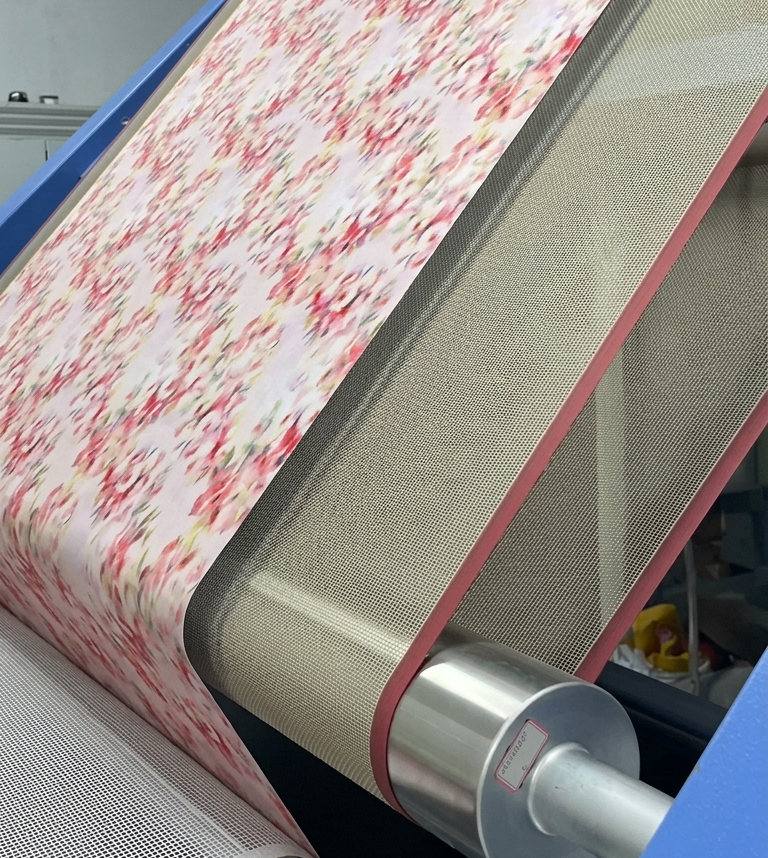
OPEN MESH BELT DRYING
During the drying, color-fixing, and setting processes for printed fabrics, our PTFE open-mesh conveyor belts ensure smooth transport throughout the entire workflow. This specific structure guarantees ample breathability and uniform heating within ovens and setting machines, effectively preventing pattern shifting and fabric distortion. By ensuring the fabric remains intact and flat, our belts significantly enhance both finished product quality and production efficiency.
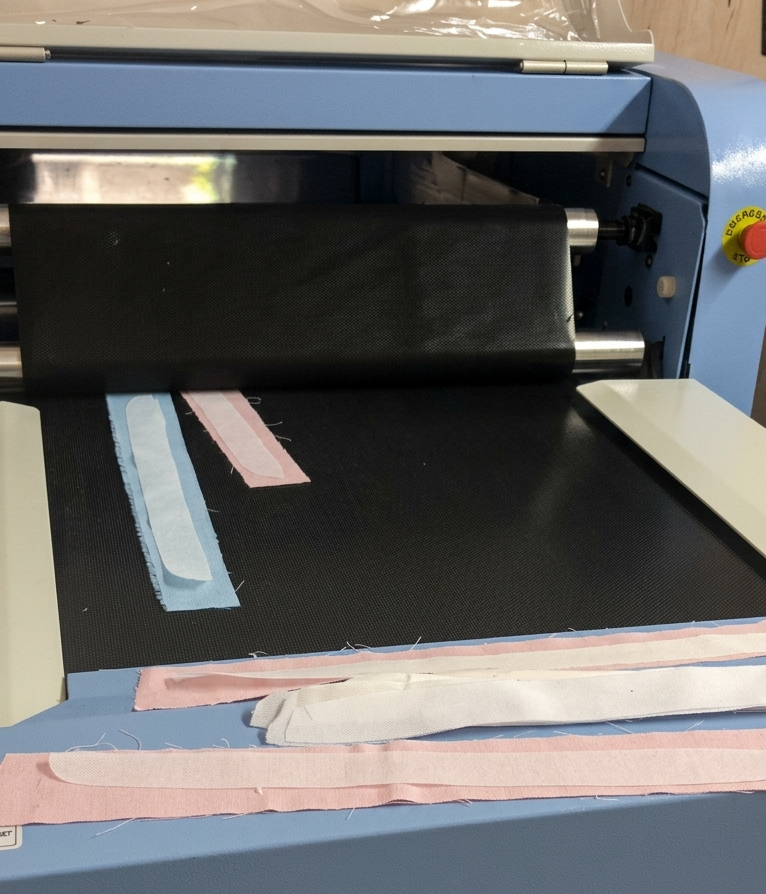
FUSING PRESS LAMINATION
In the textile lamination industry, MEACOR PTFE conveyor belts are the preferred choice for heat-press bonding and setting processes across various fabrics. These products feature outstanding high-temperature resistance and stable non-stick release properties, ensuring a smooth and efficient production workflow. We specialize in manufacturing belts with uniform thickness and smooth transitions at the joint, effectively preventing indentations or marks on the fabric and guaranteeing a flat, aesthetically pleasing finish on the final product.
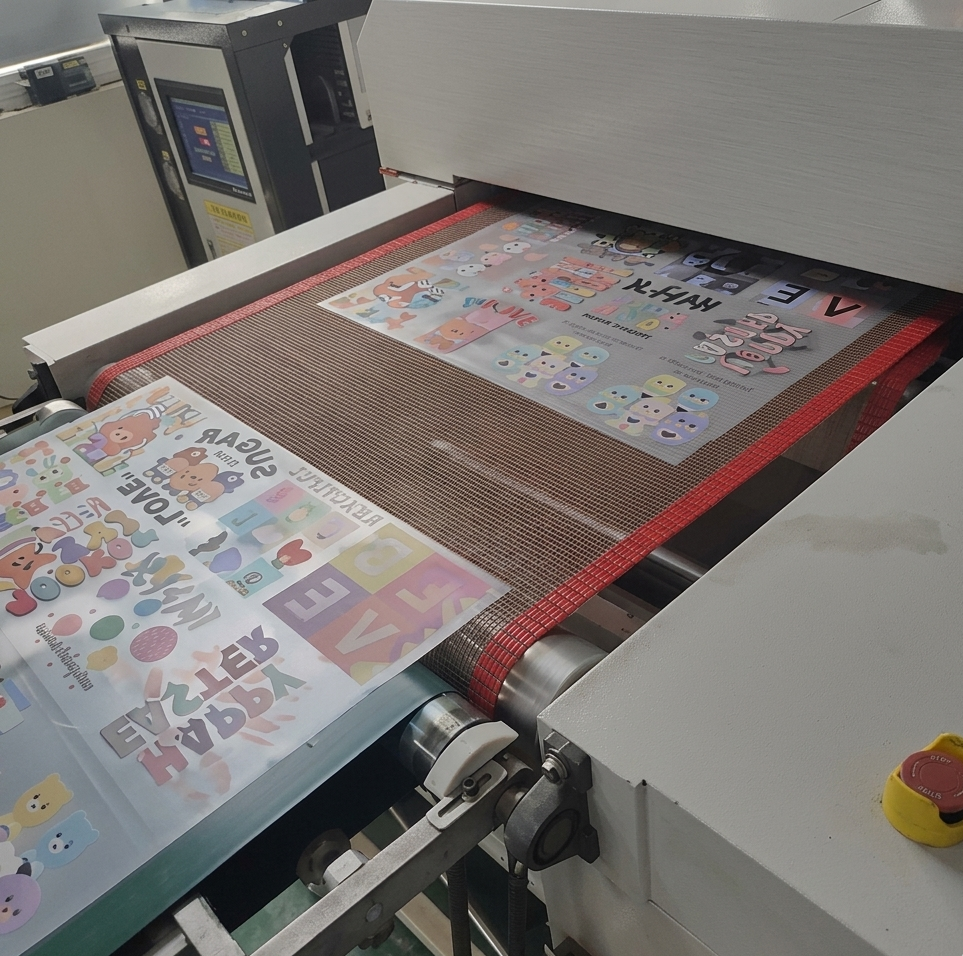
SCREEN PRINTING
In the screen printing industry, MEACOR PTFE mesh belts are specifically engineered for transporting printed substrates and facilitating the ink curing process. Whether the drying equipment utilizes forced air circulation, UV radiation, or IR radiation—the three dominant technologies on the market—our PTFE belts integrate seamlessly, ensuring stable and reliable transport support in any drying environment.
We understand that the joint is the "weakest link" in any industrial belt. For Fusing Press Lamination and Thermal Bonding, we utilize proprietary vulcanized scarfing and ultra-thin overlap splicing techniques.
Unlike standard mechanical fasteners that can cause "shadow marks" or indentations on delicate nonwovens and garments, our seamless or smooth-overlap joints maintain uniform thickness and heat transfer across the entire belt width. This ensures zero-mark production while providing high tensile strength to withstand the constant flexing and high-tension environments of modern high-speed machinery.
Dimensional stability is our core focus. Our PTFE open mesh belts are woven from high-modulus fiberglass yarns coated with a heavy-duty PTFE layer, which minimizes elongation and shrinkage during IR or UV drying cycles.
To tackle the common issue of belt tracking and edge wear, we offer reinforced edge treatments (such as PTFE film or heat-sealed fabric borders) combined with specialized guiding systems (like eyelets or studs). This prevents the belt from "creeping" or fraying against the machine frame, ensuring consistent airflow through the mesh and stable substrate transport even under 260°C thermal stress.
Our belts are engineered with an advanced fluorocarbon resin formula that offers industry-leading coating density. In Screen Printing and Nonwoven Bonding, this translates to superior "release" properties—inks and resins won’t penetrate the fibers, which prevents the belt from becoming brittle and cracking.
While the initial cost might be slightly higher than generic alternatives, our belts typically offer a 30-50% longer service life and require far fewer cleaning cycles. By reducing the frequency of belt replacements and eliminating cross-contamination, you achieve a significantly lower Total Cost of Ownership (TCO) and a faster ROI through maximized machine uptime.