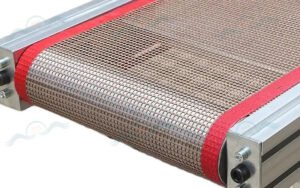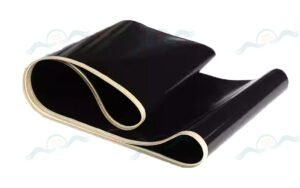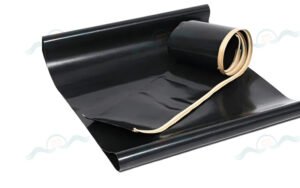
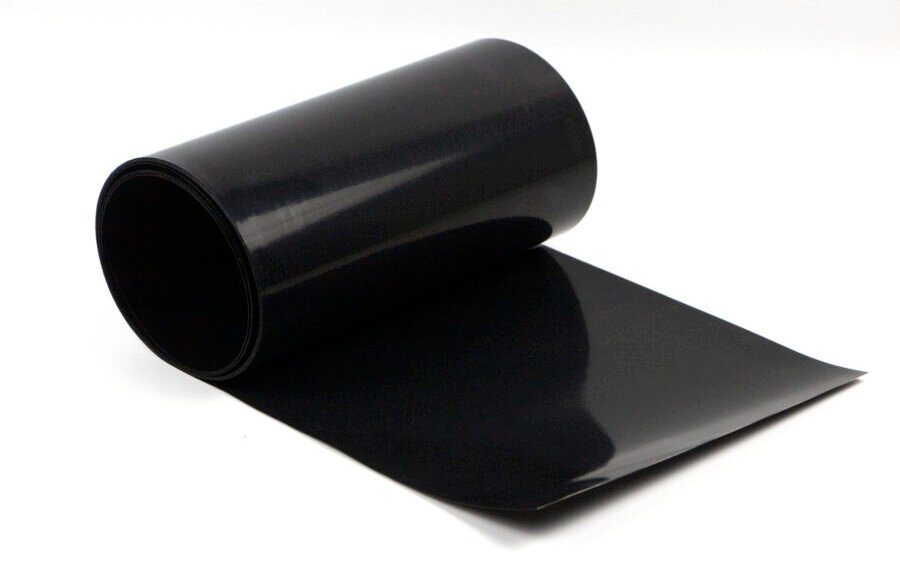
Polytetrafluoroethylene (PTFE) High-Temperature Cloth, commonly known as Teflon High-Temperature Cloth, is a high-performance composite material manufactured by impregnating high-quality fiberglass cloth with PTFE resin using specialized processing techniques. As a core consumable for laminating machines, it offers unparalleled advantages in temperature control, non-stick release, dimensional stability, and durability. It is widely used in thermal lamination processes across industries such as photovoltaics (PV), lithium batteries, packaging, printing, automotive interiors, and non-woven fabrics, serving as a critical pillar for production efficiency and product quality.
- Extreme Temperature Resistance for All Working Conditions
Lamination processes rely heavily on high-temperature heating, a demand perfectly met by PTFE cloth.
Operating Range: Continuous working temperatures from -70°C to 260°C. Modified variants can withstand short-term peaks of 350°C–360°C, far exceeding the standard 150°C–220°C range of most lamination processes.
Thermal Stability: In precision applications like PV module lamination and lithium battery hot-pressing, the material shows no significant strength attenuation even after 200 days of continuous use at 250°C. At 350°C, weight loss is only 0.6% after 120 hours.
Low-Temperature Performance: It remains flexible down to -180°C without cracking, preventing material deformation or melting risks and ensuring a stable, continuous process.
- Superior Non-Stick and Self-Cleaning Properties
The ultra-low surface energy of PTFE resin provides the cloth with exceptional non-stick characteristics.
Low Friction: The surface friction coefficient is a mere 0.05–0.1, significantly lower than metals or standard fabrics.
Adhesion Prevention: It effectively prevents materials like EVA film, hot-melt adhesives, resins, coatings, and non-woven fabrics from bonding to heating rollers or press plates.
Efficiency Gains: Stains can be easily removed with water or alcohol without the need for chemical release agents, reducing maintenance downtime by over 30% and drastically improving the yield of finished products by eliminating surface defects like wrinkles or residual glue.
- Dimensional Stability and Mechanical Strength
Precision lamination requires high dimensional accuracy. The combination of a fiberglass base and a dense PTFE coating ensures:
Low Elongation: An extension coefficient of less than 5‰, preventing deformation under high temperature and pressure.
High Tensile Strength: For example, a 0.45mm thick product can reach a tensile strength of 2900–3100N/50mm, allowing it to withstand heavy mechanical stress without tearing or delamination.
Seamless Design: Our seamless PTFE conveyor belts eliminate the risk of joint failure or tracking issues caused by uneven belt perimeters.
- Chemical Corrosion and Aging Resistance
Lamination often involves contact with harsh chemicals. PTFE cloth is chemically inert:
Corrosion Proof: Resistant to strong acids, alkalis, aqua regia, and various organic solvents.
Extended Lifespan: Its resistance to UV, aging, and fatigue allows for a service life of 3–5 years (with proper maintenance)—roughly 3 to 5 times longer than standard silicone cloth. This reduces replacement frequency and overall equipment operation costs.
- Insulation and Anti-Static Capabilities
PTFE cloth meets the rigorous demands of high-end electronics manufacturing:
Electrical Insulation: With a dielectric constant of less than 2.6 and low dielectric loss, it serves as an ideal insulator for PV modules and flexible PCBs.
Anti-Static Options: Specially treated versions offer surface resistance of 10⁶–10⁹Ω, preventing dust adsorption and protecting sensitive electronic components from electrostatic discharge (ESD).
- Versatile Specifications and Customization
We provide fully customizable specifications to fit any laminating machine:
Thickness: 0.08mm to 1.0mm.
Width: Standard 1.25m to 3m (Customizable up to 4m).
Finishes: Glossy, matte, or textured surfaces in colors including brown, black, white, and beige.
Application Matching: * Photovoltaics: Typically 0.25mm–0.35mm thickness with ultra-wide specifications.
Lithium Batteries: 0.15mm–0.2mm thickness with anti-static properties.
Packaging: Thin variants (0.08mm–0.1mm) for optimized heat transfer.
- Environmental Safety and Compliance
Our PTFE cloth is non-toxic, odorless, and asbestos-free.
Certifications: Fully compliant with RoHS, FDA, and ISO standards.
Food & Pharma Grade: Safe for direct contact with food and pharmaceutical packaging, ensuring no chemical migration.
Sustainability: Recyclable characteristics align with global green manufacturing tre.