Operational Guidelines and Precautions for PTFE Conveyor Belts
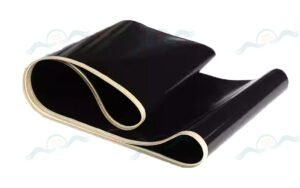
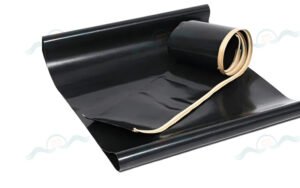
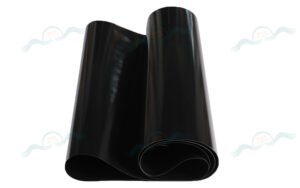
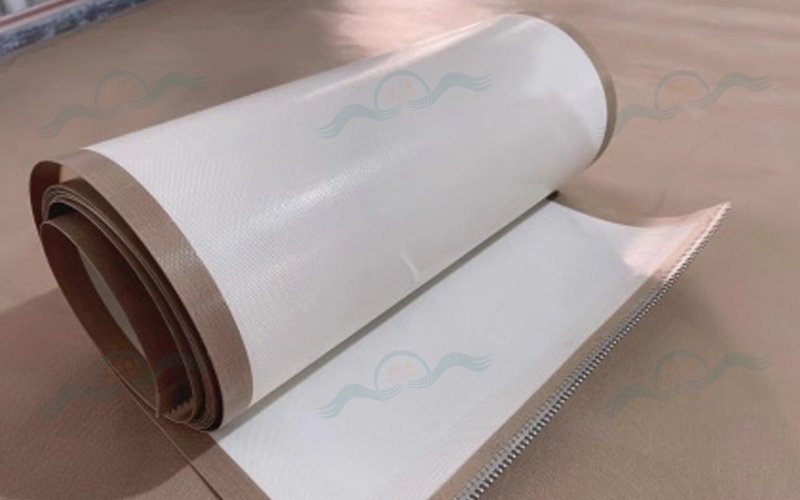
PTFE, FEP, and PFA (Teflon) conveyor belts are heavily utilized in food processing, chemical, electronic, and printing industries due to their high thermal limits, chemical inertness, and low coefficient of friction. Maximizing their operational lifespan requires strict compliance with installation standards, runtime controls, sanitation maintenance, and storage parameters.
I. Pre-Installation Setup and Splicing Standards
- Precision Tension Control (Critical Metric):
- PTFE conveyor belts possess a relatively low elastic modulus. Over-tensioning triggers splice cracking and base fabric elongation. Tension fields must be regulated between 0.3 to 0.5 MPa (use 0.3 MPa for belt widths ≤500 mm; use 0.5 MPa for widths ≥1000 mm).
- Ensure the drive pulley, tail pulley, and idlers are calibrated parallel to each other and the faces are contaminant-free to prevent uneven tracking.
- Joint and Splice Management (Determines Operational Lifespan):
- Thermal-Welded Splices: Maintain heat thresholds at 260°C–280°C (PTFE) or 200°C–220°C (FEP/PFA) under a pressure profile of 0.3–0.5 MPa for 3–5 minutes. Allow full cooling before applying mechanical tension. The overlap joint length should be 1.5 to 2 times the total belt width.
- Sewn Splices: Utilize pure PTFE sewing thread with a stitch density of ≥10 stitches/cm to avoid material leaks or tensile weak nodes. Never use metallic wires as they cause scoring on pulley surfaces.
- Splices must sit completely flush against the pulley matrix without local protrusions to avoid operational judder.
- Minimum Pulley Diameter Compatibility:
- To combat bending fatigue, ensure the drive pulley diameter meets these thresholds: ≥50 mm for belt widths ≤500 mm; ≥80 mm for widths 500–1000 mm; ≥100 mm for widths ≥1000 mm.
II. Runtime Process Controls
- Thermal Threshold Management (Strict Avoidance of Overheating):
- Continuous heat limits: PTFE (-180°C to 260°C), FEP (-200°C to 200°C), PFA (-200°C to 260°C). Establish active operating targets 20°C–30°C below peak ratings to ensure a safety buffer.
- Integrate structural heat barriers when running paths route near open heating elements or steam vents to eliminate localized carbonization.
- Load Dynamics and Velocity Control:
- Rated Carrying Load: Based on thickness gauges (0.15–1.0 mm), limit operational loads to ≤0.5–2.0 kg/cm² to prevent splice fatigue.
- Linear Speeds: Maintain tracking speeds at ≤1.5 m/s. High-speed setups require auxiliary pressure rollers or surface textures to prevent material slippage.
- Tracking Bias and Edge Safeguarding:
- Correct tracking deviations by making micro-adjustments (工作增量≤5 mm) to the tail pulley. Never pry or leverage belt edges with rigid tools.
- For belt profiles ≥800 mm, install specialized PTFE tracking guides to eliminate edge friction against machine frames.
- Power Cycling Protocol:
- Always execute soft, unloaded startups, incrementally adding material loads only after establishing full tracking stability. Unload the belt completely before shutting down the conveyor drive.
III. Cleaning and Preventive Maintenance
- Standard Sanitation Cycles:
- Purge food particles or chemical debris using warm water (≤60°C) combined with soft-bristle nylon brushes. Rigid scrapers or steel wire pads will score the protective PTFE topcoat.
- Remove grease build-ups via neutral detergents. Steer clear of organic solvents (such as alcohol, acetone, or gasoline) which can dissolve the fluoropolymer bond and make surfaces tacky.
- Clean the system only after the belt has cooled down to room temperature to prevent thermal shock delamination.
- Scheduled Maintenance Logging (Weekly Frequency):
- Inspect splices for structural separation or loose threads. Repair or re-weld joints instantly upon detecting anomalies.
- If surface coating fractures or blistering nodes exceed an area of 5 cm², execute local patching or replace the tracking profile. Adjust tension parameters if structural belt narrowing reaches ≥3%.
- Systematically clear material accumulations on pulley faces to avoid localized uneven wear tracking.
IV. Environmental Adaptability and Storage Parameters
- Storage Specifications:
- Store in dark, ventilated inventory docks tracking between 0°C–30°C with relative humidity ≤60%. Shield materials from direct UV rays to prevent coating micro-cracks.
- Never fold or place vertical loads on the rolls. Coils must be wound into cores with diameters ≥30 cm and sealed with protective moisture-barrier wrap.
- Application-Specific Selections:
- For operations tracking above 200°C, prioritize PTFE or PFA. For cryo-processing below -50°C, utilize PTFE to combat glassy embrittlement.
- Food-contact operations must deploy FDA-compliant food-grade tracking media exclusively.
V. Quick Troubleshooting Directory
- Splice Cracking: Caused by over-tensioning or inaccurate heat-press parameters. Corrective Action: Recalibrate tension values, trim the damaged edge, and execute a fresh thermal weld.
- Coating Delamination: Triggered by solvent exposure or local thermal spikes. Corrective Action: Eliminate organic solvents, align heating rods, and apply a PTFE patch.
- Tracking Deviation: Caused by skewed pulley axes or non-uniform loading. Corrective Action: Calibrate tracking idlers, centralize material feeds, or add tracking guides.
- Drive Pulley Slip: Induced by low tension or oil build-up on pulleys. Corrective Action: Step up tension boundaries safely (≤0.5 MPa) and sanitize pulleys with neutral agents.