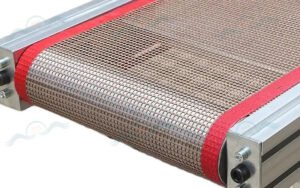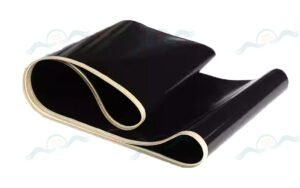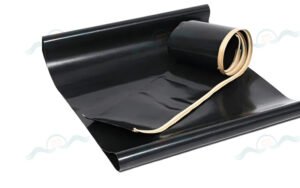
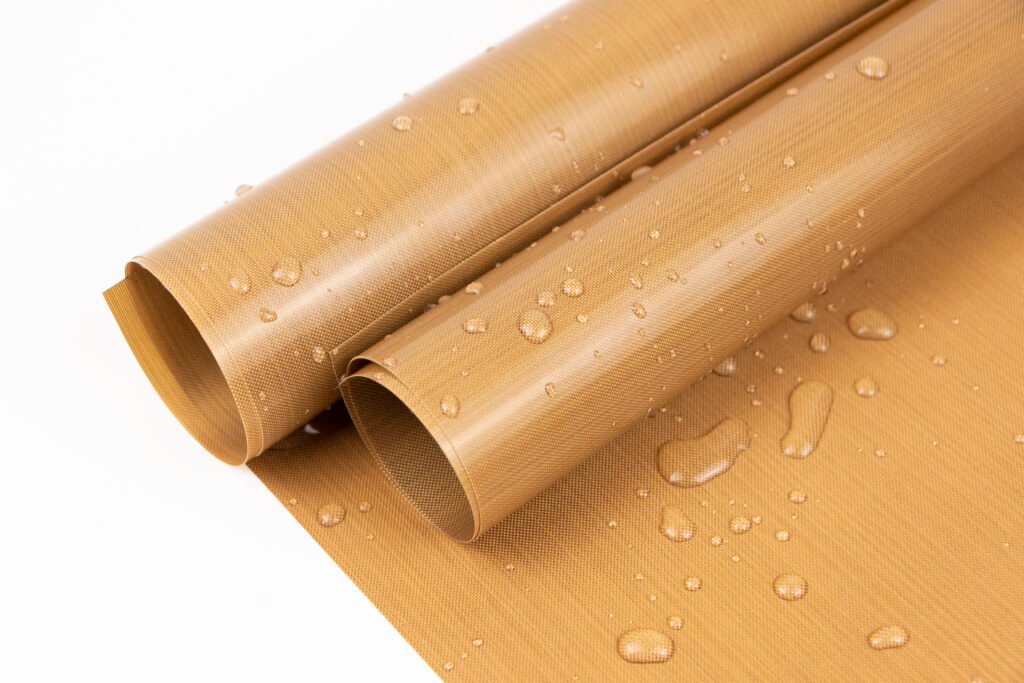
The core differences between these materials are concentrated in four dimensions: structural design, performance focus, manufacturing cost, and application scenarios. Below is a detailed breakdown to assist in material selection and application judgment.
II. Key Performance Differences
Non-stick and Self-cleaning
Double-Sided: The entire surface is non-stick. Both interfaces resist material adhesion and are easy to clean. Ideal for processes where materials contact both sides of the cloth.
Single-Sided: Only the coated side is non-stick; the exposed fiberglass side may trap materials or residues.
Chemical and Temperature Resistance
Double-Sided: Comprehensive corrosion resistance (strong acids, alkalis, and organic solvents). Continuous temperature resistance: -70°C to 260°C (short-term peaks up to 300°C).
Single-Sided: Coated side has excellent resistance, but the exposed side is vulnerable. Not recommended for bilateral chemical exposure.
Mechanical Strength and Stability
Double-Sided: Higher tensile strength (warp/weft can reach 800N/5cm or more) with an elongation coefficient < 5‰. Superior dimensional stability.
Permeability and Heat Transfer
Double-Sided: Zero permeability. Provides more uniform heat conduction, suitable for constant temperature and zero-leakage requirements.
Single-Sided: The exposed side retains some permeability, making it suitable for drying or dyeing processes requiring air exhaust.
III. Specifications and Customization
Thickness Grading
Thin (0.05–0.2mm): Precision applications like heat sealing tapes and LCD lamination gaskets.
Medium (0.2–0.5mm): The mainstream specification for conveyor belts and heat press templates.
Thick (0.5–1.2mm): High-load bearing for heavy-duty belts, chemical pipe wrapping, and thermal barriers.
Coating Types & Colors
Standard PTFE: Universal non-stick.
Anti-static (Black): PTFE coated fabrics Infused with carbon to eliminate static, used in flammable/explosive environments.
Colors: Brown (Standard), White (Food grade/FDA), Black (Anti-static), Silver (Heat radiation reflection).
Base Fabric Weave
Plain Weave: High dimensional stability, ideal for precision lamination.
Twill Weave: Better flexibility, ideal for curved wrapping or high-flex conveyor belts.
V. Selection and Usage Recommendations
High Requirements: Choose Double-Sided for bilateral non-stick, bilateral corrosion resistance, or maximum structural strength.
Cost Efficiency: Choose Single-Sided if only one side contacts the material or heat source.
Special Needs: Use Porous/Breathable coatings for drying; use White FDA-certified models for food or medical contact.
Usage Guidelines
Avoid Creasing: Double-sided cloth should not be sharply folded to prevent coating micro-cracks.
Orientation: During installation, ensure the primary functional side (if slightly different) faces the material.
Pre-heating: For long-term high-temp use, pre-bake at 150°C–200°C for 1–2 hours to remove residual volatiles and extend service life.