Performance of PTFE Adhesive Tapes Under Various Operating Conditions
Performance of PTFE Adhesive Tapes Under Various Operating Conditions
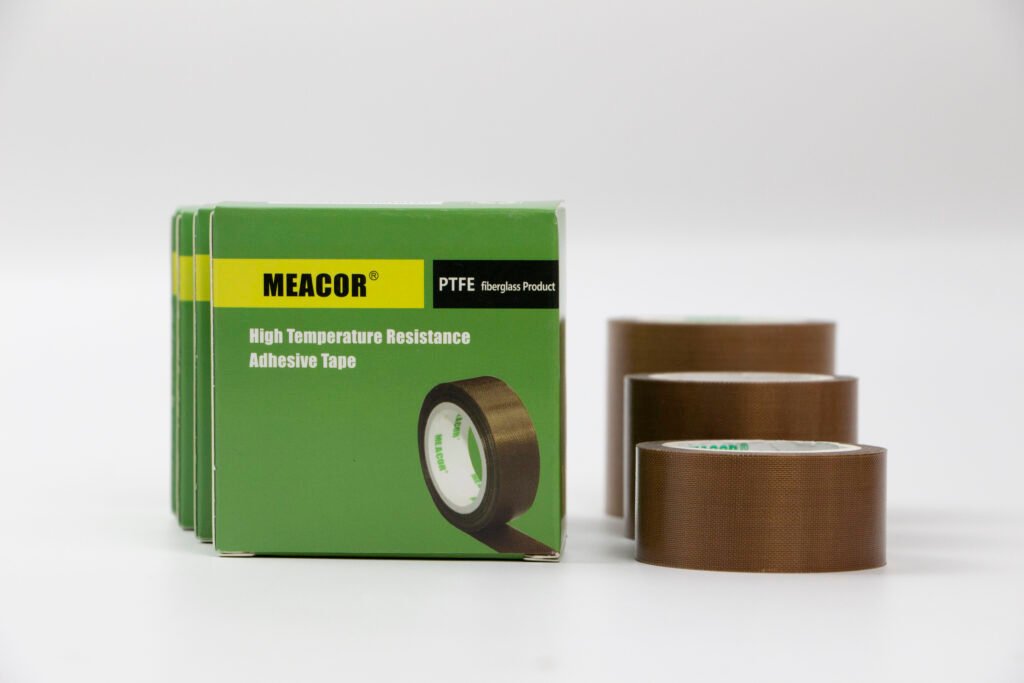
PTFE adhesive tapes are renowned for their ultra-wide temperature resistance, ranging from -196°C to 300°C. Actual performance depends on the substrate type, duration of exposure, environmental conditions, and the type of adhesive used. Detailed scenarios are provided below:
I. Fundamental Temperature Ranges (Core Indicators)
Usage Category
Temperature Range
Duration
Performance Characteristics
Long-term Continuous
-70°C to 260°C (Standard)
Months to Years
Highly stable; no melting or peeling; minimal change in strength or weight.
Modified High-end
-196°C to 300°C
Months to Years
Enhanced stability via cross-linking modification.
Short-term Tolerance
300°C to 350°C
Minutes to Hours
Temporary endurance; slight degradation may occur over 30 mins.
Instantaneous Peak
350°C to 380°C
Seconds
Emergency use only; frequent exposure not recommended.
3. Thermal Cycling (Rapid Temperature Fluctuations)
Performance: Low thermal expansion coefficient enables the tape to withstand rapid temperature changes (> 80°C differential).
Advice: Consider mechanical fastening to prevent peeling caused by expansion/contraction cycles.
IV. Impact of Secondary Factors
Chemical Environment: The PTFE substrate is chemically inert, but the adhesive may be affected. Silicone Pressure-Sensitive Adhesive (PSA) maintains 80% initial tack at 250°C even in chemical environments, outperforming acrylics.
Pressure Conditions: In high-pressure environments ($\le$ 10,000 PSI), utilize multi-layer wrapping to ensure sealing integrity. In vacuum environments, PTFE exhibits minimal outgassing.
UV/Outdoor Exposure: PTFE is inherently UV-resistant. For long-term outdoor use, select weather-resistant variants to protect the adhesive layer from degradation.
V. Adhesive Type Comparison
Adhesive Type
Temp Range
Tack Retention at High Temp
Application
Silicone PSA
-70°C to 260°C
80% initial tack @ 250°C
High-temp industrial, heat sealing.
Acrylic
-40°C to 180°C
Drops rapidly above 150°C
Electronics fixing, low-to-mid temp.
Adhesive-free
-196°C to 300°C
N/A (Mechanical fix)
Non-stick isolation, zero-residue needs.
VI. Practical Selection Recommendations
Standard High-Temp ($\le$ 260°C): Choose Fiberglass-reinforced + Silicone PSA for the best cost-to-performance ratio.
Ultra-Low Temp ($\le$ -100°C): Prioritize Pure PTFE film tape for superior flexibility.
Short-term High-Temp ($\approx$ 300°C): Standard PTFE tape is sufficient if exposure is limited to $\le$ 30 minutes.
Chemical + High-Temp: Select Modified PTFE + Silicone PSA for maximum chemical stability.
Summary
The core of PTFE tape’s thermal performance lies in the stable molecular structure of the PTFE substrate. For optimal results, ensure continuous operating temperatures remain below 260°C. Always inspect the tape status after exposure to short-term temperature peaks to ensure industrial safety and performance integrity.