Summary of the Advantages and Characteristics of Black Teflon Tape in the Electronic Insulation Industry
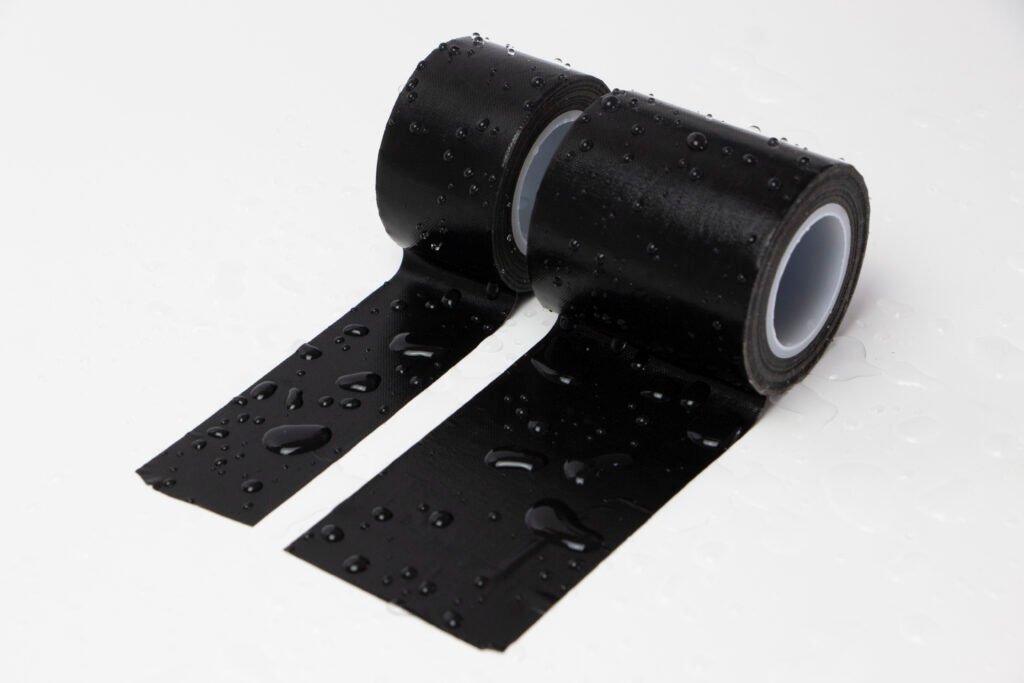
Black Teflon tape, also known as Black PTFE (Polytetrafluoroethylene) tape, is a high-performance functional consumable essential to the electronics industry. It is manufactured using PTFE as the core substrate coated with a high-temperature resistant silicone pressure-sensitive adhesive. Some variants incorporate special additives to achieve additional functionalities such as anti-static properties and light-shielding.
Due to its exceptional comprehensive performance, it is widely utilized in insulation and protection scenarios for PCBs, transformers, semiconductors, electronic component packaging, and high-voltage cables. Compared to standard insulation tapes, it offers irreplaceable advantages in meeting the high precision, high reliability, and extreme environmental adaptability requirements of the electronics industry. Its specific characteristics and advantages are summarized below:
I. Core Advantages: Meeting Essential Needs for Electrical Safety
Superior Electrical Insulation for High & Low Voltage Scenarios
The primary requirement in the electronics industry is reliable electrical isolation to prevent short circuits and leakage. Black Teflon tape excels here due to the high dielectric strength and volume resistivity of PTFE.
Performance: With a dielectric constant of approximately 2.6 and a dissipation factor below 0.0025, it maintains stable insulation in high-frequency and high-voltage environments.
Application: It is suitable for everything from delicate chip pin insulation to heavy-duty high-voltage cable protection. Its performance remains unaffected by humidity or temperature fluctuations, ensuring long-term stability and extending equipment lifespan.
Extreme Temperature Resistance
Electronic components often face extreme heat during soldering or intense cold in outdoor/industrial settings.
Wide Temperature Range: It operates stably from -70°C to 260°C. Pure film versions can even withstand a range of -196°C to 300°C.
Thermal Stability: It does not melt, deform, or become brittle under extreme conditions. Tests show that after 200 days at 250°C, its strength remains unchanged. This solves the common “melting at high heat” or “cracking at low heat” issues found in standard tapes.
II. Key Characteristics: Optimizing Process & Reliability
Outstanding Non-Stick Properties
The smooth, low-friction surface prevents the adhesion of resins, solder flux, or glues.
Easy Maintenance: It can be peeled off cleanly without leaving adhesive residue, preventing damage to delicate circuits during repairs and improving maintenance efficiency.
Excellent Flexibility for Precision Work
Modern electronics feature tight layouts and complex geometries.
Conformability: The tape is soft and highly flexible, allowing it to wrap tightly around irregular surfaces, sharp corners, and tiny pins without wrinkling or leaving gaps.
Space-Saving: Available in various thicknesses (e.g., 0.08mm, 0.13mm), it provides robust protection without adding unnecessary bulk to compact devices.
High Mechanical Strength and Wear Resistance
Many black Teflon tapes are reinforced with fiberglass fabric to enhance durability.
Toughness: They offer high tensile strength and tear resistance, protecting components from mechanical friction and physical impact during assembly or operation.
Weathering: They resist aging and do not yellow or crack when exposed to UV light or moisture.
Aesthetic Concealment and Identification
The black color provides two distinct functional benefits:
Visual Integration: It blends seamlessly with black casings and internal components of high-end electronics, maintaining a sleek appearance.
Identification: It can serve as a visual marker for insulated zones, helping technicians quickly identify protected areas during mass production.
Eco-Friendly and Non-Toxic
Meeting modern environmental mandates is crucial.
Compliance: These tapes are typically RoHS compliant, halogen-free, and non-toxic. They do not release harmful gases during high-temperature operation, ensuring safety for both the end-user and the manufacturing staff.
III. Industry Adaptability Conclusion
Black Teflon tape is an irreplaceable material in the high-end electronic insulation sector. While the initial cost may be higher than general-purpose tapes, its longevity, reliability, and multi-functional protection (insulation + heat resistance + anti-static) significantly reduce long-term operational costs and failure rates. As electronic technology evolves toward miniaturization and higher precision, the application of black Teflon tape will continue to expand into fields like flexible electronics, advanced semiconductor manufacturing, and optoelectronic devices.