PTFE High-Temperature Fabric for Textile Printing & Dyeing — Completely Eliminating High-Temperature Material Adhesion
In the high-temperature operating conditions (150°C–250°C) of the textile printing and dyeing industry, dyes, auxiliaries, and sizing agents are prone to softening and melting at elevated temperatures, adhering to equipment surfaces and causing roller adhesion, guide belt fouling, and dryer tunnel buildup. These issues result in product defects, equipment downtime, high cleaning costs, and low production efficiency. PTFE (Teflon) high-temperature fabric, with its unique performance properties, has become the ideal solution for resolving these industry pain points.
Ⅰ. Core Pain Points & Limitations of Traditional Solutions
| Pain Point | Specific Manifestation | Traditional Solution | Limitations |
|---|---|---|---|
| Roller Adhesion | Dyes/auxiliaries adhere to guide rollers and dryer cylinders at high temperature, causing fabric color variation, stains, and holes | Frequent shutdown for wiping; use of release agents | Low efficiency, high cost, product contamination, unstable quality |
| Guide Belt Fouling | Print paste and heat-setting auxiliaries adhere to guide belt surface, causing blurred patterns and poor transfer | Periodic belt replacement; chemical cleaning | High maintenance cost, long downtime, chemical residues affect product safety |
| Dryer Tunnel Buildup | Fabric oligomers and auxiliaries precipitate and adhere in high-temperature drying tunnels, affecting drying efficiency and fabric hand feel | Manual cleaning; high-temperature burning off | High labor intensity, equipment damage, increased energy consumption |
Ⅱ. Core Advantages of PTFE High-Temperature Fabric — Resolving Adhesion Problems at the Source
1. Ultimate Non-Stick Performance — The “Non-Stick DNA” of PTFE
- Extremely low surface friction coefficient (0.05–0.1); virtually nothing adheres — including dyes, resins, inks, and sizing agents at high temperature
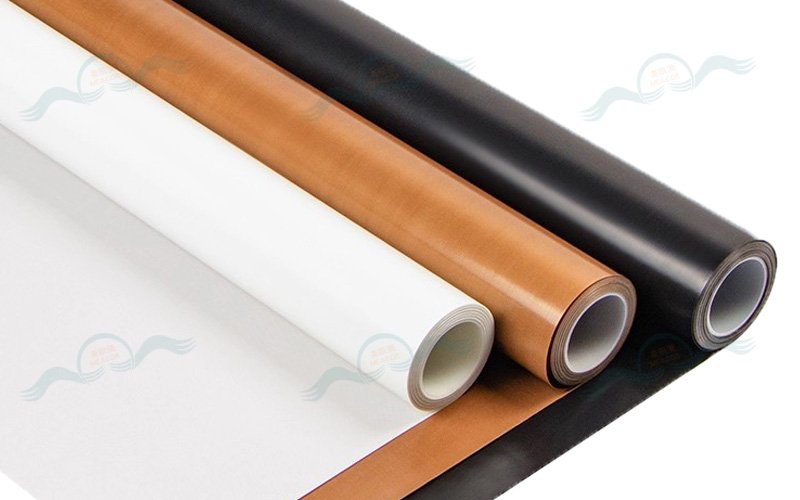
- Special surface treatment: PTFE resin impregnation and high-temperature curing forms a dense, smooth non-stick layer that resists contaminant attachment
- Self-cleaning capability: minor surface deposits can be removed by simple wiping or air purging — no chemical cleaning agents required
2. Outstanding High-Temperature Resistance — Compatible with Full-Process Dyeing & Printing High-Temperature Conditions
- Continuous operating temperature: -70°C to 260°C; short-term tolerance exceeding 300°C
- Excellent thermal stability: virtually no change in strength or weight after 200 days of continuous exposure at 250°C
- Dimensional stability: elongation coefficient less than 5‰; resists deformation at high temperature; ensures equipment operating precision
3. Chemical Stability — Resisting Attack from Dyeing & Printing Chemicals
- Resistant to virtually all strong acids, strong alkalis, organic solvents, and oxidizing agents; unaffected by dyeing auxiliaries and dyes
- Strong aging resistance and weatherability; long service life; reduces replacement frequency and associated costs
4. Mechanical Strength & Adaptability — Meeting the Demanding Requirements of Textile Equipment
- Teflon high-temperature cloth substrate provides both flexibility and tensile strength; suitable for use with small-diameter pulley equipment
- Excellent flex fatigue resistance; suitable for reciprocating motion and high-speed textile printing and dyeing machinery
- Adjustable air permeability; adaptable to different process requirements including print drying and heat-setting
Ⅲ. Key Application Scenarios in Textile Printing & Dyeing
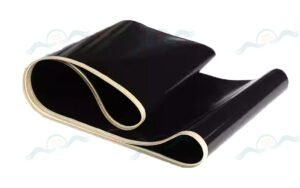
1. Stenter Machine Fabric Sleeves / Conveyor Belts
- Withstands temperatures above 200°C; uniform heat transfer; reduces fabric color variation; improves heat-setting quality
- Non-stick to heat-setting auxiliaries and fabric oligomers; cleaning time reduced by more than 35%; significantly improves production efficiency
- Dimensional stability ensures uniform fabric tension throughout the heat-setting process; prevents wrinkling and deformation
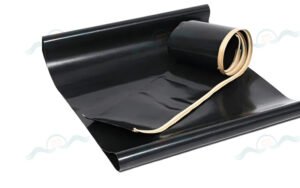
2. Print Guide Belts / Mesh Belts
- Smooth, flat surface ensures clear and accurate print pattern transfer; reduces defect rate
- Non-stick to print paste; color changeover cleaning is quick and convenient; shortens order changeover time
- Chemical corrosion resistance; withstands solvents, acids, and alkalis present in print paste formulations
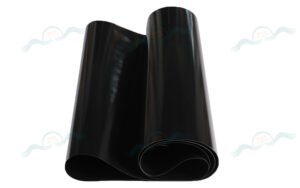
3. High-Temperature Dryer Tunnel Liners / Conveyor Belts
- Good air permeability reduces heat source energy consumption; improves drying efficiency
- Non-stick to oligomers and auxiliaries precipitated in drying tunnels; maintains tunnel cleanliness; extends equipment service life
- Flame-retardant; compliant with textile and dyeing industry safety standards
4. Other Applications
- Heat Transfer Printing Equipment: Non-stick to transfer film and ink; ensures uniform transfer quality
- Coating Equipment: Used as coating substrate or release interlayer; prevents coating materials from adhering to equipment surfaces
Ⅳ. Real-World Application Results — Data-Validated Value
- Production Efficiency Improvement: Reduced equipment cleaning downtime adds 10–15 effective production hours per week
- Product Quality Improvement: Defect rate from adhesion-related color variation, staining, and fabric holes reduced by more than 80%
- Maintenance Cost Reduction: Reduced chemical cleaning agent consumption and equipment replacement frequency; maintenance costs lowered by approximately 50%
- Extended Service Life: PTFE high-temperature fabric service life is 3–5 times longer than standard rubber belts and 2–3 times longer than silicone belts
Ⅴ. Selection & Usage Recommendations
Select by Process Type:
- Print Guide Belts: Select smooth plain-weave PTFE fabric to ensure clear pattern transfer
- Drying Conveyor Belts: Select mesh-type PTFE fabric to improve breathability and drying efficiency
- Stenter Machine Fabric Sleeves: Select medium-thickness, high-strength PTFE fabric to ensure dimensional stability
Specification Matching:
- Thickness: 0.13–0.4 mm; select based on equipment pressure and temperature requirements
- Width: Customized to equipment specifications; extra-wide formats available
- Joint Method: Heat-welded or mechanical fastener joints to ensure joint strength and surface flatness
Routine Maintenance Guidelines:
- Periodically wipe the surface with a clean cloth to remove minor deposits
- Avoid contact with sharp objects that could scratch the surface and compromise non-stick performance
- Keep operating temperature within 260°C to maximize service life
PTFE high-temperature fabric for textile printing and dyeing, through the ultimate non-stick properties, outstanding high-temperature resistance, and chemical stability of PTFE material, resolves the industry’s most critical pain point — high-temperature material adhesion — at the source. It delivers multiple values simultaneously: improved production efficiency, enhanced product quality, and reduced maintenance costs. As the ideal material for high-temperature operating conditions in the dyeing and finishing industry, PTFE high-temperature fabric is becoming the preferred solution for a growing number of enterprises, helping the textile printing and dyeing industry advance toward greater efficiency, environmental responsibility, and quality excellence.