Can PTFE High-Temperature Fabric for Pipeline Anti-Corrosion Wrapping Provide Long-Term Resistance to Acid and Alkali Corrosion?
PTFE high-temperature fabric delivers long-term acid and alkali corrosion resistance, provided specific usage conditions are met and a small number of extreme corrosive media are excluded. Its core material — polytetrafluoroethylene (PTFE), known as the “King of Plastics” — exhibits outstanding chemical inertness against the vast majority of strong acids and alkalis. Combined with correct installation and maintenance practices, it achieves stable long-term anti-corrosion performance.
Ⅰ. Core Acid & Alkali Resistance Performance Analysis
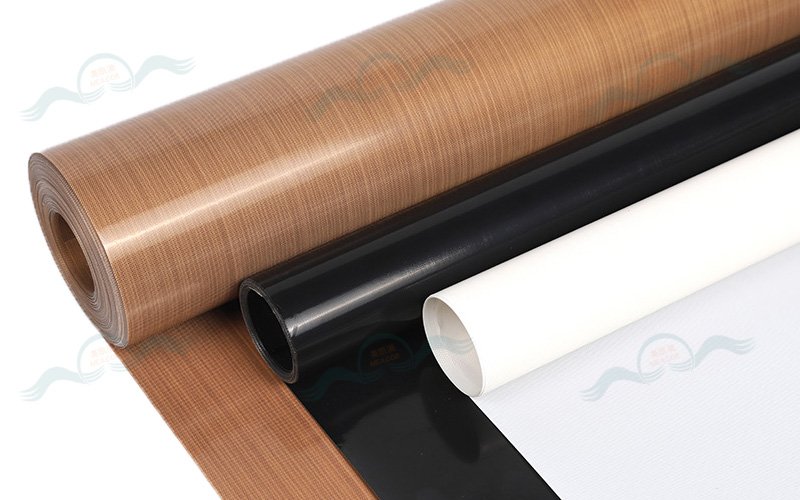
1. Chemical Stability Foundation PTFE high-temperature fabric is manufactured by impregnating high-performance fiberglass cloth with PTFE emulsion. The PTFE molecular backbone consists of carbon-fluorine (C-F) bonds with extremely high bond energy (485 kJ/mol), making it highly resistant to chemical attack. With the exception of a very small number of extremely aggressive substances — including molten alkali metals (sodium, potassium), liquid fluorine, and chlorine trifluoride — PTFE can withstand virtually all chemical media.
2. Specific Acid & Alkali Tolerance Performance
| Corrosive Media Type | Resistance Capability | Typical Application Scenarios |
|---|---|---|
| Strong Acids (sulfuric acid, nitric acid, hydrochloric acid, hydrofluoric acid, aqua regia) | Excellent — no significant change after prolonged immersion even in boiling state | Chemical pipelines; desulfurization tower linings (pH = 2 environments) |
| Strong Alkalis (sodium hydroxide, etc.) | Excellent — stable in high-concentration strong alkali environments | Papermaking and electroplating industry pipelines |
| Organic Solvents / Oxidizing Agents | Excellent — neither dissolves nor reacts | Pharmaceutical and chemical solvent transfer pipelines |
| High-Salinity / Corrosive Gases | Excellent — resistant to electrochemical corrosion | Marine environments; chemical exhaust gas pipelines |
Ⅱ. Long-Term Performance Influencing Factors & Assurance Conditions
1. Key Influencing Factors
| Influencing Factor | Impact on Long-Term Performance | Recommended Standard |
|---|---|---|
| Operating Temperature | Long-term stable temperature ≤ 260°C (short-term up to 300°C); excessively high temperatures accelerate aging | Maintain within -70°C to 260°C range |
| Installation Quality | Loose wrapping or improper seam treatment allows media penetration and localized corrosion | Use heat welding or specialized adhesive sealing; avoid wrinkles |
| Mechanical Damage | Friction and impact damage the PTFE coating, compromising protective performance | Avoid contact with sharp objects; add cushioning layers at pipe fixation points |
| Media Flow Velocity / Pressure | High-velocity fluid erosion may cause coating abrasion; high-pressure environments require thicker specifications | Flow velocity ≤ 2 m/s; pressure ≤ 1.6 MPa (adjust based on thickness) |
| Product Quality | Inferior products have uneven coating and are prone to delamination, significantly reducing service life | Select double-sided coated products with coating thickness ≥ 0.2 mm |
2. Long-Term Performance Assurance Measures
- Correct Product Selection: Select appropriate thickness (0.35 mm thick grade suitable for most chemical pipelines) and construction (double-sided coating preferred) based on media type, temperature, and pressure
- Standardized Installation: Surface pre-treatment (rust removal, cleaning) → flat wrapping → seam sealing → external fixation (stainless steel banding straps)
- Regular Maintenance: Inspect coating integrity periodically; promptly repair localized damage to prevent corrosive media penetration
Ⅲ. Verification Through Real-World Application Cases
Power Plant Desulfurization Systems: 0.35 mm thick PTFE fabric used as absorption tower lining; continuous operation for 3 years without corrosion in pH = 2 acid environments; service life extended 4× compared to traditional rubber linings
- Sulfuric Acid Transfer Pipelines: 98% concentrated sulfuric acid pipelines wrapped with PTFE high-temperature fabric; service life extended from 2 years to 8 years; maintenance costs reduced by 60%
- Chemical Exhaust Gas Pipelines: PTFE anti-corrosion ductwork in semiconductor etching processes operated continuously for more than 18 months without corrosion perforation; total lifecycle cost reduced by 45%
Ⅳ. Limitations & Important Notes
- Non-Resistant Media: Molten alkali metals, liquid fluorine, and chlorine trifluoride — contact with these substances will cause PTFE decomposition
- Limited Mechanical Strength: Inherent strength is lower than metal; relies on the pipeline substrate for structural support; must not bear direct heavy loads
- Thermal Expansion Differential: Thermal expansion coefficient differs from metal substrates; severe temperature fluctuations may cause coating delamination — adequate expansion allowance must be provided
Ⅴ. Summary & Recommendations
PTFE high-temperature fabric is an excellent choice for pipeline anti-corrosion applications, capable of stable long-term performance in the vast majority of acid and alkali environments. Service life can reach 3–8 years or longer, depending on operating conditions and product quality. When pipeline conveyed media consist of conventional strong acids or alkalis (excluding molten alkali metals and liquid fluorine) and operating temperatures are maintained below 260°C, PTFE high-temperature fabric wrapping delivers ideal long-term anti-corrosion performance.