
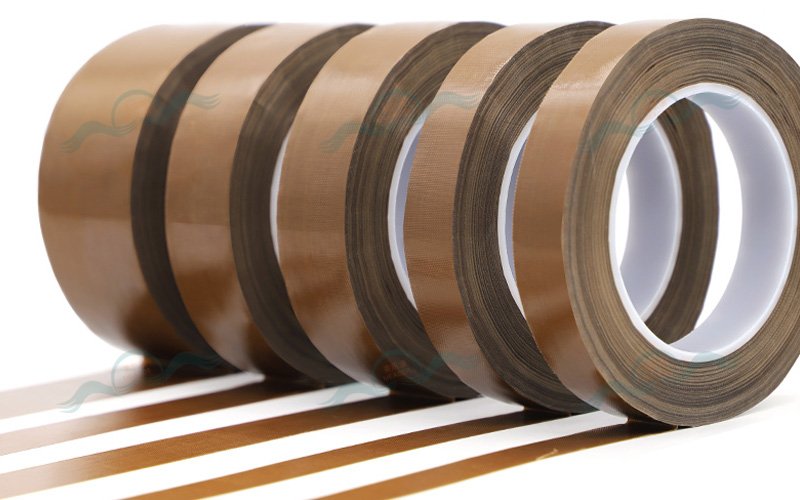
How Do the Latest Developments in PTFE Teflon Tape Application Standards and Industry Regulations Impact Enterprises?
The PTFE tape industry is undergoing three major transformations — standard upgrades, stricter environmental regulations, and expansion into high-end applications — which are creating comprehensive impacts on enterprise R&D, production, supply chain, market access, and cost structure.
Ⅰ. Overview of Key Standards & Regulatory Developments
Domestic Standards
- QB/T 4008-2022 (PTFE Thread Seal Tape): New requirements for acid/alkali resistance and air-tightness; quality variation rate ≤ ±1.0%
- GB/T 7752-2025: Upgraded dielectric strength test method for insulating tape
- High-End Sealing Materials White Paper: Long-term temperature resistance ≥ 260°C for semiconductor/aerospace applications; peel strength retention rate ≥ 85% after aging
Implementation: October 1, 2022 / March 1, 2026 / February 2025 — affects the entire industry, with primary impact on enterprises serving high-end applications
International Environmental Regulations
- EU PFAS Class-Wide Restriction: Shifting from “specific substance control” to “full lifecycle + use-necessity” assessment
- REACH SVHC List Expansion: New substances added including PFHxS; restriction threshold 0.1%
- RoHS 3.0: Regulation of 10 hazardous substances; stricter heavy metal limits
Implementation: Progressive rollout 2025–2026 — affects enterprises exporting to the EU, impacting the entire industrial chain
Industry Specifications
- Multi-Functional PTFE Tape Technical Specification: Introduces “Functional Density Index” (FDI) for comprehensive evaluation
- Environmental Requirements: Promotes solvent-free and water-based adhesives to reduce VOC emissions
- Flame Retardancy Standard: UL 94 V-0 becomes the baseline requirement for electronics and aerospace sectors
Status: Public consultation/implementation 2024–2025 — affects mid-to-high-end markets, driving product differentiation
Ⅱ. Seven Core Impacts on Enterprises
1. Pressure on Technology R&D & Product Upgrades
- Positive Drivers: Standard upgrades push enterprises to achieve breakthroughs in critical technologies, such as high-temperature stability (260°C → 300°C) and matching coating adhesion with bonding strength; multi-functional requirements drive composite development, such as “PTFE + fiberglass + silicone” three-layer structures to improve FDI scores
- Challenges: High-end applications (semiconductor/aerospace) demand stringent aging performance requirements, requiring increased R&D investment to verify long-term stability; environmental standards mandate solvent-free transition, requiring comprehensive reformulation of traditional solvent-based adhesives and extending development cycles
2. Restructuring of Production Cost Structure
| Cost Item | Trend | Impact Level | Response Direction |
|---|---|---|---|
| Raw Materials | Rising prices for high-purity PTFE resin and solvent-free adhesives | ★★★★☆ | Supply chain optimization; establish long-term partnerships with raw material suppliers |
| Testing & Certification | New testing items for PFAS, VOC; extended certification cycles | ★★★☆☆ | Establish in-house testing laboratories; reduce third-party dependency |
| Production Equipment | Upgrade coating and curing equipment for environmental compliance | ★★★☆☆ | Phased upgrades; prioritize core market requirements |
| Workforce Training | Technical staff must master new standards and testing methods | ★★★☆☆ | Internal training + external collaboration; build specialized expertise |
Key Impact: Profit margins for low-end products will be further compressed; industry average costs are projected to rise 15–25% by 2026, accelerating industry consolidation
3. Higher Market Access Barriers
- International Markets: PTFE Teflon Tape Following implementation of the EU PFAS class-wide restriction, approximately 20% of existing products face risk of withdrawal due to non-compliance with testing requirements — requiring reformulation or use-exemption applications
- Domestic High-End Market: Functional Density Index (FDI) becomes a key bidding criterion; low-end homogeneous products struggle to enter semiconductor, new energy, and similar sectors
- Industry Qualifications: Gas and chemical sectors mandate certification for sealing-grade PTFE tape; uncertified enterprises will be excluded from the market
4. Increased Supply Chain Management Complexity
- Upstream Control: Requires PFAS and VOC audits of raw material suppliers; establishment of qualified supplier registries
- Process Traceability: Full lifecycle management requires building a complete traceability system from raw material to finished product, recording PFAS content and production process parameters
- Inventory Risk: Standard updates may render existing inventory non-compliant with new requirements, requiring proactive handling to avoid stockpile losses
5. Shifts in Customer Demand Structure
- Growing High-End Demand: Aerospace, new energy, and semiconductor sectors show 20%+ annual growth in demand for high-performance PTFE tape, requiring superior temperature resistance, chemical resistance, and stability
- Increased Customization Requirements: Different application scenarios (e.g., PV modules, lithium battery encapsulation) require specialized formulations — enterprises must shift from “standardized production” to “customized service”
- Heightened Environmental Awareness: Green certification weighs increasingly in customer procurement decisions; solvent-free, low-VOC products command price premiums of 10–15%
6. Reshaping of the Competitive Landscape
- Increasing Industry Concentration: Standard upgrades and environmental compliance investments increase survival pressure on small and medium enterprises; industry CR5 (top-5 enterprise market concentration) is projected to rise from the current 35% to over 50% by 2026–2027
- Intensifying Differentiated Competition: Enterprises must establish competitive advantages in specialized segments, such as “high-temperature specialist grade,” “low-VOC eco-friendly grade,” and “high peel strength grade”
- Accelerating Cross-Industry Collaboration: Partnerships with materials and equipment companies to develop next-generation PTFE tape, such as “PTFE + graphene” composite tape, raising performance ceilings
7. Compliance Risk & Legal Liability
- Export Compliance: EU REACH regulations require notification when SVHC content in products exceeds 0.1% with annual export volume above 1 ton — non-compliance may result in fines up to €10 million
- Domestic Regulatory Oversight: The State Administration for Market Regulation is intensifying spot-check inspections of PTFE tape; non-compliant products will face mandatory recall and public disclosure, damaging enterprise reputation
- Environmental Liability: Enterprises exceeding PFAS emission limits may be placed on environmental blacklists, restricting new project approvals and financing access
Ⅲ. Recommended Enterprise Response Strategies
1. Establish a Standards Monitoring Mechanism
Designate personnel to track domestic and international standards updates, with particular focus on ISO, GB, QB standards and EU REACH, RoHS regulatory changes; join industry associations to participate in standard-setting processes and secure influence early
2. Technology Innovation & Product Portfolio Adjustment
- Short-term: Optimize existing product formulations to ensure compliance with the latest environmental standards; apply for necessary use exemptions
- Medium-term: Develop solvent-free, low-PFAS PTFE tape to capture early-mover advantage in high-end markets
- Long-term: Develop multi-functional composite tape products to improve FDI scores and meet differentiated demand
3. Supply Chain Optimization & Cost Control
Establish strategic partnerships with upstream raw material suppliers to jointly develop compliant materials and reduce costs; optimize production processes to improve raw material utilization and offset rising cost pressures
4. Compliance Management System Development
Establish full product lifecycle compliance management processes covering R&D, production, and sales; strengthen in-house testing capabilities with PFAS and VOC testing equipment to shorten testing cycles and reduce certification costs
5. Market Strategy Adjustment
Prioritize expansion into new energy, semiconductor, and aerospace high-end sectors to avoid low-end homogeneous competition; provide integrated “product + solution + after-sales service” offerings to enhance customer loyalty and value-add
Ⅳ. Summary
The latest developments in PTFE tape industry standards and regulations represent both challenges and opportunities. In the short term, enterprises will face pressures including rising costs and increased market access difficulty. However, in the long term, these changes will drive industry-wide technology upgrades and structural optimization, accelerating the elimination of outdated production capacity — creating greater development opportunities for enterprises with technical capabilities and compliance awareness. Enterprises should proactively respond and adapt to standard changes, building core competitiveness through technology innovation and management improvement to achieve sustainable development.