The Core Logic for Improving PTFE Tape Temperature Resistance: Select Fiberglass-Reinforced High-Purity PTFE as the Substrate
Improving the temperature resistance of PTFE Teflon tape requires optimization across five dimensions: substrate, adhesive, production process, surface treatment, and usage standards — balancing the material’s inherent thermal limits with actual operating condition requirements.
Ⅰ. Optimize the Substrate — Elevate the Thermal Foundation at the Source
The PTFE substrate is the foundational determinant of tape temperature resistance, directly setting the continuous and instantaneous upper temperature limits.
Select High-Purity / Modified PTFE Substrate
Standard PTFE substrate withstands approximately 260°C continuous and 300°C instantaneous. High-crystallinity, low-impurity food-grade or industrial-grade virgin PTFE reduces small-molecule volatilization-induced embrittlement at elevated temperatures, maintaining stable continuous temperature resistance at 260–280°C.
Use Fiberglass-Reinforced PTFE Substrate (Fiberglass Cloth + PTFE Impregnation)
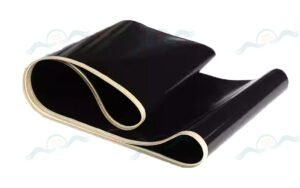
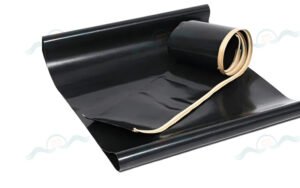
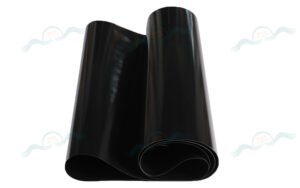
The fiberglass skeleton significantly improves dimensional stability at high temperatures, preventing PTFE thermal shrinkage and deformation. Continuous temperature resistance reaches 280°C and instantaneous tolerance exceeds 350°C — ideal for high-temperature conveyor belts, sealing gaskets, and similar applications.
Increase Substrate Thickness
With equivalent material quality, greater thickness provides better thermal buffering. Standard thin grades (0.08–0.13 mm) are suitable for lower-temperature conditions. For high-temperature applications, select 0.18–0.25 mm thick substrate to reduce thermal penetration-induced aging and surface damage.
Ⅱ. Upgrade the Adhesive — Solve the Core Pain Point of “High-Temperature Debonding”
The adhesive is the weakest link in tape temperature resistance. Standard silicone adhesive tends to soften and debond above 200°C and must be replaced for high-temperature applications.
Switch to High-Temperature Adhesive
- Addition-cured high-temperature silicone adhesive (preferred): Higher cross-link density than standard condensation-cured silicone; continuous rating up to 260°C; instantaneous tolerance up to 300°C; no small-molecule release at high temperatures, preventing adhesive residue
- Ultra-high-temperature conditions (> 280°C): Use inorganic adhesive (e.g., silicate-based); temperature resistance exceeds 500°C; limited flexibility, suitable for static sealing and high-temperature masking (non-bending applications)
Optimize Adhesive Coating Process
- Apply thin, uniform coating: avoid excessive thickness (thick adhesive flows at high temperatures); control coating thickness at 20–30 μm — maintains adequate adhesion while reducing high-temperature softening risk
- Add primer treatment: Apply high-temperature primer (e.g., fluorine-modified primer) between PTFE substrate and adhesive to improve interfacial bonding strength and prevent high-temperature delamination
Ⅲ. Strengthen Surface Treatment — Improve Substrate-Adhesive Bonding Strength
PTFE has extremely low surface energy (only 18–22 mN/m) — untreated surfaces are prone to “adhesive layer detachment.” Surface treatment is the key to improving high-temperature adhesion.
Chemical Etching (Sodium-Naphthalene Solution Method)
Etching the PTFE substrate surface destroys surface fluorine atoms and forms polar functional groups, raising surface energy to above 40 mN/m. Adhesive adhesion is significantly enhanced — minimal debonding at high temperatures (260°C). This is the mainstream treatment method for industrial high-temperature tapes.
Corona / Plasma Treatment
Suitable for thin PTFE substrate grades. High-voltage corona discharge or plasma bombardment activates surface molecules and improves adhesive wettability. Short-term temperature resistance improvement is notable after treatment, but long-term high-temperature performance is slightly inferior to chemical etching — suitable for medium-to-low temperature high-temperature conditions (< 230°C).
Ⅳ. Standardize Usage — Prevent “Human-Induced Performance Degradation” and Extend High-Temperature Service Life
Even a tape with excellent intrinsic temperature resistance can fail quickly if improperly used.
Clean the Bonding Surface
Before application, wipe the bonding surface with anhydrous ethanol or acetone to remove oil, dust, and moisture — contaminants reduce adhesion, causing bubbling and debonding at high temperatures.
Control Application Temperature & Pressure
- After applying at ambient temperature, apply heat and pressure for curing: heat at 100–120°C for 10–15 minutes while applying 0.3–0.5 MPa pressure — promotes full adhesive cross-linking and improves high-temperature stability
- Avoid direct application at high temperatures (adhesive may soften prematurely, resulting in insufficient initial tack)
Match Tape to Operating Temperature — Never Exceed Rated Limits
- Continuous use: Do not exceed the tape’s rated continuous temperature (e.g., pure PTFE + high-temperature silicone ≤ 260°C) — over-temperature causes adhesive carbonization and substrate embrittlement
- Instantaneous high temperature: Keep within the instantaneous tolerance limit (e.g., fiberglass-reinforced grade ≤ 350°C); avoid sustained over-temperature exposure
Minimize Mechanical Stress at High Temperatures
PTFE substrate softens at elevated temperatures — avoid bending, stretching, or friction. Use high-temperature-rated hold-down strips to secure the tape and prevent displacement or damage.
Ⅴ. Special Scenarios: Targeted Composite Optimization
- Ultra-high-temperature static applications: “Fiberglass-reinforced PTFE substrate + inorganic adhesive” — temperature resistance up to 500°C; suitable for furnace body sealing and high-temperature pipeline wrapping
- Dynamic high-temperature applications (e.g., conveyor belts): “Fiberglass-reinforced PTFE + addition-cured silicone adhesive” — balances temperature resistance with flexibility; prevents high-temperature fracture
- Combined corrosion + high-temperature environments: Use fluorine-modified corrosion-resistant adhesive to prevent adhesive layer attack from corrosive gases (e.g., acid/alkali vapors) at high temperatures
Summary
The core logic for improving PTFE tape temperature resistance: Select fiberglass-reinforced or high-purity PTFE substrate; replace adhesive with high-temperature silicone or inorganic adhesive; perform chemical etching surface treatment; during use — clean surfaces, apply heat-cure, and strictly control temperature. In practice, combine and optimize based on operating conditions (continuous/instantaneous; static/dynamic; presence of corrosive media) to both extend the temperature resistance limit and maximize tape service life.