How Does the Fiberglass Content in PTFE High-Temperature Fabric Affect Its Performance?
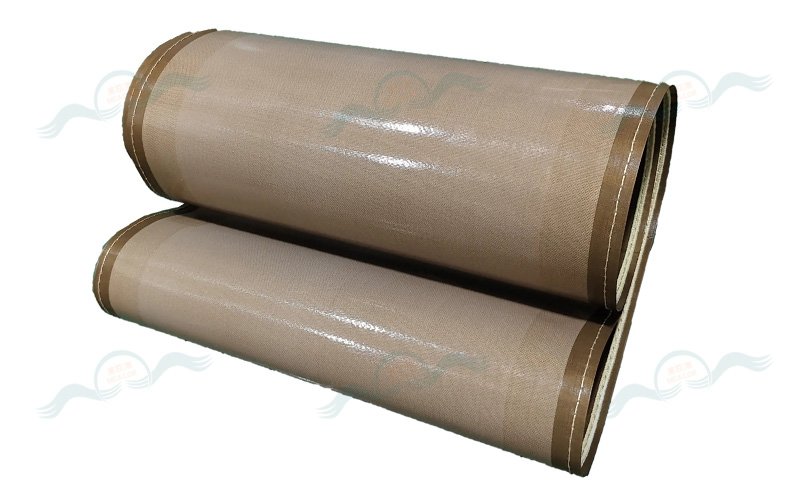
The fiberglass content in PTFE high-temperature fabric (polytetrafluoroethylene-coated fiberglass cloth) is a key factor determining its core performance. Fiberglass serves as the reinforcing skeleton, working synergistically with the PTFE coating on the surface. The fiberglass content level directly affects mechanical strength, temperature resistance, flexibility, and other critical performance indicators.
Impact on Mechanical Properties
Fiberglass is the rigid reinforcing phase of PTFE high-temperature fabric — the higher its content, the better the tensile strength, tear strength, tensile modulus, and puncture resistance.
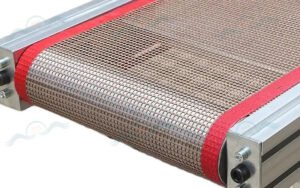
- High content (typically > 70%): Withstands greater tensile loads and impact forces; resists damage and deformation; suitable for load-bearing and pull-resistant applications (e.g., high-temperature conveyor belts, industrial drying equipment conveyors)
- Low content (typically < 50%): Mechanical strength decreases significantly; fabric becomes softer and tears easily; suitable only for lightweight applications with no external tensile forces (e.g., small vessel liners, insulation wrapping)
Impact on Temperature Resistance & Dimensional Stability
Fiberglass itself has excellent temperature resistance (softening point approximately 550°C; short-term tolerance above 300°C), while PTFE has a long-term operating range of -70°C to 260°C.
- High content: Superior dimensional stability at elevated temperatures; minimal shrinkage and deformation; better thermal aging resistance; maintains structural integrity during prolonged 260°C operation
- Low content: More susceptible to thermal shrinkage at high temperatures; dimensional stability deteriorates; long-term use may cause coating wrinkling and delamination
Impact on Flexibility & Processability
The rigidity of fiberglass counteracts the flexibility of the PTFE coating — these two properties exhibit a trade-off relationship.
- High content: Fabric tends to be rigid and brittle; reduced flexibility; excessive bending cycles cause fiberglass filament fracture, leading to coating cracking; unsuitable for frequent folding or conforming to complex curved surfaces
- Low content: Excellent flexibility; easy to cut, bend, and wrap around irregular shapes; low processing difficulty; suitable for sealing gaskets, pipeline anti-corrosion liners, and other applications requiring flexible conformability
Impact on Chemical Resistance
PTFE is the core of chemical corrosion resistance; fiberglass resists weak acids and alkalis but is gradually attacked in strongly alkaline environments.
- High content: Prolonged use in strongly alkaline media causes fiberglass skeleton corrosion, reducing fabric strength and causing delamination; limited impact on resistance to strong acids
- Low content: Higher PTFE proportion delivers superior overall chemical resistance — particularly stronger resistance to strong alkalis and strong oxidizing agents; suitable for chemical equipment anti-corrosion liners
Impact on Wear Resistance & Non-Stick Performance
- Wear resistance: Higher fiberglass content improves overall wear resistance; even as the PTFE coating wears, the fiberglass skeleton continues to provide structural support, delaying fabric damage. Lower content results in poorer wear resistance — sharp objects wear through the fabric easily
- Non-stick performance: PTFE provides the non-stick property. Excessive fiberglass content causes incomplete coating coverage — fiber protrusions appear on the surface, reducing non-stick performance and smoothness. At moderate content levels, PTFE uniformly encapsulates the fibers for optimal non-stick performance
Impact on Cost
Fiberglass raw material costs less than PTFE — higher fiberglass content reduces overall production cost. Conversely, low-content products with higher PTFE proportions have significantly higher costs.
Application Scenario Summary by Content Level
| Fiberglass Content | Core Advantages | Applicable Scenarios |
|---|---|---|
| High (70–85%) | High strength, high heat resistance, low cost | High-temperature conveyor belts, drying equipment, industrial thermal insulation fabric |
| Medium (50–70%) | Balanced strength and flexibility; excellent non-stick performance | Food baking tray liners, hot press mold release fabric |
| Low (< 50%) | High flexibility, strong chemical resistance | Chemical anti-corrosion liners, sealing gaskets, flexible insulation layers |
Key Characteristics & Advantages of PTFE High-Temperature Fabric:
- High-temperature pressure resistance: Operating temperature range -73°C to 260°C
- Excellent non-stick performance: Completely isolates from all material surfaces during hot processing, cooling, and compression molding — no adhesion occurs
- Outstanding chemical corrosion resistance: Demonstrates good resistance to corrosion in strong acids, strong alkalis, oxidizing agents, and organic solvents
- High mechanical strength: Color can be customized according to requirements