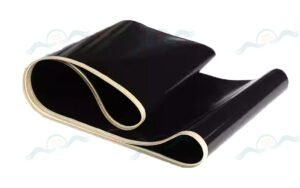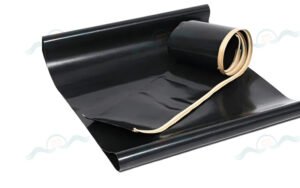
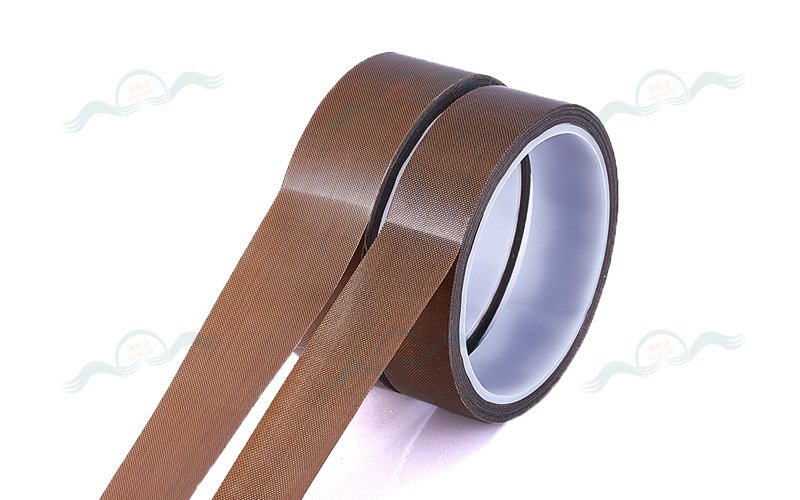
In PCB manufacturing processes, temporary fixation and protection in high-temperature environments is a common and critical requirement. Many users tend to focus attention on adhesive bond strength alone, while overlooking the real-world process impact of high-temperature tolerance and adhesive residue issues. The factors that truly determine the performance of this category of industrial tape are the underlying technical elements: substrate selection, temperature adaptability, and interface reaction control.
Operating Principle & Core Structure Analysis
This tape features a fiberglass substrate with a Teflon (PTFE) coating. The special 5 μm film layer structure forms a thermal buffer barrier. The 100°C temperature resistance originates from the inherent molecular chain rigidity of the PI material, while the PTFE coating achieves “zero adhesive residue” performance by reducing surface energy. The 50 N/cm tensile strength and 80 N/cm steel surface adhesion strength balance fixation requirements with clean peelability. The 0.5 mm total thickness design ensures adequate mechanical support while avoiding excessive material buildup.
How Technical Differences Affect Real-World Applications
Compared to conventional acrylic adhesive tape, the PTFE-PI composite structure — while sacrificing some initial tack (expressed as 50 N/cm tensile strength) — delivers significantly more stable high-temperature performance and clean removal capability. This difference stems from the coefficient of thermal expansion (CTE) matching mechanism between the two materials: the PI substrate maintains dimensional stability throughout thermal cycling, while the PTFE coating prevents carbonized adhesive residue caused by adhesive degradation at elevated temperatures.
Application Scenarios & Evaluation Framework
When evaluating this type of product, focus on four key dimensions:
Whether the maximum operating temperature is compatible with the reflow soldering process temperature profile
The impact of substrate thickness on precision component masking coverage
The steepness of the peel force curve as an indicator of disassembly convenience
Electrostatic accumulation risk — must be assessed in conjunction with the specific cleanroom environment
For short-duration high-temperature scenarios such as wave soldering masking, it is also necessary to verify that the instantaneous peak temperature tolerance does not exceed 20% above the rated nominal value as a safety margin.