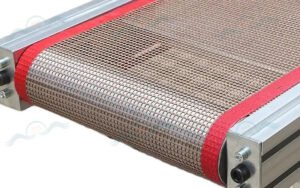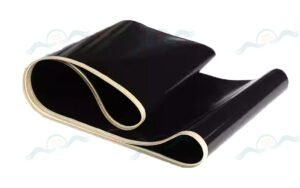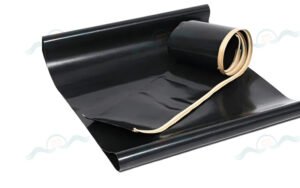
PTFE (Polytetrafluoroethylene, commonly known as Teflon) high-temperature mesh belts are core conveyor components for microwave dryers. PTFE conveyor belts They are manufactured by impregnating fiberglass or aramid fibers with PTFE resin and sintering them at high temperatures. These belts perfectly complement the technical characteristics of microwave heating—fast, uniform, and non-contact. Compared to traditional metal mesh or rubber belts, they offer superior microwave permeability, heat resistance, and hygiene, significantly enhancing drying efficiency and product quality.
- Excellent Microwave Permeability for Uniform Drying
The essence of microwave drying is the penetration of energy into the material for volumetric heating. PTFE is a non-polar material with extremely low dielectric loss; it does not absorb microwave energy.
Efficiency: Microwaves penetrate the belt without resistance to act directly on the material, preventing energy loss or localized overheating caused by the belt itself.
Uniformity: The mesh structure allows microwaves to wrap around the material from all angles. Unlike metal belts that reflect microwaves and cause uneven heating (e.g., “dry outside, wet inside” or localized charring), PTFE belts ensure uniform moisture content and can increase drying efficiency by over 30%. - Superior High-Temperature Resistance
Microwave drying often involves high-heat environments. PTFE mesh belts operate stably within a range of -70°C to 260°C, with short-term resistance up to 300°C.Durability: When operated continuously at 250°C for 200 days, the strength retention remains $\ge$ 95% without softening or aging.Comparison: Unlike rubber belts (limited to 60-85°C) which melt, or metal belts which oxidize and deform, PTFE belts ensure continuous production for sterilization and high-heat curing without downtime due to belt failure. - Non-Stick Surface & Easy Cleaning
With a friction coefficient as low as 0.05–0.1, the ultra-low surface energy of PTFE prevents the adhesion of sticky substances such as syrups, dough, resins, and extracts.
Reduced Loss: Materials release easily, reducing product waste and breakage.
Efficiency: Cleaning requires only high-pressure water or wiping. The cleaning cycle can be extended from daily to weekly, significantly increasing the uptime of the production line and ensuring sanitary conditions. - Exceptional Chemical Corrosion Resistance
Microwave dryers often process materials containing acids, bases, or organic solvents.
Stability: PTFE is more chemically stable than 316 stainless steel, resisting “aqua regia,” strong alkalis, and various organic solvents. It does not rust or become brittle, making it ideal for the chemical, pharmaceutical, and food industries where aggressive cleaning agents are used. - High Breathability & Energy Savings
The regular grid structure (common specs: 1×1mm, 4×4mm, etc.) provides superior airflow compared to solid belts.
Faster Drying: Hot air passes through the belt and material layers quickly, accelerating evaporation and preventing moisture stagnation.
Power Savings: Because the belt is lightweight and does not absorb heat, it reduces equipment energy consumption by approximately 30% compared to metal mesh belts. - Dimensional Stability & Mechanical Performance
Reinforced with high-strength fiberglass or aramid, these belts have an elongation coefficient of < 5‰ and a tensile strength of 2900–3100 N/50mm.
Precision: The belt maintains its shape under high speeds and repeated bending, preventing tracking issues (running off-center) and reducing the need for frequent tension adjustments. This ensures stable material transport and lower maintenance costs. - Food & Pharmaceutical Grade Safety
PTFE mesh belts are non-toxic, odorless, and free of harmful secretions.
Standards: Fully compliant with FDA (US), GMP (Pharma), and QS (China) food contact requirements.
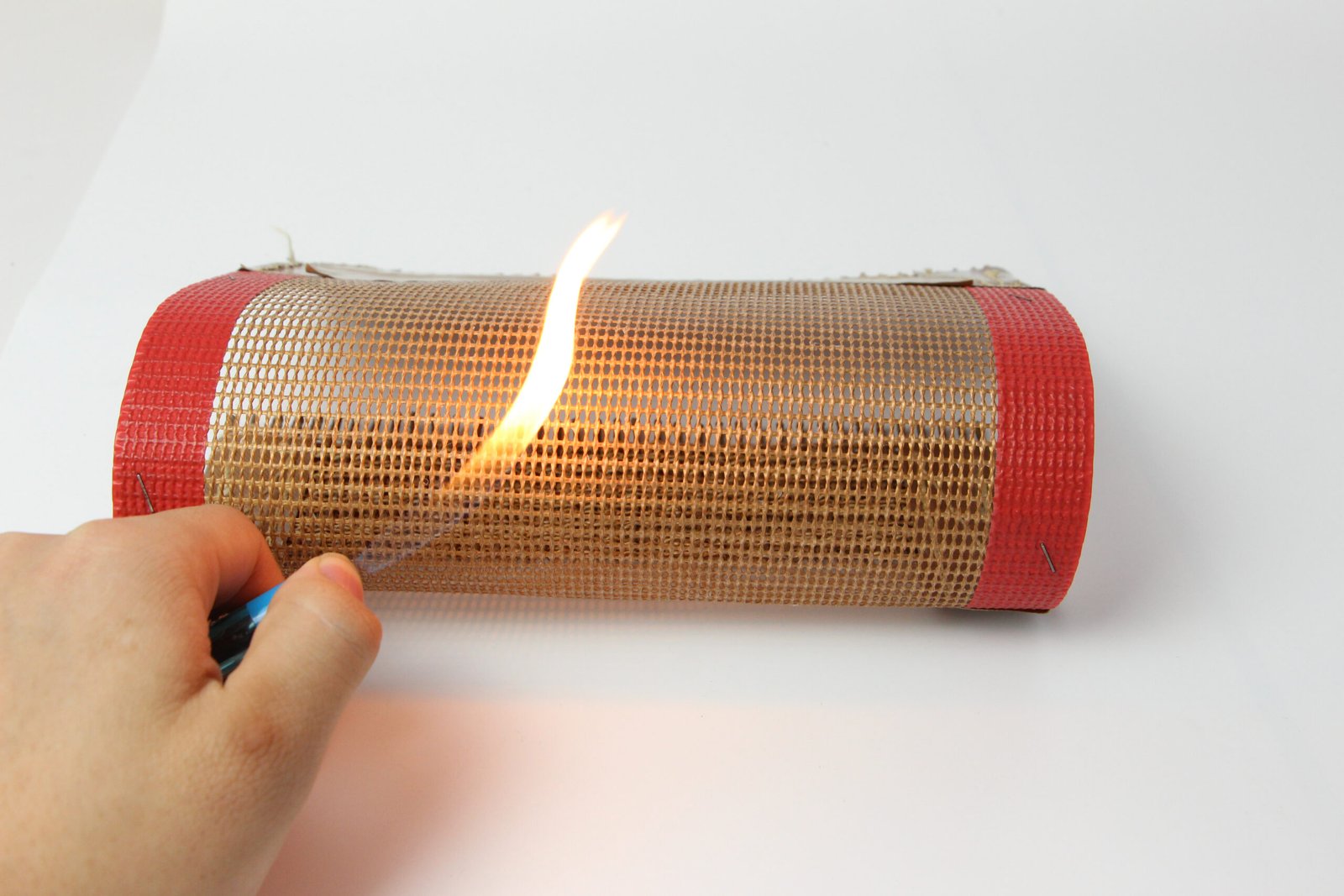
Safety: They are flame retardant (UL94V-0 standard) and do not produce toxic fumes at high temperatures, minimizing fire hazards within the microwave chamber. - Extended Service Life & Cost-Effectiveness
While the initial purchase price may be higher, the service life of a PTFE belt is typically 1.5 to 2 years—2 to 3 times longer than rubber belts and 3 to 5 times longer than standard metal mesh.
ROI: When factoring in reduced replacement costs, lower maintenance labor, and minimized downtime, the total cost of ownership (TCO) is significantly lower, making it the most economical choice for modern industrial lines.