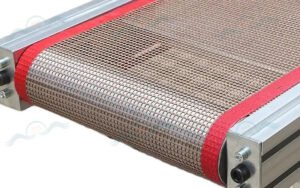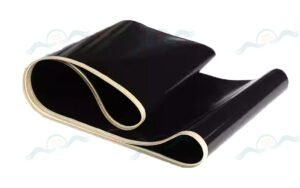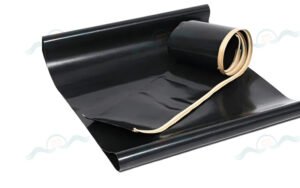
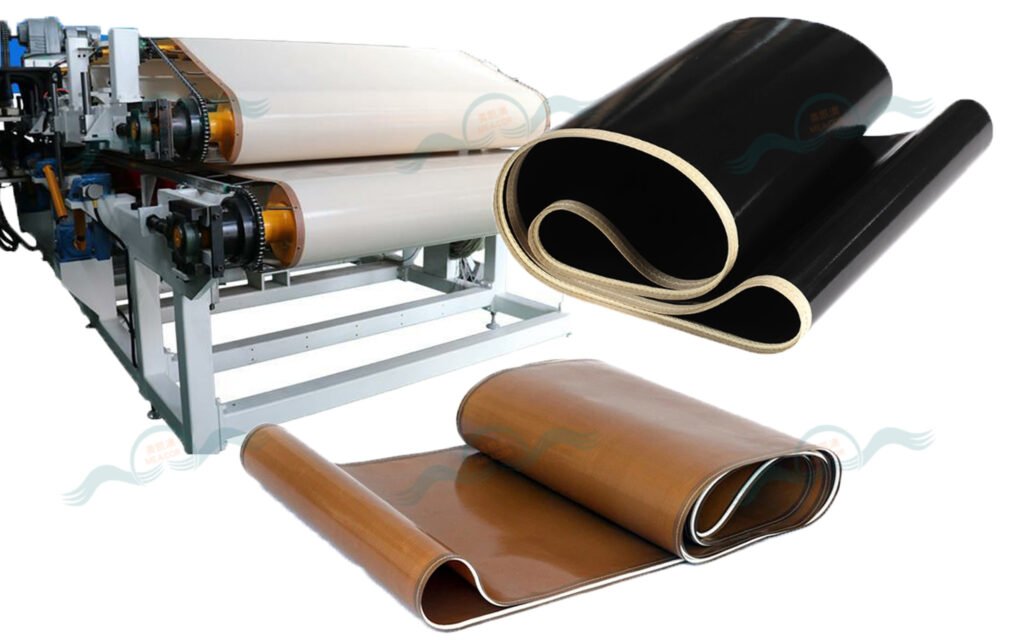
Bonding machine belts, also referred to as fabric press belts or interlining press belts, are conveyor belts specifically designed for use on garment fusing/bonding machines.
These belts are generally manufactured using fiberglass or Kevlar (aramid fiber) as the base fabric, coated with PTFE (Teflon) emulsion, and then cured through a high-temperature drying process to produce a high-temperature resistant conveyor belt.
Types of Bonding Machine Belts
- PTFE Seamless Bonding Machine Belt
Seamless belts are woven into a tubular structure using high-strength fiberglass yarn or Kevlar (aramid) fiber on circular weaving equipment, then coated with PTFE (Teflon) resin using a proprietary process. This construction completely eliminates the belt breakage at splice joints that was common with traditional belts, as well as the belt tracking deviation caused by uneven circumference at connection points. The service life of seamless bonding machine belts is more than 3 times longer than that of any spliced PTFE conveyor belt. - Double-Layer Composite Bonding Machine Belt
The double-layer composite belt features an inner layer of anti-static lacquered cloth and an outer layer of tear-resistant fiber fabric, bonded together in an offset-composite configuration. This construction significantly enhances tensile strength, extends service life, ensures uniform overall thickness, provides excellent anti-tracking performance, and delivers a smooth, fine surface finish — particularly well-suited for processing ultra-thin fusible interlinings. - Standard Spliced Bonding Machine Belt
Standard spliced belts are self-woven and self-coated using fully imported base materials, delivering a bright, smooth surface finish.
Market Pricing
Bonding machine belt prices vary considerably depending on material, specification, and manufacturer. Based on current wholesale reference pricing, standard PTFE belts are priced at approximately RMB 20–150 per square meter, while finished belts sold per piece are priced at approximately RMB 20–220 per belt. Major suppliers are concentrated in Taizhou and Wuxi (Jiangsu Province) and Jiangmen (Guangdong Province). As a core consumable for bonding machines, the belt directly determines the quality and efficiency of garment fusing operations. Understanding its material properties and selection criteria can help reduce production costs and extend equipment service life.
🧵 Product Characteristics & Material Classification
Bonding machine belts are high-temperature resistant seamless conveyor belts used on garment fusing machines. Their core function is to bond garment fabric and interlining firmly together under high temperature and pressure. Current mainstream products are primarily made from PTFE (Teflon) composite materials, and can be classified into the following categories based on structure and material:
PTFE Seamless Belt
Material: High-strength fiberglass yarn or Kevlar (aramid) as the base fabric, surface-coated with PTFE resin.
Features: Tubular woven construction with no splice joint, completely eliminating belt tracking deviation caused by joint breakage or bounce associated with traditional belts.
Service Life: Operational lifespan is typically more than 3 times longer than spliced belts; smooth surface resists adhesive buildup, making cleaning and maintenance more convenient.
Double-Layer Composite Belt
Structure: Inner layer of anti-static lacquered cloth; outer layer of tear-resistant fiber fabric bonded in an offset-composite configuration.
Advantages: Significantly enhanced tensile strength, superior anti-tracking performance, suitable for processing ultra-thin fusible interlinings without leaving pressure marks.
Silicone Seamless Belt
Properties: Certain next-generation belts utilize silicone material, with a temperature resistance of up to 300°C, featuring high lubricity, non-stick surface, and resistance to cracking.
Applications: Ideal for seamless garment fusing applications requiring an exceptionally smooth surface finish.
All types of bonding machine belts offer high-temperature resistance (-196°C to 350°C), chemical corrosion resistance, and a low coefficient of friction, ensuring stable operation in demanding industrial environments.
📏 Specifications & Selection Guidelines
When purchasing bonding machine belts, it is essential to precisely match the belt to the bonding machine model and processing requirements, as incorrect specifications will result in belt tracking deviation or inadequate bonding quality.
Key Dimensional Parameters
Thickness: Common nominal thicknesses include 0.22 mm, 0.245 mm, 0.28 mm, and 0.385 mm — greater thickness generally provides better pressure resistance.
Width: Standard widths range from 400 mm to 1,200 mm; certain custom configurations can reach 1,500 mm or even 2,400 mm.
Circumference: Ranges from 1,360 mm to 6,700 mm — must precisely match the drum circumference of the machine, as excessive deviation will result in installation failure or unstable operation.
Model Compatibility
Seamless belts are available in series 200, 300, 400, 500, 600, 900, and 1200, corresponding to the specific model requirements of brands such as Typical, Juki, Jiayou, and Hashima. Always measure the old belt or consult the equipment nameplate before purchasing.
Performance Selection
Anti-Tracking: For older equipment or machines prone to belt lateral displacement, select seamless belts with guide strips or integrated anti-tracking structures.
Anti-Static: When processing electronic components or flammable materials, select belts with anti-static treatment — low dielectric constant and high electrical insulation are essential.
💰 Market Pricing & Sourcing Channels
Bonding machine belts are industrial consumables, and pricing is significantly influenced by dimensions, material, and purchase volume.
Pricing Factors
Material Cost: PTFE belts with imported Kevlar base fabric command a higher price; standard fiberglass base fabric belts are comparatively more economical.
Process Differences: Seamless construction, due to its greater technical complexity and longer service life, carries a higher unit price than standard spliced belts.
Custom Orders: Non-standard dimensions (special circumferences or extra-wide configurations) require custom production, resulting in higher pricing and extended lead times.
Procurement Recommendations
Bulk Purchase: For high-frequency users such as garment manufacturers, wholesale purchasing by square meter offers lower unit costs — market reference price approximately RMB 20–150 per square meter.
Single-Belt Replacement: Small workshops or one-off maintenance replacements can purchase finished single belts directly, priced at approximately a few dozen to two hundred RMB per belt — confirm whether shipping is included.
Supplier Selection: Prioritize suppliers that offer product warranties and after-sales technical support; certain branded belts carry a guaranteed service life of 3–5 years.