Common Specifications of PTFE High-Temperature Fabrics in the Electronics Industry
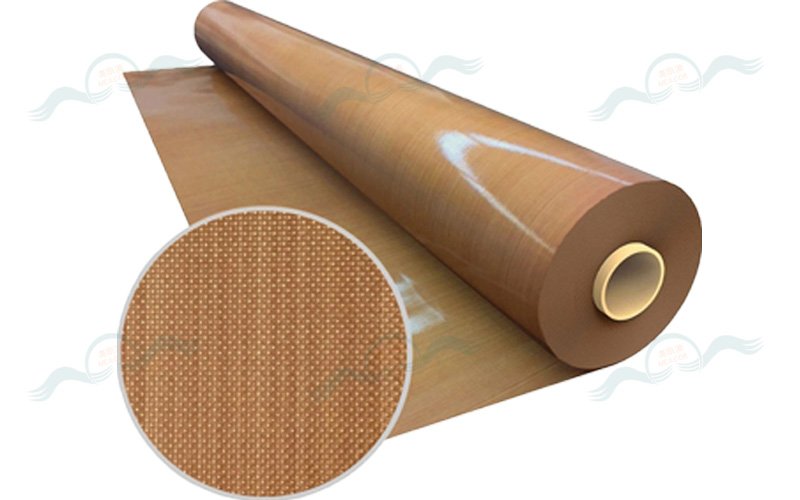
PTFE (Teflon) high-temperature fabrics widely utilized in the electronics industry are primarily categorized by thickness, width, substrate matrix, coating technology, and critical performance metrics. These specifications are engineered to meet specialized demands such as electronic component insulation, thermal press demolding, and high-temperature conveying. The concrete specifications include:
I. Thickness Specifications
The electronics sector predominantly requires ultra-thin to medium-thick profiles to accommodate precision component assembly:
- Ultra-Thin Class (0.08 mm, 0.10 mm, 0.13 mm): Utilized for microscopic electronic component insulation gaskets, die-cut spacers, and precision wire wrapping.
- Standard Class (0.18 mm, 0.20 mm, 0.25 mm): The most versatile gauge range, extensively used for PCB thermal press release liners and base carriers for electronic high-temperature adhesive tapes.
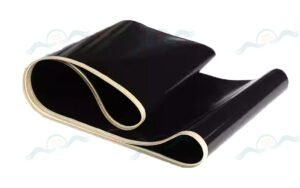
- Medium-Thick Class (0.30 mm, 0.35 mm, 0.50 mm): Geared toward heavy-duty applications, including high-temperature conveyor belts for electronic assemblies and curing furnace drying sheets.
II. Width Specifications
Available in macro-industrial widths or precision slit coils to seamlessly integrate with automated assembly configurations:
- Standard Bulk Widths: 1000 mm, 1200 mm, 1500 mm, engineered for continuous automated electronics production processing.
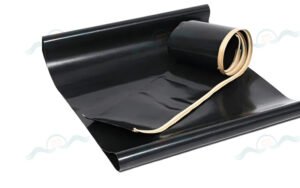
- Customized Slit Ribbons: Precision narrow strips of 5 mm, 10 mm, 20 mm, 50 mm, etc., deployed as electrical isolation barriers and solder joint masking sleeves.
III. Substrate Matrix Classifications
The base fabric dictates the mechanical tensile capacity and dielectric threshold. The electronics industry runs on two primary variants:
- Fiberglass Substrates: The industry standard, divided into E-glass (alkali-free) and C-glass (medium-alkali). E-glass yields superior electrical insulation properties (insulation resistance ≥10¹² Ω), making it the premier choice for critical electronic insulation; C-glass serves as a cost-effective alternative for basic mechanical protection.
- Aramid Substrates: Delivers 3 to 5 times the tear propagation resistance of fiberglass, making it an excellent selection for high-stress conveyor drives in component processing, though at a premium cost tier.
IV. Coating Processes and Functional Variants
Formulated by surface layer configurations and additive treatments to match specific manufacturing operations:
- Layer Architecture: Single-sided coating (engineered for targeted single-face non-stick applications like electronic diaphragm hot-pressing) and double-sided coating (delivering two-sided non-stick insulation, which is the most universally applicable configuration).
- Functional Formulations: Pure PTFE dispersion (the baseline selection offering non-stick and thermal performance), Silicone-backed coating (self-adhesive backing allowing instant peel-and-stick mounting onto hardware components), and Anti-static/ESD coating (engineered with a targeted surface resistance of 10⁶–10⁹ Ω for dust-free, static-sensitive cleanroom operations).
V. Critical Performance Thresholds
The electronics manufacturing pipeline demands strict compliance regarding thermal bounds and electrical protection metrics:
- Working Temperature Range: Continuous operating limits spanning -70°C to 200°C, with brief intermittent peaks extending to 260°C, safely covering component reflow soldering and thermal baking schedules.
- Dielectric Breakdown Voltage: Capped between 5 kV and 15 kV, aligning fully with strict electronic hardware insulation safety guidelines.
- Specialized Configurations: ESD protection, UV stabilization, and perforated/porous architectures (pore sizing from 0.5 mm to 2 mm for optimized component ventilation and heat dissipation during drying).