High-Temperature Performance Test Standards for PTFE (Teflon) High-Temp Tapes
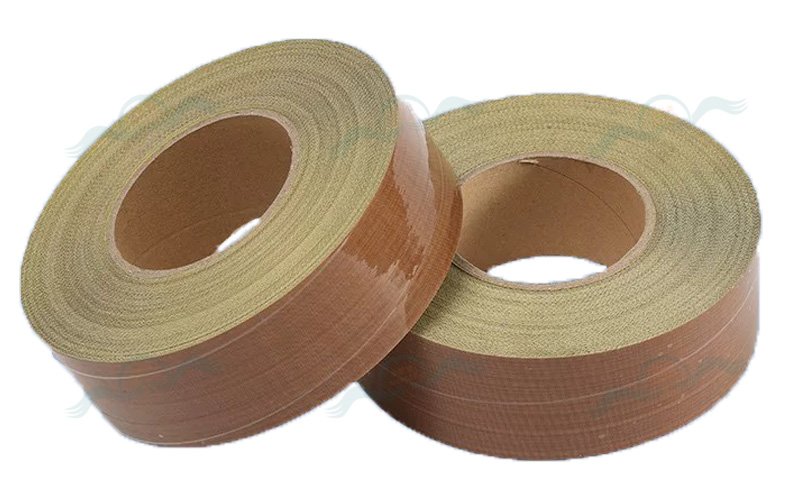
PTFE high-temperature tapes (comprising PTFE backings combined with glass cloth, non-woven fabric, or film) are evaluated for thermal resistance across three core dimensions: continuous operating temperature, short-term flash heat endurance, and thermal aging stability. Testing framework integrates global and domestic standards evaluating visual integrity and mechanical retention.
I. Core International Test Standards
- ASTM D3575-2021 (Standard Specification for Flexible Cellular Materials Made From Olefin Polymers / Coated Fabrics)
- Scope: PTFE-coated glass cloth tapes.
- Method: Continuous thermal aging in constant-temperature ovens at 200°C, 260°C, or 300°C for 100h, 500h, or 1000h. Short-term flash heat tests use heat guns or furnaces at 350–400°C for 30s to 5 minutes.
- Criteria: Zero cracking, charring, or adhesion loss; peel strength (180° on stainless steel) retention ≥ 80%; tensile strength retention ≥ 70%; weight loss ≤ 5%.
- ISO 2871-1:2017 (Rubber and Plastics Hoses / Specialized High-Heat Assemblies)
- Scope: Pipe wrapping and high-heat sealing applications.
- Method: Evaluates sealing integrity and structural stabilization after maintaining 200–260°C exposure for 24 hours under rated pressure.
- Criteria: Zero leak paths, minimal deformation, peel strength drop ≤ 30%.
- DIN 53472-2016 (Testing of Plastics and Elastomers – Thermal Aging)
- Scope: Pure PTFE film tapes.
- Method: Staged thermal aging (180°C/240h, 220°C/168h, 260°C/72h).
- Criteria: Yellowing index ≤ 3, zero coating delamination, elongation at break retention ≥ 60%.
II. Core Domestic Test Standards (GB/T & HG/T Framework)
- HG/T 4304-2012 (Polytetrafluoroethylene Film Tapes)
- Scope: Standard industry specification for PTFE tapes.
- Method: Continuous thermal aging at 260°C for 240 hours; thermal shock cycle (-40°C for 2h → 260°C for 2h across 5 cycles).
- Criteria: No surface cracking or adhesive flow; steel peel adhesion ≥ 0.12 N (retention ≥ 80%); withstands flash exposure at 300°C for 5 minutes without structural damage.
- GB/T 1690-2010 (Rubber, Vulcanized or Thermoplastic – Determination of the Effect of Liquids)
- Scope: Chemical and oil exposure scenarios.
- Method: Immersion in target liquids (e.g., motor oil, acids, alkalis) at 150–200°C for 72 hours.
- Criteria: Zero swelling or blistering, peel strength retention ≥ 75%.
- GB/T 3512-2014 (Accelerated Aging and Heat Resistance Tests – Hot Air Method)
- Scope: Universal hot-air thermal evaluation (50°C to 300°C over 16h to 1000h).
- Criteria: Tensile strength change within ±25%, Shore A hardness shift ≤ 10, no surface defects.
III. Practical Testing Methodologies
- Continuous Heat Resistance Test:
Mount 100 mm x 25 mm specimens on stainless steel plates. Subject to 260°C aging for 240–500 hours in precision air ovens (±2°C control). Accept if peel strength and tensile retention remain ≥ 80%. - Flash Heat Resistance Test:
Direct heat gun airflow (350°C) at a distance of 5 cm for 30s to 5 minutes. Accept if zero ignition, melting, or adhesive breakdown occurs. - Thermal Aging & Fatigue Test:
Perform dynamic friction tests under 200°C ambient heat (1 kg load, 500 rpm for 1000 cycles). Accept if wear thickness remains ≤ 0.1 mm with no substrate tearing.
IV. Selection and Implementation Guidelines
- Glass Cloth Base Tapes: Utilize ASTM D3575 and HG/T 4304.
- Pure Film Tapes: Utilize DIN 53472 and GB/T 3512.
- Chemical Environment Tapes: Supplement with ASTM D471 and GB/T 1690.
- Calibration Notice: Ensure stainless steel panel preparation and oven thermal uniformity (±3°C) are verified prior to testing.