How to Select PTFE High-Temperature Tape for Different Operating Conditions
The core logic of PTFE high-temperature tape selection is precise matching of operating condition parameters with product characteristics. Prioritize five key dimensions — temperature range, substrate type, adhesive type, load capacity, and special environment requirements — then refine the selection based on specific application scenarios.
Ⅰ. Core Selection Dimensions at a Glance
| Selection Dimension | Key Parameters | Selection Guidelines |
|---|---|---|
| Temperature Range | Long-term operating temp / Short-term peak temp | Pure PTFE film: -70°C to 260°C; Fiberglass-reinforced: -70°C to 260°C; Kevlar-reinforced: -70°C to 300°C (short-term) |
| Substrate Type | Pure film / Fiberglass cloth / Kevlar-reinforced | Pure film: flexible & precision; Fiberglass: strong & wear-resistant; Kevlar: ultra-high strength |
| Adhesive Type | Silicone / Acrylic | Silicone: heat-resistant to 260°C, ideal for long-term high-temp use; Acrylic: heat-resistant to 150–180°C, cost-effective |
| Thickness Specification | 0.05–0.5 mm | Thin (0.08–0.13 mm): curved surfaces / precision insulation; Thick (0.18–0.4 mm): wear resistance / heavy load / thermal insulation |
| Special Requirements | Anti-static / Food-grade / Corrosion-resistant | Anti-static: black coating; Food-grade: FDA certified; Corrosion-resistant: full fluoropolymer coating |
Ⅱ. Selection by Temperature Operating Condition
1. Low-Temperature Applications (-196°C to 100°C)
- Typical Scenarios: Cryogenic equipment sealing, low-temperature pipe wrapping, laboratory low-temperature environments
- Recommended Product: 0.08 mm pure PTFE film tape with silicone adhesive
- Advantages: Maximum flexibility; no brittleness at low temperatures; outstanding chemical resistance
- Note: Avoid thick-type or fiberglass-reinforced grades — they compromise conformability at low temperatures
2. Medium-Temperature Applications (100°C to 200°C)
- Typical Scenarios: Electronic component soldering protection, PCB board masking, general heat-sealing equipment
- Recommended Product: 0.13–0.18 mm fiberglass-reinforced tape (silicone or acrylic adhesive)
- Cost-Effective Option: Acrylic adhesive grade (below 180°C) — reduces cost by approximately 30%
- Performance Upgrade: For applications requiring frequent removal, select pure film tape — leaves no adhesive residue
3. High-Temperature Applications (200°C to 260°C)
- Typical Scenarios: Oven/furnace interior linings, thermoplastic molds, high-temperature conveyor belts
- Required Product: Fiberglass-reinforced silicone adhesive tape (0.18–0.25 mm)
- Critical Requirement: Both substrate and adhesive must withstand continuous 260°C temperatures to prevent delamination and detachment
- Heavy-Load Scenarios: Select 0.25 mm Kevlar-reinforced grade — tensile strength up to 900 N/cm
4. Ultra-High-Temperature Applications (260°C to 300°C, Short-Term)
- Typical Scenarios: Welding preheat zones, high-temperature pipeline emergency repair, instantaneous high-temperature processes
- Recommended Product: 0.25–0.35 mm Kevlar-reinforced silicone adhesive tape
- Note: Service life will be shortened under these conditions — periodic inspection and replacement are recommended
- Prohibited: Acrylic adhesive grades — will soften and fail above 180°C
Ⅲ. Selection by Substrate Type
1. Pure PTFE Film Tape (Non-Reinforced)
- Thickness: 0.05–0.25 mm
- Advantages: Maximum flexibility; transparent/semi-transparent; low friction; no fiber shedding
- Best Applications: Food/pharmaceutical packaging heat sealing (FDA certified); precision electronic component insulation masking; smooth curved surfaces/drum anti-stick (e.g., paper machine dryer cylinders); high-frequency vibration equipment (flex fatigue resistance exceeding 10⁶ cycles)
- Limitations: Lower tensile strength (approximately 300 N/cm) — not suitable for heavy-load applications
2. Fiberglass-Reinforced PTFE Tape
- Thickness: 0.13–0.40 mm (commonly 0.13/0.18 mm)
- Structure: Fiberglass cloth + PTFE coating + high-temperature pressure-sensitive adhesive
- Advantages: High strength (1,700 N/cm), wear-resistant, excellent cost-performance ratio
- Best Applications: Heat sealer heating element fixation (requires good initial tack); chemical pipeline/valve anti-corrosion wrapping; general industrial high-temperature anti-stick (e.g., hopper liners); electrical insulation (transformer/motor coil wrapping)
3. Kevlar (Aramid) Reinforced PTFE Tape
- Thickness: 0.25–0.5 mm
- Advantages: Ultra-high strength (900 N/cm+), high-temperature resistance, tear resistance
- Best Applications: Heavy-load high-temperature conveying (e.g., composite material forming); high-voltage electrical insulation (withstanding > 2 MPa pressure); extreme environments (e.g., aerospace high-temperature components); frequent start-stop equipment (minimum bending radius 3 mm)
Ⅳ. Selection by Adhesive Type
1. Silicone Adhesive (Mainstream Choice)
- Temperature Rating: -70°C to 260°C (long-term); up to 300°C short-term
- Characteristics: High-temperature resistance, aging resistance, long-lasting adhesion, minimal residue after removal
- Applications: All high-temperature conditions, especially long-term use scenarios
- Note: May have minor effects on certain plastic surfaces — prior testing is recommended
2. Acrylic Adhesive (Economy Grade)
- Temperature Rating: -40°C to 180°C (long-term)
- Characteristics: Strong initial tack, excellent adhesion to a wide range of substrates, lower cost
- Applications: Medium and low-temperature conditions (below 180°C) — electronic component temporary fixation, ambient-temperature pipeline sealing
- Prohibited: Environments above 200°C — will soften and lose adhesion
Ⅴ. Application-Specific Selection Guidelines
1. Food & Pharmaceutical Industry
- Core Requirements: FDA/LFGB certification, zero migration, direct food-contact safe
- Recommended: 0.08–0.13 mm pure PTFE film silicone tape (white/transparent)
- Applications: Heat sealer blade anti-stick protection, drying line conveyor belts, food mold release
- Prohibited: Recycled material products or uncertified products
2. Electronics & Electrical Industry
- Core Requirements: High electrical insulation, anti-static, high-temperature soldering resistance
- High-Frequency Soldering: 0.1 mm pure film tape (insulation + solder spatter protection)
- PCB Board Masking: 0.08 mm ultra-thin pure film tape (precision positioning)
- High-Voltage Insulation: 0.18 mm fiberglass-reinforced silicone tape (withstanding > 5 kV)
- Anti-Static Requirements: Black coating grade (surface resistance 10⁶–10⁹ Ω)
3. Chemical Corrosion Protection Industry
- Core Requirements: Resistance to strong acids and alkalis, solvent resistance, superior sealing performance
- Pipeline/Flange Sealing: 0.25 mm thick fiberglass-reinforced tape (multi-layer wrapping)
- Storage Tank Lining: 0.4 mm thick Kevlar-reinforced tape (pressure resistance + corrosion resistance)
- Acid/Alkali Tank Protection: Full fluoropolymer coating grade (resistant to 99% of chemical media)
4. Thermoplastics & Composite Materials Industry
- Core Requirements: Strong non-stick performance, high-temperature resistance, tear resistance
- Mold Release: 0.13 mm pure film tape (easy release, non-stick to resins)
- Hot Press Platen Anti-Stick: 0.18 mm fiberglass-reinforced tape (wear resistance + heat resistance)
- Prepreg Layup Forming: 0.25 mm Kevlar-reinforced tape (high strength + high-temperature resistance)
5. Packaging & Printing Industry
- Core Requirements: Excellent heat-sealing performance, non-stick, high-frequency friction resistance
- Heat Sealer Blade Protection: 0.13 mm fiberglass-reinforced silicone tape (good initial tack, precise positioning)
- Bag-Making Machine Drum: 0.18 mm pure film tape (low friction, improves production efficiency)
- High-Speed Printing Machines: Anti-static black coating grade (reduces static-induced dust attraction)
Ⅵ. Common Selection Mistakes & How to Avoid Them
- Checking temperature but ignoring adhesive rating: Some products have substrates rated to 260°C but adhesives rated only to 180°C — will detach under high temperature
- Ignoring thickness matching: Thin tape (< 0.1 mm) is unsuitable for heavy loads; thick tape (> 0.2 mm) is unsuitable for curved surfaces
- Selecting food-grade products without checking certification: Always select FDA/LFGB certified products to prevent harmful substance migration
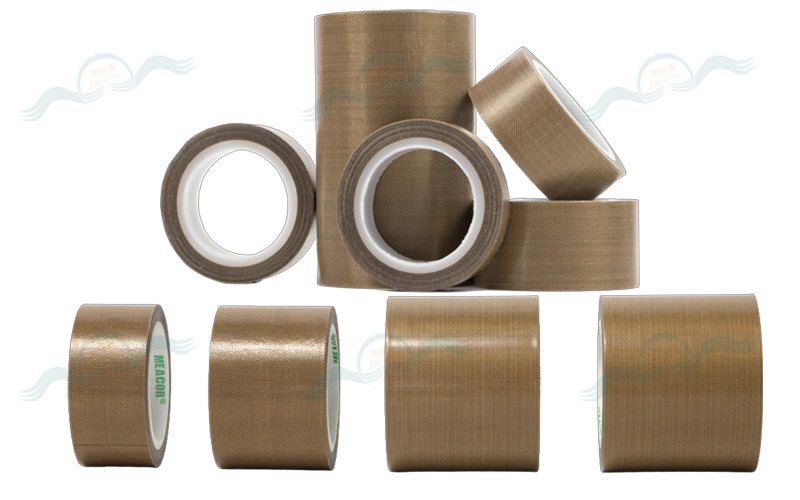
- Using standard tape for anti-static applications: Standard brown tape has no anti-static function — always select the dedicated black coating grade
- Selecting thick fiberglass tape for frequent removal applications: Thick fiberglass tape is difficult to remove and leaves adhesive residue — select pure film tape instead
Ⅶ. Quick Selection FlowchartDetermine maximum long-term operating temperature (primary criterion)
Select substrate type (pure film / fiberglass / Kevlar)
- Match adhesive type (silicone / acrylic)
- Determine thickness specification (thin / thick)
- Consider special requirements (anti-static / food-grade / corrosion-resistant)
- Verify certifications and standards (industry-specific requirements)
Summary
PTFE high-temperature tape selection must follow the principle of “operating conditions determine parameters; parameters determine product selection.” First establish temperature and load capacity as the two primary criteria, then refine the selection based on substrate type, adhesive type, thickness, and special functional requirements, and validate against the specific industry application scenario. Small-scale testing is strongly recommended prior to bulk deployment to ensure the product is fully compatible with the actual operating conditions.