What Are the Specific Applications of PTFE Teflon Tape in Automotive Manufacturing?
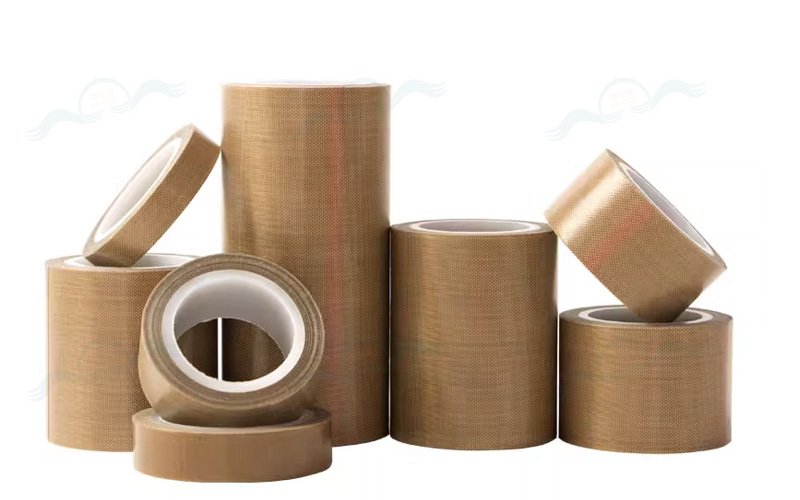
PTFE tape, leveraging its heat resistance (260°C+), chemical corrosion resistance, low friction coefficient, excellent electrical insulation, and clean removal (no adhesive residue), is widely applied throughout the entire automotive manufacturing process — covering powertrain, electrical, body, braking, and interior systems.
Ⅰ. Powertrain & Transmission System Applications
| Application Scenario | Specific Use | Core Advantage |
|---|---|---|
| Engine Sealing | Fuel line joint sealing, cylinder head gasket auxiliary sealing, oxygen sensor airtight sealing | Prevents fuel/oil leakage; withstands engine heat; strong chemical inertness |
| Friction Reduction | Throttle body, timing system, transmission gear shift mechanism lubrication | Low friction coefficient; eliminates noise; extends component service life |
| Thermal Protection | Exhaust pipe heat insulation wrapping, turbocharger pipeline protection | Heat resistant; prevents thermal radiation damage to surrounding components |
| Wire Harness Protection | Engine compartment high-voltage/high-temperature wire harness bundling and insulation | Heat and oil resistant; prevents wire harness aging and short circuits |
Ⅱ. Electrical & Electronic System Applications
High-Voltage Wire Harness Insulation (Core Application for New Energy Vehicles)
- Wrapped around individual high-voltage conductor cores to form a waterproof insulation barrier; withstands 600V/900V high voltage
- Cable protection in high-temperature zones of battery packs; 260°C temperature resistance prevents thermal runaway hazards
- Wire harness fixation inside Electronic Control Units (ECU) and Battery Management Systems (BMS)
Sensor & Connector Protection
- ABS anti-lock braking system sensor wire harness insulation; brake sensor connection point protection
- Oxygen sensor and temperature sensor conductor insulation; prevents signal interference
- Radar and proximity sensor (blind spot monitoring) cable protection
Battery System Applications (Electric Vehicles)
- Battery tab corrosion protection; isolates electrolyte contact
- Inter-module insulation in battery packs; prevents short circuits
- Motor winding insulation; withstands high temperatures during motor operation
Ⅲ. Body Manufacturing & Coating Process Applications
High-Temperature Masking for Spray Painting
- Protects non-spray areas during curved body surface coating — door/window edges, headlight mounting areas
- Precise masking during powder coating, oven baking, and electroplating; no residue, no shrinkage
- Withstands 200°C+ continuous temperatures; suitable for baking processes; no substrate damage upon removal
Assembly Assistance
- Protects sensitive areas during body welding; prevents weld spatter adhesion
- Acts as an isolation layer during glass installation; prevents adhesive bonding to metal surfaces
- Prevents friction wear at metal-to-plastic component interfaces; eliminates assembly gap noise
Ⅳ. Braking & Chassis System Applications
| Application Scenario | Specific Use | Core Advantage |
|---|---|---|
| Brake Line Sealing | ABS interconnecting hose joint sealing; wheel pulse sensor hose sealing | Prevents brake fluid leakage; high-pressure resistant; chemically stable |
| Chassis Component Protection | Suspension system rubber bushing anti-wear; shock absorber piston rod protection | Wear resistant; low friction; extends component service life |
| Brake System Noise Reduction | Brake disc backing plate anti-friction noise; brake pad shim auxiliary fixation | Eliminates brake “squealing”; improves NVH performance |
Ⅴ. Interior & Comfort System Applications
NVH Noise Reduction (Abnormal Noise Elimination)
- Door weatherstrip-to-body contact points; prevents friction noise during driving over rough surfaces
- Interior panel clips, A/B pillar trim edges; reduces assembly gap noise
- Electric sliding door cable/rail protection; reduces friction damage and noise
Interior Assembly
- Dashboard component fixation; prevents thermal expansion-induced loosening
- Seat heating element insulation protection; prevents short circuits
- HVAC duct sealing; prevents airflow leakage affecting cooling/heating efficiency
Ⅵ. Other Manufacturing Process Applications
Rubber Component Production
- Serves as isolation medium during automotive weatherstrip and O-ring vulcanization molding; prevents mold adhesion
- During co-vulcanization of silicone rubber and metal inserts; prevents metal oxide layer contamination of rubber
Specialized Process Assistance
- Replaces release agents during glass fiber reinforced plastic (FRP) component molding; leaves no residue
- Welding fixture protection; prevents metal adhesion; extends fixture service life
- Coating equipment roller wrapping; prevents paint adhesion; improves coating quality
Ⅶ. New Energy Vehicle Exclusive Application Highlights
- Three-Electric System Insulation: Electrical isolation between battery, motor, and electronic control high-voltage components; ensures high-voltage safety
- Thermal Management Optimization: Battery pack thermal runaway protection; prevents heat propagation
- Lightweight Design: Ultra-thin profile (0.08–0.18 mm) provides reliable protection without adding weight
- Fast Charging System Protection: Withstands instantaneous high temperatures generated during fast charging; protects charging interfaces and wire harnesses
Application Summary
PTFE tape plays multiple roles in automotive manufacturing — sealing expert, insulation guardian, friction eliminator, thermal protection shield, and process facilitator — delivering high-performance properties that meet the stringent safety, durability, and comfort requirements of modern vehicles, especially new energy vehicles. As automotive technology advances toward electrification and intelligent systems, PTFE tape applications will continue to expand, cementing its status as an indispensable key material in automotive manufacturing.