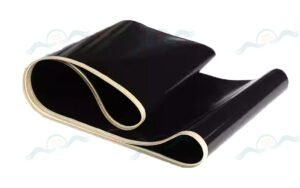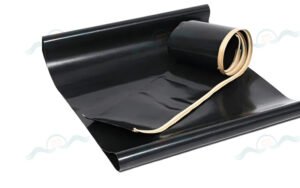
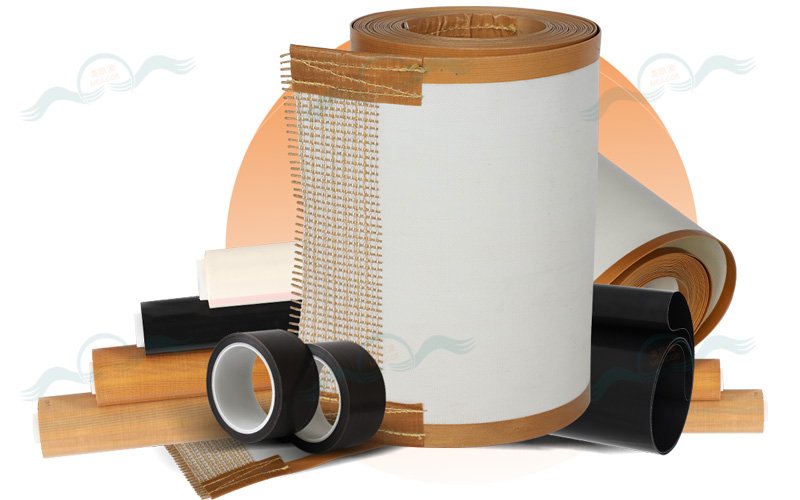
Nano-Modification Technology Applied — Wear Life of PTFE High-Temperature Fabric Significantly Extended
Nano-modification technology introduces nano-scale reinforcing phases into the PTFE high-temperature fabric substrate or coating to construct a “micro-reinforcement skeleton,” achieving 3–10× improvement in wear resistance and extending service life from the traditional 8,000 hours to 15,000–28,000 hours — while fully retaining PTFE’s inherent core advantages of high-temperature resistance (-196°C to 360°C), low friction (≤ 0.05), and chemical corrosion resistance.
Ⅰ. Core Modification Technologies & Mechanisms
1. Nano-Filler Composite Modification (Mainstream Approach)
| Nano-Filler Type | Typical Loading | Wear Resistance Improvement | Action Mechanism |
|---|---|---|---|
| Nano-SiO₂ | 3–5 wt% | 2–3× wear resistance improvement | Mohs hardness 7; forms anti-scratch “skeleton”; suppresses PTFE molecular chain slippage |
| Nano-Al₂O₃ | 3–5 wt% | 3–4× wear resistance; 2.3× hardness improvement | High hardness (1,500 HV); enhances matrix compressive strength by 30%; disperses friction stress |
| Nano-Silicon Carbide | 5–8 wt% | 5× or more wear resistance improvement | Mohs hardness 9.2; ultra-high thermal conductivity; prevents localized high-temperature degradation |
| Graphene / Graphene Oxide | 1–5 wt% | Wear rate reduced by 84.97%; friction coefficient reduced to 0.0763 | 2D platelet structure forms continuous lubricating film; enhances interfacial bonding |
| MXene (Ti₃C₂Tₓ) | 2–5 wt% | Dual improvement in wear resistance + thermal stability | Layered structure suppresses crack propagation; surface functional groups enhance interfacial compatibility |
Key Breakthrough: Surface modification techniques (including amination and silane coupling agent treatment) combined with ultrasonic dispersion technology resolve nano-filler agglomeration, achieving uniform distribution and improving interfacial bonding strength by 40%.
2. Nano-Coating Surface Modification
- Nano-Ceramic Composite Coating: Sprayed 50 nm Al₂O₃/TiO₂ composite coating; wear resistance improved by 150% (ASTM D4060 testing); corrosion rate reduced to 0.02 mm/year
- Gradient Nano-Structure Design: High-hardness nano-ceramic surface layer + transition layer + PTFE matrix; surface layer hardness reaching HV 0.3/15 650; service life extended to 15,000 hours in food processing conveyor belt applications
- Core-Shell Nano-Particles: MXene@PTFE core-shell composite particles suppress MXene oxidation; achieving synergistic optimization of lubricity and wear resistance
3. Fiber Interface Nano-Modification
- Plasma Surface Activation: Increases fiber surface energy; enhances adhesion with PTFE coating; reduces delamination wear
- Electrospun Nanofiber Composite: Forms nano-fiber reinforcement layer on fiberglass substrate surface; tensile strength improved by 35%; interlaminar shear strength improved by 40%
Ⅱ. Preparation Process & Key Control Parameters
Substrate Pre-Treatment Fiberglass/aramid fiber substrate cleaning → sandblasting/phosphating → silane coupling agent treatment → drying (improves coating adhesion by 30%) Plasma surface modification: 3.0 kV voltage treatment converts PTFE film from milky white to transparent while maintaining nano-scale surface topography
Nano-Composite Coating Preparation Nano-filler → surface modification → ultrasonic dispersion → blending with PTFE emulsion → coating (impregnation/spraying) → gradient temperature sintering (220°C optimal) → cooling and setting Key parameters: nano-filler particle size ≤ 50 nm; PTFE resin particle size ≤ 5 μm; curing temperature 220°C — achieving a laboratory-record wear loss of only 3.1 mg
Post-Treatment Optimization
- Double-sided symmetrical coating + high-temperature calendering: improves surface flatness; reduces friction coefficient by 10–15%
- Radiation cross-linking treatment: increases PTFE molecular chain cross-link density; extends wear life by 50%
Ⅲ. Performance Improvement Data & Application Cases
1. Quantified Performance Improvements
| Performance Indicator | Traditional PTFE Fabric | Nano-Modified PTFE Fabric | Improvement |
|---|---|---|---|
| Wear Cycles | 3,000–5,000 cycles | 15,000–25,000 cycles | 5× improvement |
| Wear Rate | 1.5×10⁻⁶ mm³·N⁻¹·m⁻¹ | 2.3×10⁻⁸ mm³·N⁻¹·m⁻¹ | 84.97% reduction |
| Service Life (food machinery) | 8,000 hours | 15,000 hours | 87.5% improvement |
| Service Life (650°C environment) | 1,000 hours | 2,800 hours | 180% improvement |
| Surface Hardness (HV) | 280 | 650 | 2.3× improvement |
2. Breakthrough Application Cases
- Photovoltaic Laminating: Nano-SiO₂ modified PTFE fabric used continuously for 12,000 hours in 200°C laminating environments without damage — 4× longer than traditional products; module production cost reduced by 15%
- Chemical Desulfurization: Nano-silicon carbide modified PTFE filter bags achieve 3-year wear life in pH = 2 acid environments — 4× longer than traditional rubber linings; maintenance downtime reduced by 60%
- Food Baking: Gradient nano-coating PTFE conveyor belts operate continuously at 300°C for 8,000 hours with no surface scratching, no material adhesion, and cleaning cycle extended by 3×
- Semiconductor Packaging: Graphene-modified PTFE high-temperature fabric maintains low friction coefficient (0.04) at 350°C with a service life of 18,000 hours — meeting high cleanroom purity requirements
Ⅳ. Technical Advantages & Development Trends
Core Advantages
- Performance-Cost Balance: Wear life improved 3–10×; unit operating cost reduced by 60–80%
- Functional Integration: Simultaneously improves wear resistance, thermal conductivity, and anti-static performance
- Environmental Responsibility: Reduces material replacement frequency; lowers VOC emissions; compliant with EU PFAS restriction directives
Future Trends
- Multi-Nano Synergy: Graphene + PEEK + ceramic nano-particle ternary composite targeting 10× wear resistance improvement
- Intelligent Responsive Materials: Development of temperature-sensitive color-changing nano-coatings for high-temperature early warning functionality
- Fluorine-Free Alternatives: Nano-reinforced aramid-based materials achieving 380°C temperature resistance with 89% reduction in VOC emissions
Ⅴ. Selection & Usage Recommendations
Select Filler Type Based on Operating Conditions:
- High-Temperature Heavy Load: Nano-silicon carbide + alumina composite modification
- Food & Pharmaceutical: Nano-SiO₂ modification (non-toxic)
- Electronics & Semiconductor: Graphene modification (high cleanliness + thermal conductivity)
Key Parameter Controls:
- Nano-filler loading controlled at 3–8 wt% (excessive loading reduces flexibility)
- Coating thickness 8–10 μm (balances wear resistance with flexibility)
- Select products from reputable manufacturers to ensure uniform nano-filler dispersion
Nano-modification technology has become the core pathway for advancing PTFE high-temperature fabric to higher performance levels. Through precise material design and process control, order-of-magnitude improvements in wear life can be achieved — providing more reliable and more economical high-temperature wear-resistant solutions for industrial applications.