While both PTFE and PET tapes offer high-temperature resistance and insulation, they differ significantly in construction and performance limits. PTFE tape generally offers far superior characteristics compared to PET tape.
- Material and Construction
PTFE Tape: Made from fiberglass cloth impregnated with polytetrafluoroethylene (PTFE) on one side and coated with high-temperature silicone adhesive on the other.
PET Tape: Constructed by coating a polyester (PET) film on both sides with acrylic adhesive.
- Characteristics of PTFE Tape
PTFE tape is designed for extreme industrial environments and offers the following advantages:
Temperature Resistance: Operates from -196°C to 300°C with excellent weather and aging resistance.
Surface Properties: Smooth, non-stick surface that is easy to clean of oil, stains, or adhesives.
Durability: Low friction, high wear resistance, corrosion resistance, and high insulation resistance. It can be reused and is easy to replace.
Convenience: It can be applied directly to large flat or curved surfaces, eliminating the need for specialized PTFE spray-coating processes.
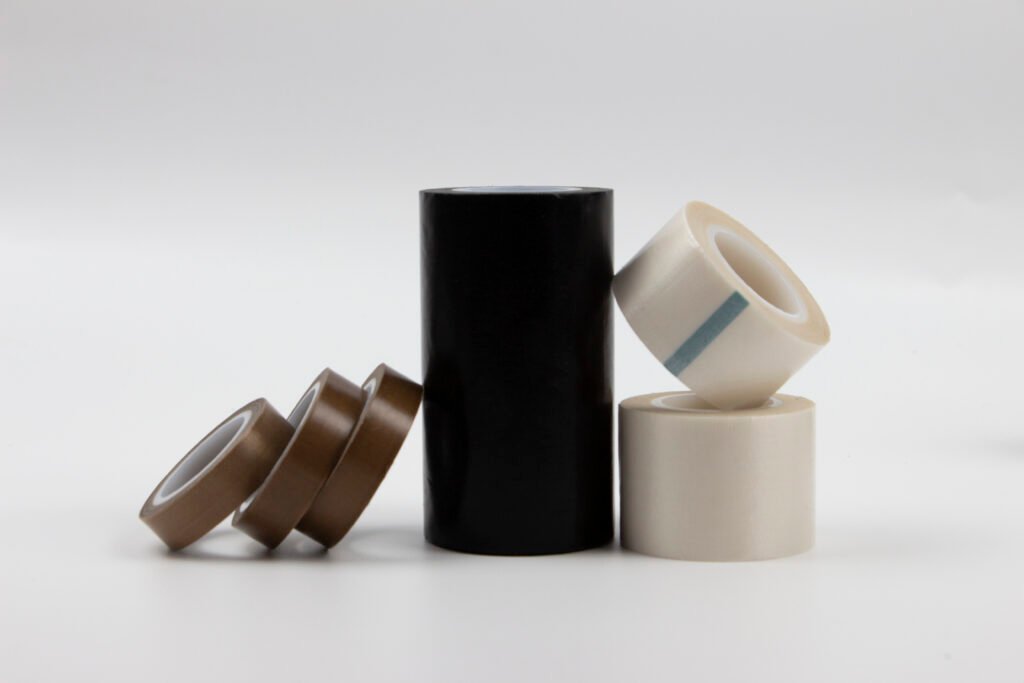
Specifications: Standard rolls are 1 meter wide and 50 meters long. Common colors include brown, black, and white (or gray after special treatment).
- Characteristics of PET Tape
PET tape is a versatile adhesive solution with wide-ranging compatibility:
Temperature Resistance: Long-term resistance of 100–120°C; short-term resistance of 140–200°C.
Stability: Features excellent dimensional, thermal, and chemical stability.
Adhesion: Good initial tack and holding power. It bonds well to plastics, rubber, and nameplates.
Specifications: Generally available in transparent, black, or green. Common thicknesses range from 0.05mm to 0.2mm, making it easy to die-cut.