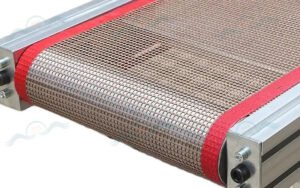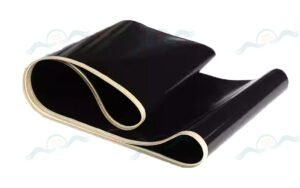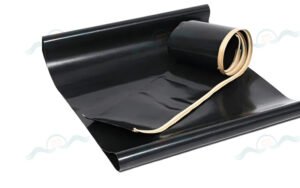
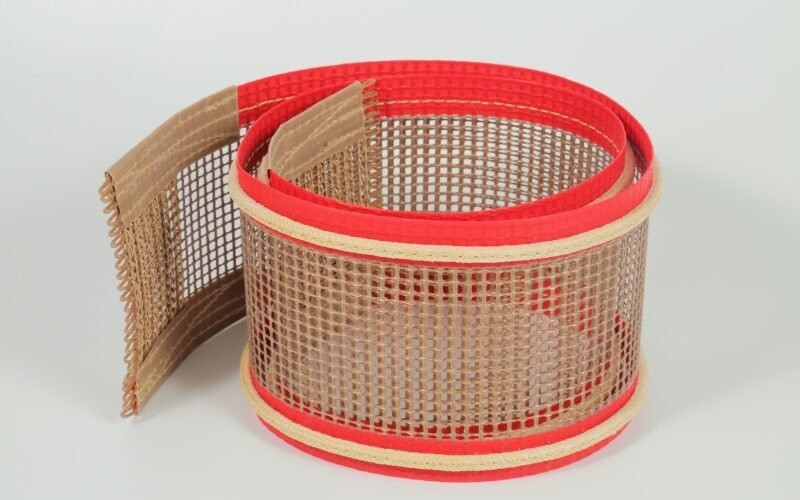
Teflon mesh conveyor belts are manufactured by impregnating fiberglass raw materials with PTFE resin. Due to their stability, durability, and high cost-effectiveness, they are widely used across various industries. Below are the primary application examples and maintenance guides for Teflon mesh belts.
- Primary Applications
Food & Packaging: Food dryers, vegetable and seafood dehydration dryers, non-woven fabric dryers, and heat-shrink film packaging equipment.
Industrial Drying & Sterilization: Glass drying machinery, and sterilization/drying processes in industries such as LED, agriculture, apparel, chemical fiber, printing and dyeing, pharmaceuticals, electronics, powder metallurgy, biotechnology, and furniture manufacturing.
Specialized Processing: High-frequency drying, microwave drying, freezing and thawing of various foods, baking, heat-shrinking of packaged items, drying of moisture-containing goods, and rapid drying of solvent-based inks.
Textiles: Printing drying, bleached/dyed cloth drying, fabric shrinkage drying, and Teflon mesh conveyor belts for non-woven fabric drying tunnels and rooms.
- Troubleshooting Belt Slippage
Slippage is a common issue during operation. Here is how to handle it:
Insufficient Tension: If the tension at the drum is too low, the belt will slip, especially during startup. Solution: Adjust the tensioning device to increase the friction between the belt and the drive shaft.
Bearing Damage: Damaged idler bearings or roller bearings that fail to rotate can increase resistance. This is often caused by excessive dust accumulation at the machine tail. Solution: Perform timely maintenance and replace damaged or inflexible components.
Startup Speed: Starting the motor too quickly can cause slippage. Solution: Use a slow-start method or a gear reducer to effectively overcome this.
Overloading: If the load exceeds the belt’s capacity, it will slip. In this case, slippage actually serves as a protective measure for the motor to prevent it from burning out.
Low Friction: Moisture or humid environments can reduce friction between the drive shaft and the belt. Solution: Apply PVC adhesive tape to the roller to improve grip.
- Maintenance and Care
Regular maintenance maximizes the value of the belt, reduces costs, and increases production efficiency.
Surface Inspection: Regularly check if the belt surface is flat and free of debris or oil stains.
Drive Alignment: Periodically check the connection between the belt and the drive/driven wheels for looseness and adjust as needed.
Elongation Check: Monitor the belt for any signs of stretching or elongation.
Lubrication: Ensure that the drive and driven wheels rotate normally; add lubricating oil regularly.
Edge & Joint Integrity: Inspect the belt edges and joints to prevent damage or peeling caused by belt misalignment (tracking issues).
Cleaning: Regularly wipe the belt surface with alcohol or xylene to maintain cleanliness.
Correct Loading: Wear is often caused by improper material placement. Ensure materials are loaded strictly according to industrial regulations.