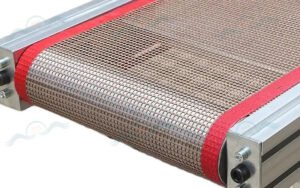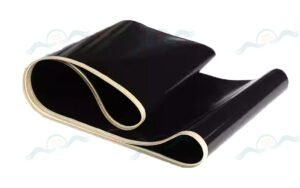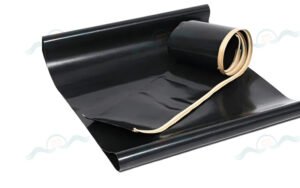
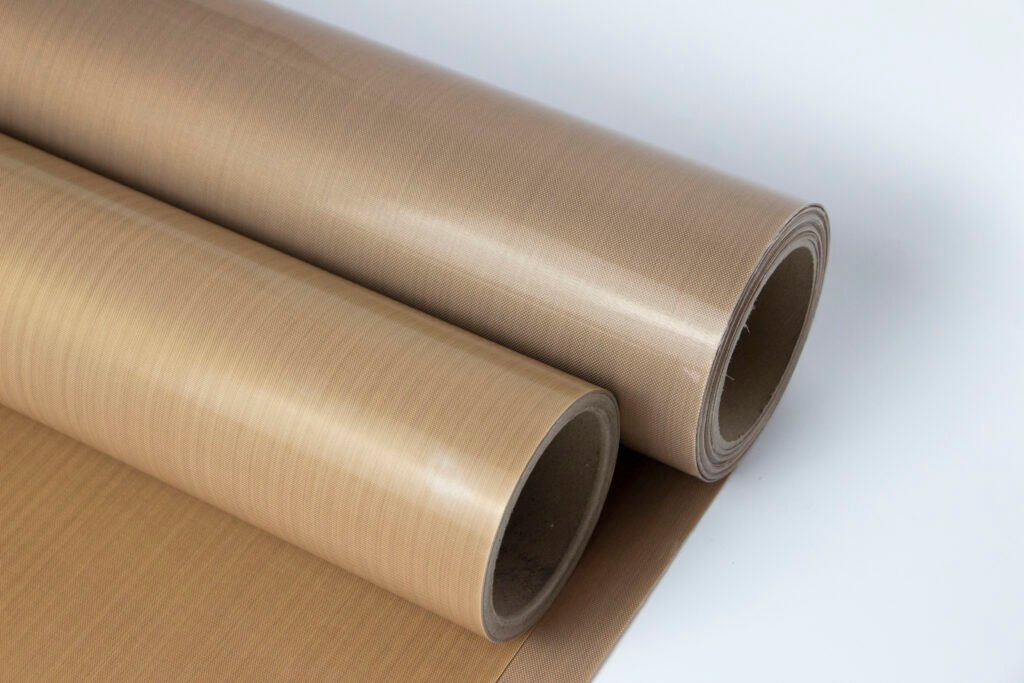
With its all-dimensional parameter adjustability and modular functional customization, Customized PTFE High-Temperature Cloth effectively addresses the needs of non-standard industrial scenarios. it serves as an ideal solution for equipment adaptation, extreme operating conditions, and specialized process requirements.
I. Core Customization Capabilities & Adaptability
1. Dimensional Customization (Solving Non-standard Equipment Sizing)
| Dimension | Adjustment Range | Value in Non-standard Scenarios |
|---|---|---|
| Thickness | 0.05–1.5mm (Standard: 0.08–1.0mm) | Adapts to specific pressure/heat transfer needs (e.g., 0.35mm breathable cloth for PV lamination). |
| Width | 10mm – 4200mm | Matches ultra-wide or ultra-narrow equipment; reduces splicing loss and improves stability. |
| Length | Cut-to-length (up to hundreds of meters) | Avoids unnecessary joints in long equipment, reducing failure risks. |
| Shape | Die-cutting, punching, edge sealing | Meets requirements for non-planar equipment and special installation structures. |
2. Functional Customization (Solving Non-standard Operating Conditions)
| Function Type | Customization Options | Typical Application |
|---|---|---|
| Surface Treatment | Single/Double-sided coating, reinforced non-stick, wear-resistance hardening. | Food baking (FDA certified), composite molding ($Ra \le 0.8\mu m$). |
| Electrical Properties | Anti-static (Surface resistance $\le 10^9\Omega$), conductive, insulating. | SMT electronics, explosive environments, high-voltage insulation. |
| Mechanical Properties | High-strength base fabric, tear-resistant, low-elongation. | High-speed belts, heavy machinery protection, high-frequency vibration. |
| Special Functions | Porous coating, adhesive backing, magnetic adsorption, flame retardant (UL94 V0). | PV cell lamination (yield increased by 15%), magnetic conveyors, welding curtains. |
II. Case Studies in Non-standard Industrial Scenarios
Photovoltaic & New Energy: Developed a 0.35mm porous coated cloth for a PV enterprise to solve bubble issues during lamination, increasing yield by 15%.
Metallurgy Industry: Customized a 0.45mm heavy-duty cloth for continuous casting machines to withstand constant heat pressing above 260°C while maintaining dimensional stability.
Electronics Manufacturing: Provided anti-static coated cloth (resistance $\le 10^9\Omega$) for SMT lines to prevent electrostatic damage to sensitive components.
Chemical Sector: Engineered corrosion-resistant wrapping cloth for specialized pipelines to withstand strong acids and alkalis where standard materials failed.
III. Advantages and Implementation Path
1. Core Advantages
Precision Matching: Avoids “over-engineering” or “under-performing,” reducing cost waste.
Performance Optimization: Specifically strengthens key properties to boost equipment efficiency and product quality.
Problem Solving: Overcomes unique challenges such as extreme dimensions or unique functional needs.
2. Implementation Path
- Requirement Assessment: Define dimensions, temperature, pressure, media contact, and special functions.
- Solution Design: Material selection, parameter setting, and process design.
- Prototype Testing: Sample production and performance verification to ensure reliability.
- Mass Production: Scale production based on the verified solution to ensure consistency.
IV. Constraints and Considerations
Operational Boundaries:
Temperature: Standard range -70°C to 260°C; short-term 300°C; specialized customizations can reach 360°C+.
Size Limits: Ultra-wide (>4200mm) or ultra-thick (>1.5mm) may require specialized processes, increasing costs.
Critical Notes:
Select manufacturers with full customization capabilities to ensure stable quality control.
Provide detailed operating parameters to prevent customization deviations.
Prioritize sample testing to resolve compatibility issues early.
Conclusion
Customized PTFE High-Temperature Cloth precisely matches diverse industrial needs through its modular design. From PV lamination to metallurgical casting, it has been proven effective in solving sizing and environmental challenges that standard products cannot handle. Identifying a manufacturer with robust technical expertise is the key to successful application in non-standard scenarios.