PTFE Teflon Conveyor Belts — Complete Product Guide
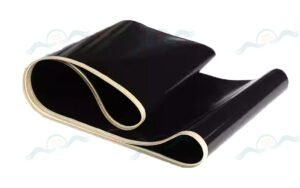
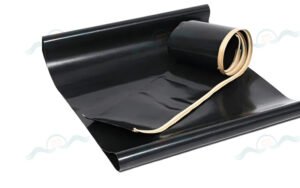
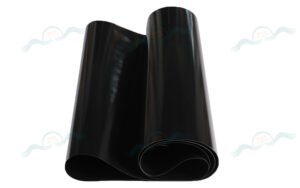
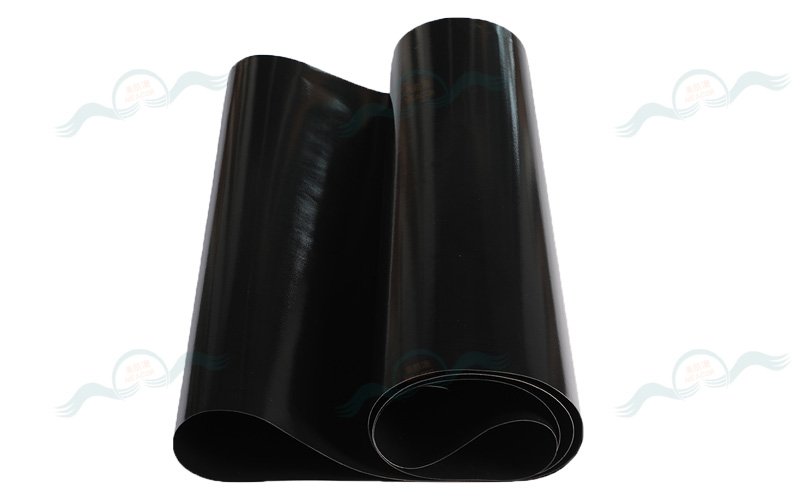
PTFE conveyor belts are also known as Teflon conveyor belts, PTFE high-temperature conveyor belts, fluoropolymer conveyor belts, and similar names. PTFE conveyor belts are divided into two main types: PTFE mesh conveyor belts and PTFE solid belts (flat belts). Both types are manufactured using advanced imported looms, with high-strength imported fiberglass yarn and Kevlar (aramid fiber) as the reinforcing substrate — woven into a high-strength mesh base fabric, then coated with premium-quality PTFE (Teflon) resin.
- PTFE Mesh Belts: Specifications defined by mesh aperture size — primary options include 1×1 mm, 2×2.5 mm, 4×4 mm, and 10×10 mm; further classified as single-weft or double-weft based on warp and weft yarn configuration
- PTFE Solid Belts: Specifications defined by thickness — maximum thickness up to 1.0 mm; minimum thickness as thin as 0.08 mm
Key Performance Characteristics
1. Extreme Temperature Resistance & Aging Resistance
Operating range: -196°C to 300°C; excellent weatherability and aging resistance. After 200 days at 250°C: no strength loss, no weight loss. After 120 hours at 350°C: weight loss only approximately 0.6%. At -180°C: full original flexibility retained.
2. Outstanding Non-Stick Performance
Virtually nothing adheres to the surface. Oil stains, pastes, resins, coatings, and virtually all adhesive substances can be effortlessly removed.
3. Chemical Corrosion Resistance
Resists strong acids, strong alkalis, aqua regia, and a wide range of organic solvents.
4. Dimensional Stability & High Mechanical Strength
Elongation coefficient less than 5‰; excellent dimensional stability; high tensile strength and good mechanical properties.
5. Flex Fatigue Resistance
Suitable for use with smaller pulley diameters.
6. Chemical Resistance & Non-Toxicity
Resistant to virtually all chemical agents; completely non-toxic.
7. Flame Retardancy
Inherently fire-resistant and flame-retardant.
8. Air Permeability
Open mesh structure reduces heat source energy consumption and improves drying efficiency.
Application Scenarios
PTFE Mesh Conveyor Belts — excellent breathability through the open mesh structure; widely used in:
Textile printing and dyeing, print drying guide belts, screen printing, UV curing systems, UV-series photo-curing machines, offset printing machines, open-width relaxation dryers, nonwoven fabric dryers, high-frequency dryers, food baking machine guide belts, temperature-controlled drying rooms, rapid drying of solvent-based inks, and general moisture-content material drying equipment.
PTFE Solid Belts — high-temperature resistance, low surface friction coefficient, excellent electrical insulation; widely used in:
Garment fusing/bonding machines, garment printing and dyeing machinery, and similar applications.
Splice Joint Methods
PTFE Mesh Belts: Bull-nose (lace) joints (primary method); steel clip fastener joints; Kevlar fabric joints
PTFE Solid Belts: Butt joints, overlap joints, skived overlap joints, steel clip fastener joints
Edge Binding Styles
PTFE skived film edge binding; Kevlar fabric edge binding; PTFE fabric edge binding
Note on Extra-Wide Mesh Belts: For equipment requiring extra-wide belts, double-weft construction is recommended.
Methods to Extend PTFE Conveyor Belt Service Life
1. Improve Concave Transition Claw Sprockets
Field experience confirms that wire rope-type conveyor belts have insufficient lateral strength — at startup, claw sprockets create excessive localized stress on the belt, causing tearing. Converting claw sprockets to drum-type rollers completely resolves this issue.
2. Improve Industrial Conveyor Belt Material Feed Hoppers
Improving feed hoppers is one of the most effective measures for preventing premature belt damage:
- Redesign transfer point hoppers to increase foreign object clearance capacity by 2.5× — preventing large objects from jamming between the hopper wall and belt during conveying, reducing the risk of belt tearing
- Install guide skirt boards at feed hopper discharge points with progressively increasing clearance in the belt travel direction — eliminates coal/material jamming between belt and guide boards
- For hoppers with large material drop height, install cushioning buffer baffles inside to prevent direct material impact on the belt surface