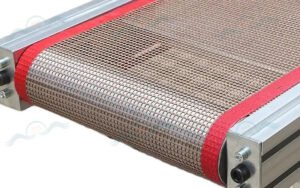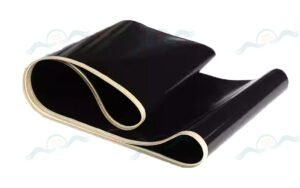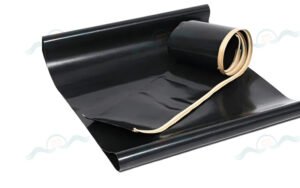
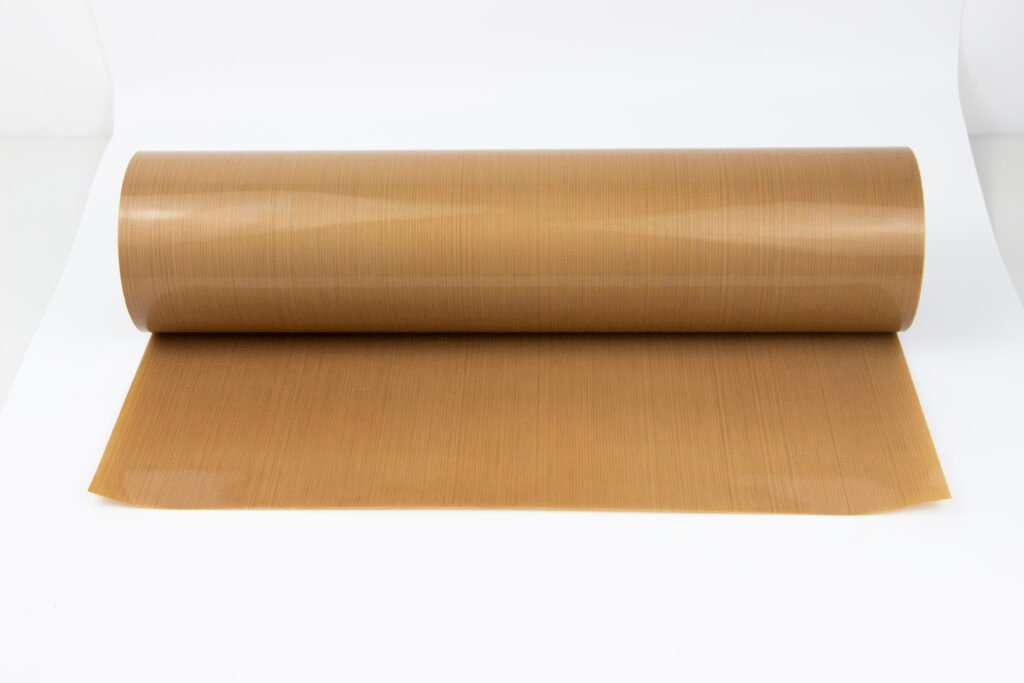
As the “invisible guardian” of industrial high-temperature protection, PTFE high-temperature fabric (also known as Teflon fabric) is experiencing a massive explosion in market demand due to its exceptional thermal resistance (-196°C to 360°C), chemical inertness, non-stick properties, electrical insulation, and low friction coefficient. By 2025, China’s market reached 13.92 billion RMB, while the global market stood at approximately $193 million USD. With a projected CAGR of 6.4% from 2026 to 2032, the global market is expected to surpass $296 million USD by 2032. The industry is rapidly shifting from traditional applications toward high-value precision manufacturing, characterized by accelerated technological upgrades, expanding application scenarios, and deepening domestic substitution.
I. Core Performance & Product Matrix: The Technical Bedrock of Industrial Demand
PTFE high-temperature fabric is composed of polytetrafluoroethylene (PTFE) integrated with substrates like fiberglass or Kevlar through dipping and coating processes.
| Product Category | Market Share | Core Characteristics | Typical Applications |
|---|---|---|---|
| Varnished Fabric | 34.2% | High flexibility, crease resistance | Seals, electrical insulation, aerospace |
| Fiberglass Fabric | 32.9% | High strength, dimensional stability | Solar lamination, food baking, heat sealing |
| Adhesive Tape | 32.9% | Strong adhesion, easy processing | Electronics packaging, automotive, pipe anti-corrosion |
Key Performance Advantages:
Extreme Temperature Adaptation: Maintains strength after 200 days at 250°C; weight loss is only 0.6% after 120 hours at 350°C.
Chemical Stability: Resistant to strong acids, alkalis, and organic solvents (excluding molten alkali metals and fluorine).
Low Friction: Coefficient of 0.05–0.1, ideal for self-lubrication.
Electrical Insulation: Dielectric constant < 2.6, supporting 5G high-frequency signal transmission.
Safety: FDA food-grade compliant, no harmful emissions.
II. Demand Explosion: Multi-Sector Market Expansion
- Shifting Application Structure
The 2025 market distribution highlights a structural upgrade toward high-end sectors:
| Application Field | Market Share | Growth Highlights |
|---|---|---|
| Food Industry | 38.7% | Baking conveyors, tray liners; driven by food safety upgrades. |
| Semiconductors | 29.4% | High-frequency CCLs, IC packaging, advanced bonding; >20% annual growth. |
| Environmental | 14.2% | Desulfurization, industrial dust removal; surge in anti-static demand. |
| New Energy | 11.5% | Lithium battery separators, heat-press molding; grows with EV adoption. |
| Aerospace | 6.2% | Driven by C919 mass delivery and demand for aviation-grade seals. |
2. Four Major Growth Engines
New Energy Revolution: Global PV installations reached 370GW in 2025, driving an 18% increase in lamination fabric demand. In lithium batteries, it is used for tab welding protection and separator heat-setting, with demand growing at >25% annually.
Advanced Manufacturing: Advanced packaging (e.g., CoWoS, SoIC) accelerates the adoption of temporary bonding tapes, with a projected 2026 market of 2.78 billion RMB. In automotive, PTFE-Silicone hybrid fabrics have extended mold life to 3 months and reduced defect rates from 15% to <2%.
Environmental Policy: Carbon neutrality targets drive upgrades in industrial flue gas treatment, increasing demand for anti-static fabrics in desulfurization towers.
Safety Standards: New regulations (e.g., EU 10/2011) favor PTFE fabric as the primary non-toxic, non-stick material for food contact.
III. Technological Innovation: Building Competitive Barriers
1. Breakthroughs in Materials and Processes
Composite Trends: New materials like Silicone-PTFE double-sided fabric, graphene-modified PTFE, and aerogel composites achieve synergy between anti-slip, non-stick, and lightweight properties.
Production Efficiency: 2.4-meter wide biaxial stretching lines have increased speeds to 25m/min, with thickness uniformity controlled within ±1.5μm.
Green Manufacturing: Third-generation microporous gradient structures are expected for mass production by 2026, with green sintering processes reaching industrialization by 2028.
2. Functional Customization
Anti-static Series: Black fabrics (surface resistance $10^6–10^9 \Omega$) are used in IC packaging to prevent electrostatic discharge.
Ultra-thin Precision: 0.05mm plain weave fabrics serve as insulation for 5G high-frequency Copper Clad Laminates (CCL).
Smart Integration: High-temperature fabrics with embedded sensors for real-time monitoring of temperature and pressure in aero-engines and EV battery management.
IV. Challenges & Strategic Response
Despite a bright outlook, the industry faces three challenges:
- Cost Pressure: Raw PTFE prices fluctuated by 42% in 2023, forcing companies to optimize processes.
- Technical Barriers: Core high-end technologies are still held by international brands. Domestic firms must increase R&D (recommended >5% of revenue).
- Standardization: The industry lacks a unified certification system aligned with international standards.
Strategies:
Vertical Integration: Expand into upstream PTFE resin production and downstream customized solutions.
Industry-Academia Collaboration: Partner with universities to shorten the transition cycle from lab to market.
Global Layout: Establish production bases in Southeast Asia and Europe to bypass trade barriers.
Conclusion
The PTFE high-temperature fabric industry is in a “Golden Age.” As new energy, advanced manufacturing, and environmental protection continue to evolve, the importance of PTFE as a fundamental industrial material will only grow. Enterprises that seize the opportunity through innovation and global expansion will secure a dominant position in the high-quality development of this sector.