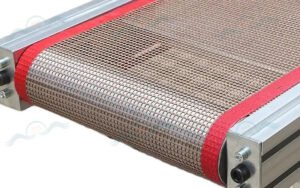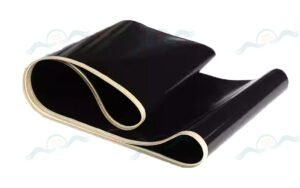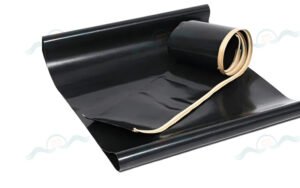
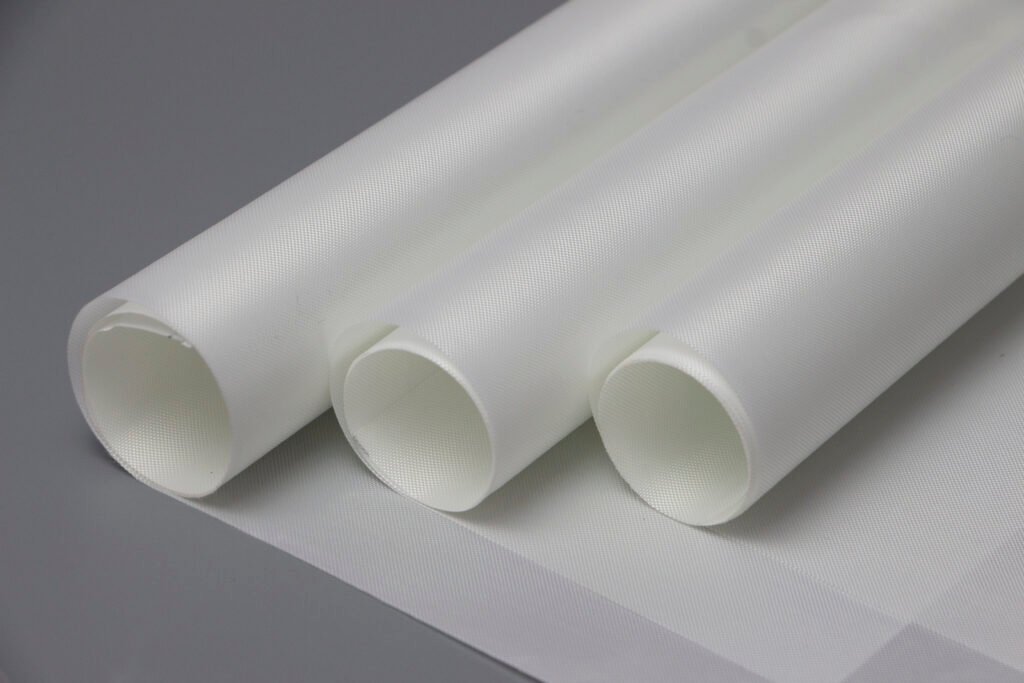
PTFE high-temperature cloth (PTFE-coated fiberglass fabric) is a highly reliable demolding solution in composite material molding. Its ultra-low surface energy and stable physical properties significantly reduce demolding resistance, minimize surface defects, enhance yield rates, and extend mold service life.
I. Core Advantages: Impact on Demolding and Yield
| Performance Dimension | Technical Specification | Impact on Demolding & Yield |
| Ultra-Low Surface Energy | Surface energy < 18 mN/m; Friction coefficient 0.05–0.1. | Near-zero adhesion prevents resin wetting, achieving “zero-stick” separation. |
| Thermal Stability | Long-term: -70°C to 260°C; Specialty: up to 360°C. | Ideal for autoclave and compression molding; strength remains stable at 250°C. |
| Chemical Inertness | Resistant to strong acids, alkalis, and organic solvents. | No reaction with resins or curing agents; prevents contamination of parts/molds. |
| Dimensional Stability | Elongation coefficient < 5‰. | Ensures high precision; prevents surface wrinkles caused by fabric deformation. |
| Mechanical Strength | Tensile strength 2000–3000 N/5cm. | Withstands high molding pressures without tearing; reduces scrap rates. |
Key Value Propositions:
- Demolding force reduced by >40%, preventing cracking or delamination during extraction.
- Reduced surface defects: Eliminates resin bonding, scratches, and pits, reducing secondary finishing.
- Mold cleaning cycles extended 5x, significantly boosting production efficiency.
II. Mechanism of Action: Achieving “Zero-Stick” Demolding
PTFE cloth ensures smooth release through three primary mechanisms:
- Physical Isolation: Acts as a flexible transition layer that completely separates the part from the mold.
- Interface Energy Control: The extremely low surface energy of PTFE ($ \gamma_s $) ensures that the work of adhesion ($ W_a = \gamma_s + \gamma_l – \gamma_{sl} $) approaches zero, causing resin to be repelled like water droplets.
- Stress Buffering: The elastic modulus matches composite materials, relieving curing shrinkage stress and reducing cracks.
III. Selection Guide: Matching Molding Processes
1. Selection by Process Type
| Molding Process | Recommended Type | Key Parameters | Application Notes |
| Autoclave | High-temp resistant (300°C+); Porous or Non-porous. | Thickness 0.25–0.35mm; Tensile strength $\ge 2500$ N/5cm. | Porous types for air venting; non-porous for complete isolation. |
| Compression | Standard (260°C); Double-sided coating. | Thickness 0.18–0.25mm; High surface smoothness. | Ensures uniform pressure distribution across the mold cavity. |
| Vacuum Infusion | Porous/Breathable; Low friction. | Air permeability 50–100 L/(m²·s). | Facilitates resin flow; prevents bonding with flow media. |
| Pultrusion | Abrasion-resistant (Kevlar reinforced). | Thickness 0.3mm; Enhanced durability. | Reduces friction with the die to extend service life. |
IV. Practical Usage Tips to Maximize Yield
- Preparation: Ensure the mold is free of residual resin or oils. Inspect the PTFE cloth for coating defects or tears before application.
- Lay-up: Lay the cloth flat without wrinkles. Use high-temperature tape to secure edges, preventing shifting under pressure.
- Process Optimization: Ensure the resin is fully cured before attempting demolding to prevent localized adhesion.
- Post-release: Peel the cloth slowly along the curvature of the part rather than pulling vertically to avoid surface damage.
V. Troubleshooting Common Issues
| Issue | Root Cause | Solution |
| Fabric texture on part surface | Fabric is too thick or surface is too rough. | Use high-smoothness double-sided coated cloth ($\le 0.2$ mm). |
| Cloth sticking to the part | Poor coating quality or over-temperature usage. | Upgrade to premium grade cloth; strictly control curing temperatures. |
| Edge cracking of the part | Excessive demolding force or stress concentration. | Use porous fabric and optimize the cooling/curing cycle. |
| Short fabric lifespan | Rough mold surfaces or sharp corners. | Polish the mold and switch to abrasion-resistant/reinforced cloth. |
VI. Conclusion & Recommendations
PTFE high-temperature cloth provides a systematic solution for composite demolding through physical isolation, interface control, and stress buffering. This leads to a 40% reduction in demolding force and can push yield rates to 99.6% or higher.
Pro-tip: For the best results, combine the use of high-quality double-sided PTFE cloth with polished or chrome-plated mold surfaces to minimize maintenance and maximize part quality.