What Are the Surface Treatment Methods for PTFE Teflon Tape?
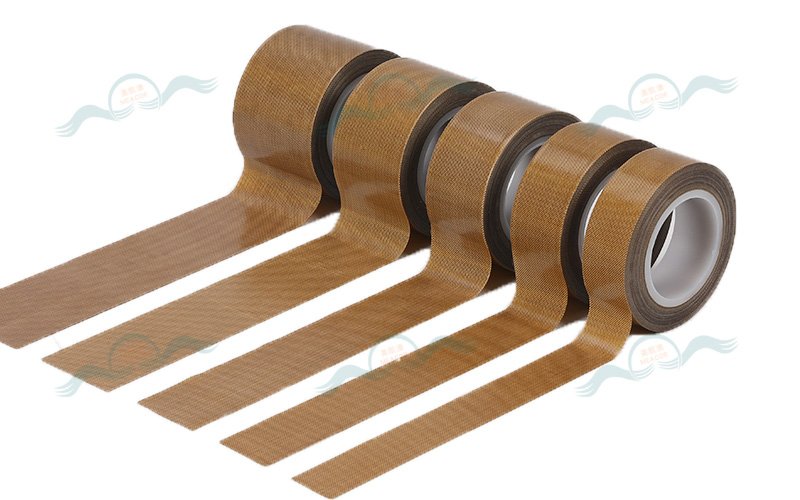
Due to its low surface energy and high chemical inertness, PTFE tape presents significant challenges for direct bonding and adhesion. Surface treatment is required to improve adhesion and bonding reliability. The mainstream methods can be categorized into three groups based on their operating principle: chemical activation, physical modification, and high-temperature/composite treatment.
Ⅰ. Core Surface Treatment Methods
1. Chemical Etching (Most Widely Used Industrially — Long-Lasting Effect)
Sodium-Naphthalene Etching: Immerse the PTFE substrate in a sodium-naphthalene solution (metallic sodium dissolved in a tetrahydrofuran + naphthalene mixture) for 5–10 minutes. This process breaks surface C-F bonds and introduces polar functional groups such as carbonyl groups, forming a roughened, chemically active surface layer.
- Effect: Surface energy raised to 50 mN/m; adhesion significantly enhanced; treatment effect durable and stable
- Characteristics: Requires strict safety precautions (highly toxic chemicals); suitable for high-precision, high-reliability bonding applications
- Other Chemical Treatments: Electrolytic reduction (reduction reaction in electrolytic solution); surface oxidation (high-temperature air/oxygen oxidation)
2. Physical Modification Methods (Eco-Friendly & Efficient — Suitable for Mass Production)
Plasma Treatment: A vacuum plasma cleaning machine or corona discharge unit bombards the surface using oxygen/nitrogen plasma, introducing polar functional groups and increasing microscopic surface roughness.
- Effect: Surface dyne value can reach 48+ dyn/cm; effective for up to 30 days after treatment
- Characteristics: No chemical residue; high automation compatibility; suitable for continuous production lines
Mechanical Abrasion: Sandblasting or shot blasting using 20–40 mesh corundum abrasive; achieves surface roughness Ra 3.2–6.3 μm, creating a mechanical interlocking surface profile.
- Effect: Improves physical adhesion; straightforward operation
- Note: Abrasive residues must be thoroughly removed to avoid interface contamination
Laser Treatment: High-precision laser ablation creates controlled micro-structures on the surface; suitable for precision components.
3. High-Temperature & Composite Treatment Methods (Targeted Enhancement)
High-Temperature Fusion Method: Brief surface melting at 380–400°C followed by rapid cooling forms a microporous structure, enhancing mechanical interlocking.
- Note: Precise temperature control is essential to prevent substrate deformation
Primer / Adhesion Promoter Treatment: Application of a specialized primer as an intermediate bonding layer to improve interfacial compatibility.
- Characteristics: Used in combination with chemical or physical treatment to improve adhesion under complex operating conditions
Ⅱ. Method Comparison & Selection Recommendations
| Treatment Method | Core Advantage | Main Disadvantage | Applicable Scenarios |
|---|---|---|---|
| Sodium-Naphthalene Etching | Strong adhesion; durable effect | Toxic reagents; safety precautions required | Precision bonding; high-reliability applications |
| Plasma Treatment | Eco-friendly; efficient; automatable | Limited effective window; high equipment cost | Mass production; continuous production lines |
| Mechanical Abrasion | Simple operation; low cost | Residue risk; moderate precision | General applications; non-precision components |
| High-Temperature Fusion | Enhanced mechanical interlocking | Difficult temperature control; deformation risk | High-temperature and wear-resistant applications |
| Primer Composite Treatment | Strong substrate compatibility; improved reliability | Additional process step; slightly higher cost | Complex substrates; harsh environment applications |
Ⅲ. General Treatment Process (Using Sodium-Naphthalene Etching as Reference)
- Degreasing & Cleaning: Wipe with acetone/ethanol to remove oil, grease, and contaminants
- Chemical Treatment: Immerse in sodium-naphthalene solution for 5–10 minutes with gentle agitation
- Rinsing & Drying: Rinse repeatedly with acetone followed by clean water; allow to dry thoroughly
- Bonding / Application: Process and apply as soon as possible after treatment to avoid surface recontamination
Ⅳ. Key Precautions
- Treatment Validity Window: Physical treatment effects (e.g., plasma) have a limited effective duration — complete bonding within 24 hours of treatment
- Safety First: Chemical treatments require full personal protective equipment (PPE) and must be performed in well-ventilated environments
- Substrate Compatibility: Different substrate materials (metal / rubber / plastic) require corresponding treatment methods — metal substrates are best treated with sandblasting + primer combination
- Dyne Value Standard: Post-treatment surface energy must reach ≥ 38 mN/m to ensure adequate surface wetting and adhesion