How to Improve the Temperature Resistance Performance of PTFE Teflon Tape?
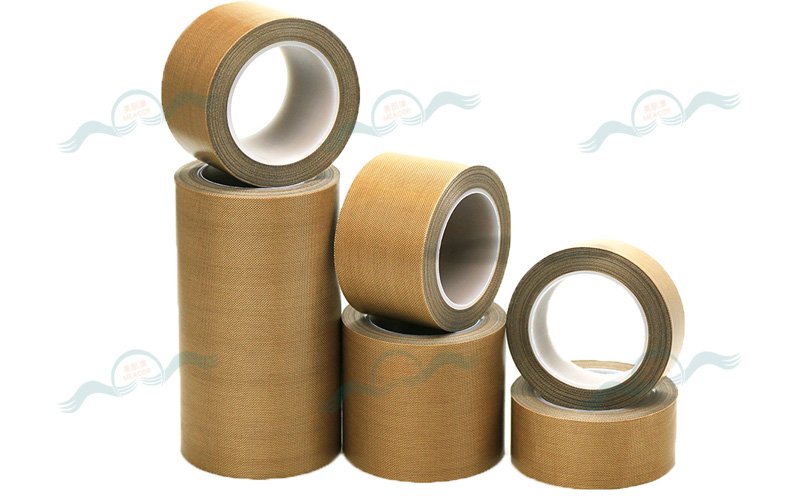
Improving the temperature resistance of PTFE tape centers on three core dimensions: substrate modification, adhesive layer upgrade, and process densification — combined with precise product selection based on application scenario. Through these approaches, continuous operating temperature can be raised from the standard 260°C to above 300°C, with short-term tolerance reaching 350°C.
Ⅰ. Substrate Reinforcement — Building a Solid Heat-Resistant Foundation
The substrate (PTFE film / reinforced base material) is the thermal core of PTFE tape. Key optimization directions:
| Optimization Direction | Specific Method | Effect & Parameters |
|---|---|---|
| Molecular Modification | PTFE molecular chain cross-link modification; introduction of high-temperature-resistant functional groups | Continuous operating range -196°C to 300°C; weight loss only 0.6% after 120 hours at 350°C |
| Reinforcing Fillers | Addition of fiberglass / carbon fiber / graphite / ceramic powder (10–30% loading) | Improves creep resistance and thermal stability; fiberglass reinforcement reduces thermal deformation; graphite filler improves thermal conductivity and heat resistance |
| Structural Upgrade | Use of biaxially oriented PTFE or fiberglass cloth reinforced substrate | Biaxially oriented structure provides greater dimensional stability; fiberglass cloth substrate achieves tensile strength of 900 N/cm with minimal thermal expansion/contraction deformation |
| Density Control | Select high-density PTFE (density ≥ 2.2 g/cm³) | Reduces internal porosity; improves thermal barrier and mechanical strength |
| Thickness Optimization | High-temperature applications: select ≥ 0.25 mm; standard applications: 0.08–0.13 mm | Increased thickness distributes thermal load and improves high-temperature durability |
Ⅱ. Adhesive Layer Upgrade — Securing High-Temperature Bond Integrity
The adhesive layer is the critical failure point at elevated temperatures and must adopt a high-temperature-rated system with precise optimization:
Adhesive Type Selection: Completely eliminate acrylic adhesive (softens and debonds above 100°C); switch to high-temperature silicone pressure-sensitive adhesive — continuous operating range 250–300°C; retains 80% of initial tack at 300°C.
Formulation Optimization:
- Raise the adhesive layer glass transition temperature (Tg) to above 265°C to prevent flow or migration at high temperatures
- Add high-temperature stabilizing additives (e.g., YY-813A) to improve thermo-oxidative stability and retard aging
- Control adhesive layer thickness at 5–50 μm; ensure uniform, bubble-free coating to prevent high-temperature delamination
Interface Treatment: Apply argon plasma treatment to the PTFE substrate (200 W / 90 s); reduce surface roughness Ra to 0.2 μm; adhesion strength improved by 300% — prevents interfacial failure at elevated temperatures.
Ⅲ. Process Densification — Strengthening Overall Performance
Production process directly determines the microstructure of the tape. Key processes:
- High-Temperature Sintering: Sinter PTFE coating/substrate at 380–400°C to densify the structure, reduce porosity, and improve heat resistance and corrosion resistance
- High-Temperature Lamination: Laminate reinforced substrate and adhesive layer at 150–200°C to ensure tight interfacial bonding and prevent high-temperature delamination
- Precision Curing with Temperature Control: After adhesive coating, cure in a precision temperature-controlled oven (staged heating to 180–220°C) to achieve full cross-linking and form a stable heat-resistant structure
- Substrate Pre-Treatment: Improve substrate surface energy through surface abrading or chemical etching to enhance adhesion to the adhesive layer
Ⅳ. Application Matching — Maximizing Performance Output
Precise Product Selection:
- Continuous use 200–300°C: Select fiberglass-reinforced + silicone adhesive grade; thickness ≥ 0.25 mm
- Short-term 350°C peak: Select cross-link-modified PTFE + high-Tg silicone adhesive grade; thickness ≥ 0.3 mm
- Low-temperature -70°C to 100°C: Select 0.08 mm standard grade for optimal balance of flexibility and heat resistance
Avoid Over-Temperature Operation: Continuous operating temperature must not exceed the tape’s rated value; short-term peak must not exceed the design upper limit (e.g., a 300°C-rated tape should not exceed 350°C short-term)
Thermal Insulation Supplementation: PTFE Tape In extreme high-temperature environments, combine with ceramic fiber or mica insulation materials to reduce thermal load and extend tape service life
Ⅴ. Key Performance Verification Indicators
After selection or optimization, verify temperature resistance effectiveness using the following benchmarks:
- 280°C constant temperature for 500 hours: Tensile strength retention rate > 92%; no reduction in dielectric strength
- 300°C hot-air impingement for 30 minutes: No curling, no adhesive failure, no scorching
- 350°C elevated temperature for 120 hours: Weight loss < 1%; no significant deformation
In summary, substrate reinforcement + silicone adhesive upgrade + high-temperature sintering is the optimal combination for improving PTFE tape temperature resistance — enabling stable continuous use at 300°C and short-term tolerance at 350°C. In practical applications, select the appropriate specification based on specific temperature, load, and environmental conditions, and follow standardized installation procedures to fully maximize heat resistance performance.