What Are the Advantages of PTFE High-Temperature Fabric in Photovoltaic Production?
PTFE high-temperature fabric (PTFE-coated fiberglass cloth) delivers eight core advantages in photovoltaic production — particularly playing a critical role in the lamination process, significantly improving production efficiency, product quality, and overall economic returns.
Ⅰ. Extreme Temperature Resistance — Perfect Match for the Lamination Process
- Ultra-Wide Temperature Range: Withstands extreme temperatures from -196°C to 350°C; continuous operating temperature reaches 260°C — far exceeding the standard 150–200°C operating range of PV laminating machines
- High-Temperature Stability: No strength change after 200 days of continuous use at 250°C; weight loss of only 0.6% after 120 hours at 350°C — ensuring stable and reliable lamination
- Instantaneous Heat Tolerance: Withstands instantaneous thermal spikes above 300°C, accommodating temperature fluctuations during the lamination process
- Low-Temperature Adaptability: No cracking at -180°C — suitable for production in cold regions or specialized process scenarios
Ⅱ. Outstanding Non-Stick Performance & Easy Cleaning — Significantly Improves Production Efficiency
- Low Surface Energy: Friction coefficient of only 0.05–0.1; surface resists adhesion of virtually any substance — preventing EVA film, backsheet materials, and similar substances from sticking to the laminator at high temperatures
- Self-Cleaning Capability: Efficient mold release achievable without oil; minor EVA residue can be quickly removed with a semi-damp cloth or alcohol wipe
- Reduced Downtime: Eliminates the frequent shutdown-and-cleaning cycles caused by adhesion with traditional materials — significantly improving continuous production line operation
- Equipment Protection: Reduces contamination risk to laminator rubber sheets and heating plates, preventing equipment damage from cured adhesive residue
Ⅲ. Chemical Corrosion Resistance & Anti-Aging — Ensures Long-Term Stable Operation
- Comprehensive Corrosion Resistance: Resists strong acids, strong alkalis, aqua regia, and various organic solvents — suitable for chemical cleaning, encapsulant coating, and other processes in PV module manufacturing
- Excellent Anti-Aging Performance: Maintains stable physical properties under prolonged outdoor exposure — extends the service life of both modules and lamination equipment
- Extremely Low Outgassing: No volatilization of harmful substances at high temperatures — prevents condensation on the inner glass surface that would affect module appearance and light transmittance
- Fire & Flame Retardancy: Compliant with international fire safety standards, reducing production safety risks
Ⅳ. Electrical Insulation & Safety Performance — Enhances Module Electrical Reliability
- High Insulation Performance: Dielectric constant as low as 2.6; dissipation factor below 0.0025 — prevents current leakage and ensures safe module operation
- Anti-Static Properties: Special processing treatments meet electrostatic protection requirements for electronic equipment — preventing dust attraction or static-related safety hazards
- Electrical Isolation Function: Serves as an isolation material for the solar cell encapsulation layer, improving module electrical performance stability
Ⅴ. Dimensional Stability & Mechanical Strength — Ensures Module Precision & Quality
- Minimal Thermal Shrinkage: Elongation coefficient less than 5‰ — resists deformation during high-temperature, high-pressure lamination, ensuring module dimensional accuracy
- High Tensile Strength: 0.45 mm-thick products achieve tensile strength of 2,900/3,100 N/50mm — withstands mechanical stress during lamination
- Low Thermal Deformation: Fiberglass substrate provides high-modulus support; thermal shrinkage rate ≤ 0.03% at 200°C; withstands more than 5,000 flex fatigue cycles without filament breakage
- Thickness Uniformity: Strict thickness tolerance control ensures uniform pressure distribution during lamination, improving module flatness
Ⅵ. Optimized Surface Characteristics — Enhances Module Optical Performance
- Double-Sided Smooth Coating: Delivers consistent surface finish on both the top and bottom of the module — avoiding light scattering losses caused by one-sided roughness; measured improvement in photo-electric conversion efficiency of 0.18%
- High Smoothness & Gloss: Ensures laminated module surfaces are free of wrinkle marks or fabric texture imprints — improving appearance quality and light transmittance
- Controlled Light Transmittance: Light transmittance of 6–13%; can serve as an auxiliary light-transmitting layer in specific lamination structures to optimize light absorption efficiency
- Special Surface Texture Design: Surface texturing increases friction to prevent panel adhesion under vacuum conditions, ensuring lamination process stability
Ⅶ. Long Service Life & High Cost-Effectiveness — Reduces Overall Production Costs
- Extended Service Life: Premium products withstand more than 8,000 lamination cycles — far exceeding traditional materials
- Low Maintenance Requirements: Reduces the need for frequent conveyor belt replacement and cleaning, lowering maintenance costs
- Significant Cost Benefits: Replacing imported products can reduce costs by 30% while improving yield rate to 99.5% — delivering outstanding overall economic value
- Environmentally Friendly & Non-Toxic: Compliant with international certifications including FDA — ensures operator safety and reduces waste generation
Ⅷ. Multiple Custom Specifications — Adapting to Diverse Production Requirements
- Thickness Options: Available from 0.05–1.2 mm; standard PV lamination thickness is 0.25–0.35 mm
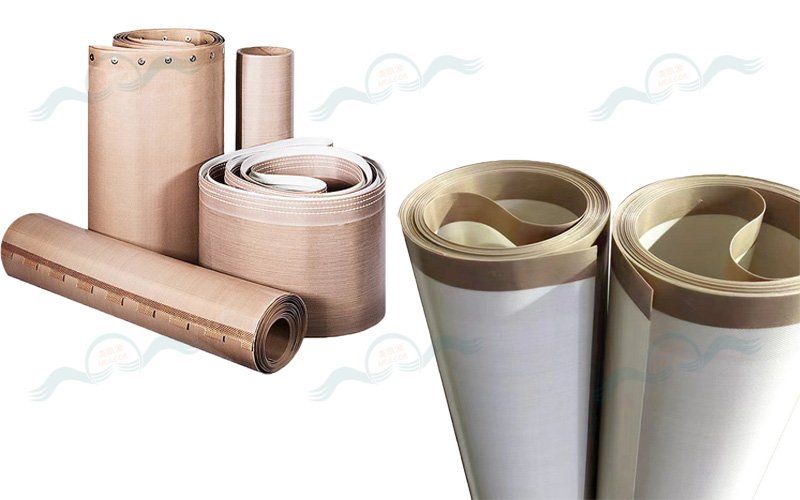
- Multiple Weave Patterns: Plain weave, twill weave, satin weave, and others — suitable for precision mold release, high-strength support, and other process requirements
- Custom Dimensions: Manufactured to laminator specifications, eliminating unnecessary cutting waste
- Special Function Customization: Anti-static, UV-resistant, and other special treatments available to meet specific production environment requirements
Core Application Scenarios Summary
| Application Position | Primary Function | Key Advantage |
|---|---|---|
| Laminator Upper Cover Sheet | Isolates module from upper heating plate | Non-stick, heat-resistant, contamination-free |
| Laminator Lower Liner Sheet | Isolates module from lower heating plate | Dimensionally stable, high mechanical strength, scratch-resistant |
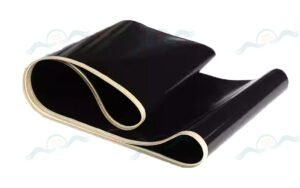
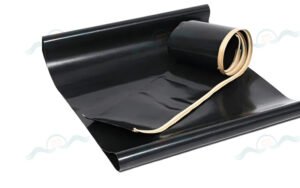
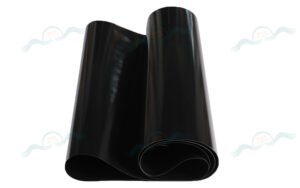
| Conveyor Belt Material | Transports solar cells and modules | Low friction, wear-resistant, easy to clean |
| Encapsulation Auxiliary Material | Improves module weatherability | Anti-aging, corrosion-resistant, electrically insulating |
PTFE high-temperature fabric, through its unique material properties, has become an indispensable key material in photovoltaic module production. Particularly in the lamination process, it resolves the core challenges of adhesion, contamination, and surface damage faced by traditional materials — providing reliable assurance for efficient, high-quality production.