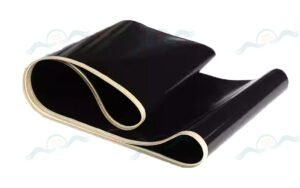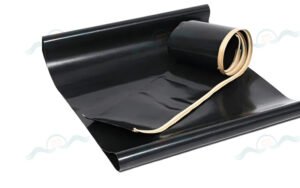
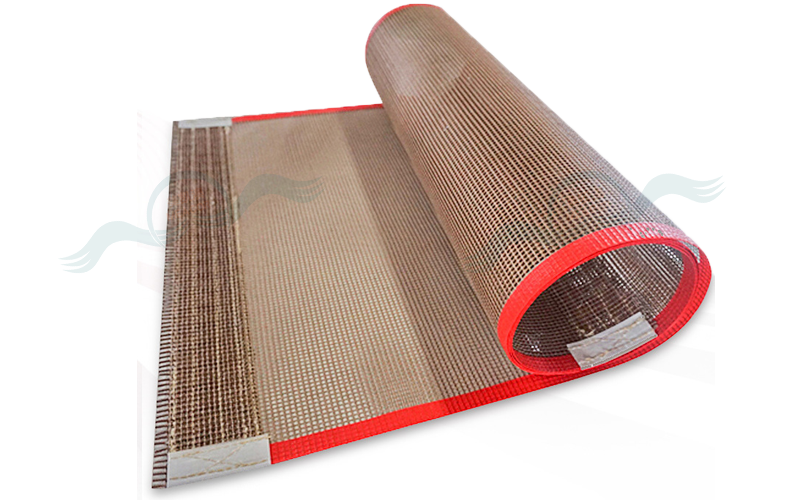
Characteristics and Applications of PTFE Mesh Conveyor Belts
PTFE (Teflon) mesh conveyor belts are manufactured by impregnating high-performance fiberglass open-mesh substrates with a suspended polytetrafluoroethylene (commonly known as the “King of Plastics”) emulsion. This process yields a high-performance, multi-purpose advanced composite material. Due to its exceptional property profile, it is heavily utilized across sectors such as papermaking, food processing, environmental protection, textile printing and dyeing, garment manufacturing, chemical processing, glass production, pharmaceuticals, electronics, electrical insulation, grinding wheel slicing, and general machinery.
Performance Characteristics:
- Extreme Temperature Resistance: Operates reliably within a thermal range of -70°C to 300°C with superb weatherability and anti-aging properties. Field testing demonstrates that continuous exposure to a 250°C heat profile for 200 days inflicts zero tensile strength decay and zero weight loss.
- Superior Non-Stick Release: Resists the adhesion of virtually all foreign substances. Surface oils, grease scaling, and stubborn contaminants are effortlessly sanitized. Viscous substances like starches, resins, and industrial coatings can be cleaned with basic procedures.
- Universal Chemical Inertness: Withstands aggressive chemical degradation from strong acids, concentrated alkalis, aqua regia, and a wide array of volatile organic solvents.
- Dimensional Stability & High Tensile Strength: Features an exceptionally low elongation coefficient (<5‰) and robust load capacity, ensuring reliable mechanical tracking.
- Flexing Fatigue Resistance: Possesses excellent flexibility, making it compatible with small pulley diameters.
- Biochemical Inertness & Non-Toxicity: Highly resistant to industrial pharmaceuticals and chemical agents, presenting a completely non-toxic profile.
- Flame Retardancy: Inherently fireproof and flame-resistant.
- Controlled Air Permeability: The structured open-mesh configuration optimizes airflow rates, slashes thermal energy consumption, and maximizes moisture drying efficiency.
Typical Application Ranges:
A. Textile, Printing, and Dyeing Sector: Deployed as tracking conveyor belts inside open-width drying tunnels and curing chambers for textile printing, fabric bleaching/dyeing, fabric shrinkage processing, and non-woven web bonding.
B. Screen Printing and Graphic Arts: Engineered for continuous conveyor lines in relax dryers, offset press drying tunnels, UV curing ovens, paper over-varnish drying systems, and screen-printed plastic curing lines.
C. Specialized Processing Equipment: Utilized as processing belts in high-frequency/RF dryers, microwave drying tunnels, commercial food cryogenic freezing and thawing lines, baking machinery, automated packaging heat-shrink tunnels, moisture-venting bulk drying plants, and flash-drying setups for solvent-based inks.
PTFE Mesh Conveyor Belts are universally suited for any automated setup tracking through forced hot-air streams or thermal processing zones.
Technical Specifications
Mesh Aperture Profiles: 0.5 mm to 10 mm square geometry configurations (standard sizes include 4×4 mm, 1×1 mm, etc.).
Load Capacity and Velocity Dynamics
- Conveying Throughput: Defines the total volumetric or mass capacity of materials transported per unit time. For bulk materials, throughput is tracked as mass/volume per hour; for piece goods, it is measured as units per hour.
- Line Speed/Velocity: Increasing tracking speeds expands throughput boundaries. On long-distance setups where the belt acts as the primary traction link, elevated tracking speeds are common. However, high-speed lines must manage tracking vibrations, acoustics, and soft-start/braking dynamics. For chain-driven mesh profiles, velocity should be regulated to prevent peak dynamic torque loads. Operating speeds must align precisely with specific manufacturing process requirements.
- Routing Length and Inclination: Linear routing lengths and incline angles directly dictate the system’s total frictional resistance and power requirements. A core benefit is multidirectional flexibility, allowing tracking routing paths to pivot up to 180 degrees.
Field Application Modes
From a system design perspective, belt-driven PTFE open-mesh conveyors represent critical assets for material handling and bulk loading. While widely integrated across mining, metallurgy, building materials, chemical processing, power generation, and food lines, the specific mechanical footprint, belt gauge, and tracking tension are customized extensively based on the installation footprint, environmental variables, and target material properties.