PTFE Conveyor Belt Tracking Inspection, Troubleshooting Methods, Drying Selection, and Technical Applications
I. Inspection Points and Troubleshooting Methods for PTFE Belt Tracking Deviation
- Idler Transverse Centerline Calibration:
Inspect the misalignment between the transverse centerline of the idlers and the longitudinal centerline of the PTFE (Teflon) conveyor frame. If the misalignment exceeds 3 mm, adjustments must be executed using the elongated mounting slots on both sides of the idler sets. The specific protocol dictates: whichever side the PTFE belt deviates toward, that corresponding side of the idler set should be shifted forward in the direction of belt travel, or the opposite side should be shifted backward. - Head and Tail Pulley Bearing Seat Planar Variance Check:
Verify the alignment deviation between the two horizontal planes of the head and tail bearing housing structures. If the planar variance exceeds 1 mm, both bearing seats must be realigned onto the exact same horizontal plane.
- Head Pulley Adjustment: If the PTFE belt drifts toward the right side of the pulley, the right bearing seat must be shifted forward, or the left bearing seat shifted backward. If the belt drifts to the left, the left bearing seat must be shifted forward, or the right bearing seat shifted backward.
- Tail Pulley Adjustment: The tracking alignment protocol for the tail pulley runs exactly opposite to that of the head pulley.
- Material Cross-Sectional Centralization:
Inspect the material placement on the PTFE high-temperature adhesive belt. Non-centered material loading on the belt cross-section triggers asymmetrical forces, forcing tracking deviation. If materials bias toward the right side, the PTFE belt will drift toward the left, and vice versa. Material loading must be centered as precisely as possible during operation. To eliminate or mitigate tracking errors induced by off-center loading, product deflectors or guiding baffles should be integrated to recalibrate material drop trajectories.
II. PTFE Belt Selection Criteria for Drying Operations
- High-Moisture Curing (PTFE Open-Mesh Belts):
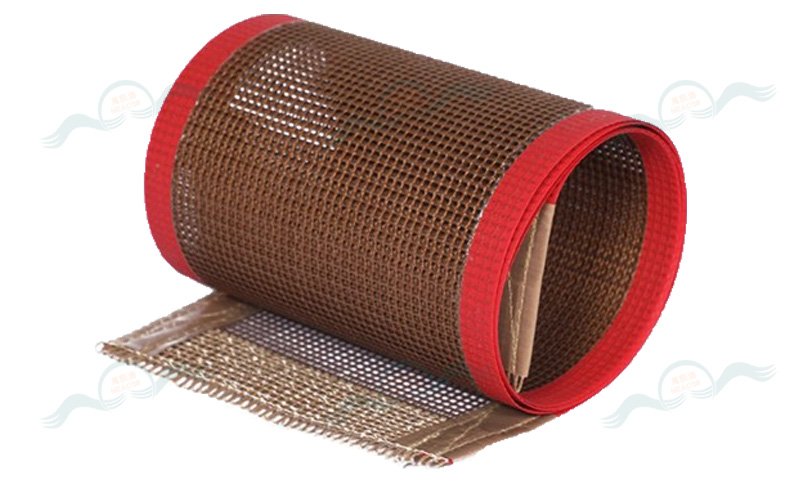
If the target material contains high moisture levels, a PTFE open-mesh belt must be deployed. The open-mesh structure delivers high air permeability, optimizing airflow rates, minimizing thermal energy loss, and boosting overall drying throughput. Typical use cases include textile printing drying, resin curing, and food dehydration tunnels. - Low-Moisture/Dry Curing (PTFE Solid Film/Fabric Belts):
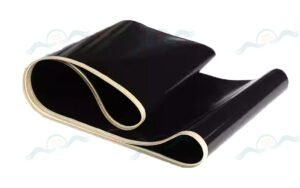
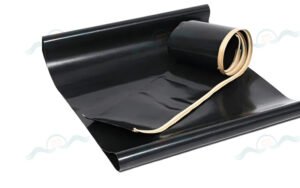
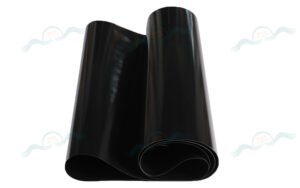
For drying processes where material moisture is minimal, a solid PTFE fabric belt represents the ideal choice. The solid profile yields an ultra-smooth face, simplifies line sanitization, and provides excellent release, serving as a premium eco-friendly processing matrix.
III. Core Industrial Application Spectrum of PTFE Conveyor Belts
PTFE conveyor belts are universally integrated across high-heat, corrosive, and non-stick industrial zones, categorized as follows:
- Anti-stick interior linings, industrial gaskets, machinery cloths, wrapping membranes, and process tracking belts for various thermal drying plants, continuous laminators, and packaging heat-seal lines.
- High-heat plastic profiles welding and sealing fabrics, as well as release sheets for plastic film thermoforming and hot-press lamination lines.
- High-dielectric electrical insulation tapes, structural spacers, slot insulation gaskets, protective washers, and base matrix sheets for high-frequency copper clad laminates (CCL).
- Thermal insulation cladding, multilayer structural laminates, and heavy-duty heat-shield barrier wraps.
- Microwave cooking gaskets, commercial oven release sheets, and automated food dehydration belts.
- Heat-resistant splicing belts, textile transfer printing mats, carpet backing adhesive curing belts, rubber vulcanization lines, and abrasive grinding wheel curing sheets.
- Pressure-sensitive adhesive tape backing fabrics.
- Architectural tensile membranes: Structural coverings for sports stadiums, transit stations, pavilions, sunshades, and landscape architectural layouts.
- Anti-corrosive cladding for petrochemical piping networks and eco-friendly flue gas desulfurization (FGD) linings in power plants.
- Flexible expansion joints/compensators, heavy-duty friction linings, and abrasive cutting disc separators.
- Specialized conductive processing lines yielding antistatic ESD fabric variants.