Application Ranges, Performance Properties, and Selection Framework of PTFE Conveyor Belts
I. Core Application Spectrum
A. Textile, Printing, and Dyeing: Deployed inside drying tunnels and curing chambers for rotary/screen printing drying, fabric bleaching and dyeing, knit shrinkage drying, and non-woven web thermal bonding.
B. Screen Printing and Graphic Arts: Engineered for automated conveyor lines in relax dryers, offset printing ovens, UV light-curing tunnels, paper over-varnish drying systems, ultraviolet drying chambers, and silk-screened plastic product curing.
C. Specialized Thermal Processing: Utilized as processing drive belts in high-frequency/RF drying tunnels, microwave heating ovens, commercial food cryogenic freezing/thawing lines, industrial baking machinery, packaging shrink tunnels, mass bulk dehydration plants, and flash-drying setups for solvent-based inks.
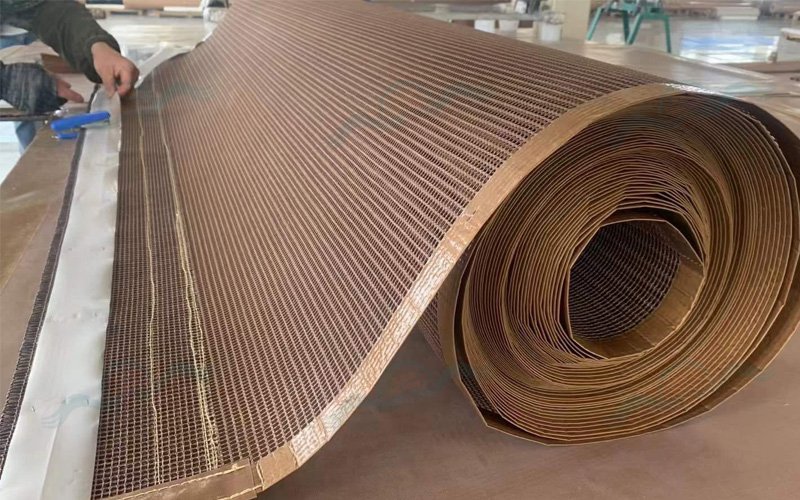
PTFE open-mesh conveyor belts are universally suited for forced hot-air circulation ovens, textile stenter frames, non-woven web dryers, and temperature-controlled curing chambers due to their optimized structural airflow permeability.
II. Performance Characteristics
- Extreme Temperature Capabilities: Operates reliably across a broad thermal envelope from -70°C to 260°C with superb weatherability and anti-aging properties. Field tests prove that continuous exposure to 250°C for 200 days yields zero tensile strength decay and zero weight reduction. At 350°C high-heat exposure for 120 hours, mass loss is restricted to only ~0.6%. It fully maintains its native structural flexibility at a cryogenic profile of -180°C.
- Elite Non-Stick Release: Resists the adhesion of virtually all chemical substances. Surface oil slicks, grease buildup, and stubborn stains are easily sanitized. Viscous media like starches, raw resins, and heavy coatings can be effortlessly cleaned.
- Universal Chemical Resistance: Withstands aggressive chemical degradation from concentrated acids, strong alkalis, aqua regia, and a wide array of volatile organic solvents.
- Dimensional Stability & Tensile Capacity: Features an exceptionally low elongation coefficient (<5‰) and robust load-bearing mechanics, preventing belt tracking distortion under stress.
- Flexing Fatigue Resistance: Possesses excellent structural tracking flexibility, making it highly compatible with small-diameter processing pulleys.
- Biochemical Inertness & Non-Toxicity: Highly resistant to industrial pharmaceuticals and chemical agents, presenting a completely non-toxic profile.
- Advanced Flame Retardancy: Inherently fireproof and flame-resistant.
- Controlled Permeability: The engineered open-mesh configuration optimizes airflow rates, dramatically slashes thermal energy consumption, and maximizes moisture drying efficiency.
III. Technical Deployment Matrix of PTFE (Polytetrafluoroethylene) Composites
- Non-stick interior liners, industrial gaskets, machinery cloths, and heavy-duty conveyor belts for diverse thermal drying plants, continuous laminators, and packaging heat-seal lines.
- High-heat welding matrices and sealing cloths for plastic profiles, as well as release liners for plastic sheet thermoforming and hot-press lamination.
- High-dielectric electrical insulation tape bases, structural spacers, slot insulation gaskets, protective rings, and base sheets for high-frequency copper clad laminates (CCL).
- Thermal insulation cladding, multilayer laminates, and heat-shield wraps.
- Microwave cooking gaskets, commercial oven sheets, and food dehydration belts.
- Heat-resistant splicing belts, textile transfer printing mats, carpet backing adhesive curing lines, rubber vulcanization conveyors, and abrasive grinding wheel release fabrics.
- Backing fabrics for pressure-sensitive adhesive tapes.
- Architectural tensile membranes: Structural coverings for sports stadiums, transit stations, pavilions, sunshades, and landscape architectural layouts.
- Anti-corrosive cladding for petrochemical piping networks and eco-friendly flue gas desulfurization (FGD) linings in power plants.
- Flexible expansion joints/compensators, heavy-duty friction linings, and abrasive cutting disc separators.
- Specialized conductive lines yielding antistatic ESD fabric variants.
IV. Selection Framework for Drying Operations
- High-Moisture Curing (PTFE Open-Mesh Belts): If the target material contains high moisture levels, a PTFE open-mesh belt must be deployed. The open-mesh structure delivers high air permeability, optimizing airflow rates, minimizing thermal energy loss, and boosting overall drying throughput. Typical use cases include textile printing drying, resin curing, and food dehydration tunnels.
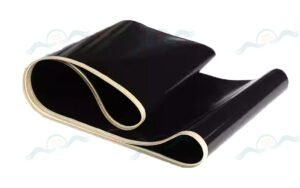
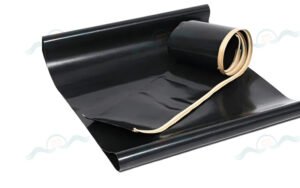
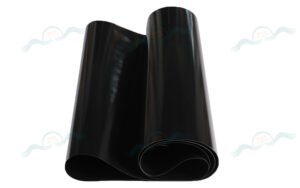
- Low-Moisture/Dry Curing (PTFE Solid Film/Fabric Belts): For drying processes where material moisture is minimal, a solid PTFE fabric belt represents the ideal choice. The solid profile yields an ultra-smooth face, simplifies line sanitization, and provides excellent release, serving as a premium eco-friendly processing matrix.