How Does PTFE High-Temperature Tape Achieve Its Temperature Resistance Performance?
Key Factor Analysis of Substrate & Adhesive System Design
In packaging, printing, and industrial heat sealing applications, users typically focus on adhesive bond strength while overlooking the critical relationship between temperature resistance performance and substrate structure compatibility. In reality, sustained operating temperatures above 300°C require the tape to simultaneously solve two major challenges: substrate thermal stability and adhesive system failure prevention.
Operating Principle & Core Structure Analysis
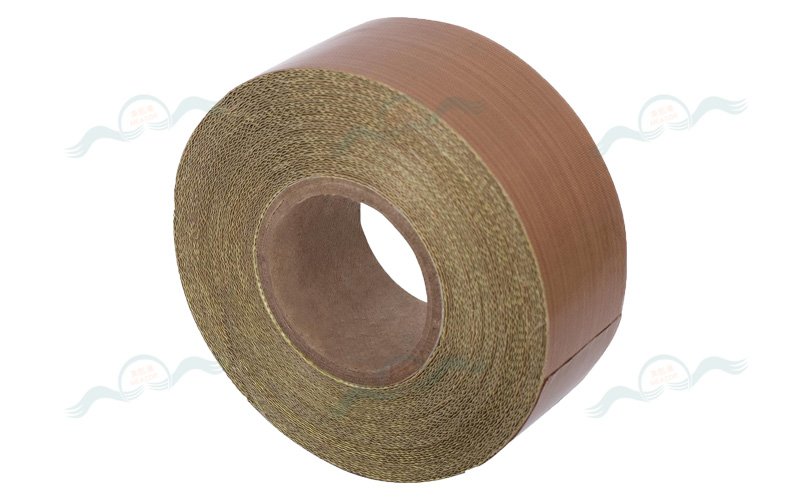
The fabric-based PTFE structure achieves temperature resistance through three-layer synergistic design:
- PTFE coating layer: Provides a chemically inert surface capable of withstanding continuous 300°C high temperatures
- Woven fiberglass cloth substrate: Ensures mechanical strength and suppresses thermal deformation
- Specialty silicone resin adhesive: Maintains adhesion under elevated temperatures
The 0.13 mm nominal thickness balances flexibility with puncture resistance, while the 25% elongation rate accommodates the deformation requirements of heat sealer rollers.
How Technical Differences Affect Real-World Applications
Unlike standard PET tape which undergoes thermal shrinkage when heated, the low surface energy of the PTFE coating enables dimensional stability at temperatures up to 350°C. However, the fabric substrate adds 15–20% additional weight load compared to film-based substrates — requiring equipment rollers to deliver higher torque output. The selection of brown pigmentation is not an aesthetic consideration but rather a functional one: reducing light transmittance minimizes UV-induced aging degradation of the adhesive layer.
Application Scenarios & Evaluation Framework
Evaluating this type of product requires attention to three key dimensions:
- Whether the short-term peak temperature exceeds the adhesive system’s tolerance limit
- Whether the bending radius during mechanical operation is compatible with the tape’s elongation rate
- Whether the fabric texture will interfere with the flatness of the bonded surface
For example, vacuum sealing machines should prioritize verification of the long-term temperature resistance curve rather than initial tack strength, while intermittent operation scenarios require particular attention to the peel strength degradation rate after thermal cycling.
PTFE fabric tape achieves 300°C+ heat resistance through three-layer synergy — PTFE coating, fiberglass substrate & silicone adhesive — balancing thermal stability, flexibility & sustained adhesion.