This question involves the consideration of functional layering in material engineering. PTFE itself possesses extremely low surface energy — manifesting as outstanding non-stick performance — but its surface is inherently difficult to bond reliably with other materials. Silicone material, by contrast, combines good adhesion, flexibility, and temperature resistance. The coating process allows the advantages of both materials to be combined: the PTFE substrate provides chemical stability and mechanical support, while the silicone layer on the surface modifies the interface properties — enabling more reliable conforming adhesion to various surfaces, or delivering specific sealing and cushioning functions.
Manufacturing Perspective
From a manufacturing standpoint, production involves multi-step physical and chemical processing. A qualified PTFE film must first undergo surface activation treatment — such as corona or plasma treatment — to raise surface energy and establish a foundation for coating adhesion. Liquid silicone is then uniformly applied to the film surface using precision coating equipment. The silicone coating may incorporate cross-linking agents, fillers, and other additives to adjust hardness, tack, or weatherability. Through a heat-curing process, the silicone layer forms a stable cross-linked network structure that bonds firmly to the substrate. The entire process requires precise control to ensure uniform coating thickness, freedom from defects, and stable performance.
Performance Combination vs. Standard PTFE Tape
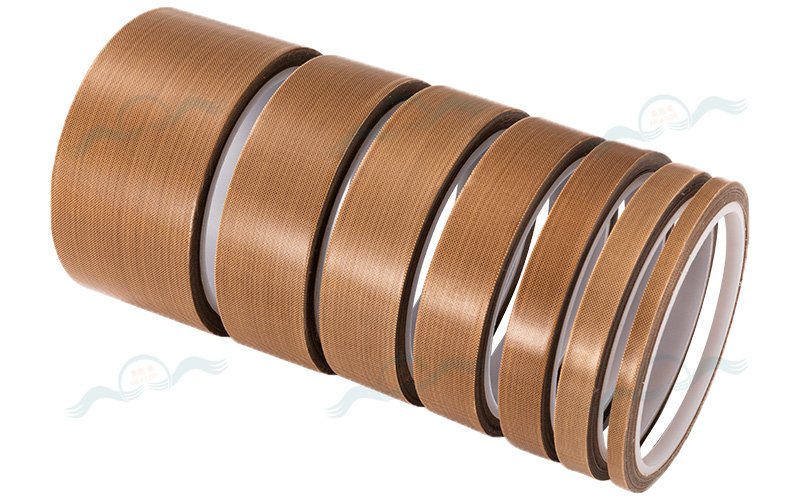
What performance advantages does this composite structure offer compared to standard PTFE Teflon Tape?
High-Temperature Stability: The PTFE substrate can withstand long-term continuous temperatures of approximately 260°C, while the silicone coating typically endures sustained temperatures above 200°C — the composite material as a whole maintains excellent thermal stability.
Adhesion Characteristics: The silicone-coated side exhibits pressure-sensitive adhesive behavior — light finger pressure generates tack — and can be repeatedly applied and removed without severely damaging the bonded surface. The PTFE backing side remains inert to virtually all chemical substances.
Asymmetric Interface Design: This non-symmetric design means one side adheres readily while the other resists adhesion — ideal for complex applications requiring single-sided anti-stick performance.
Application Scenarios
Application scenarios are primarily determined by the material’s asymmetric interface properties:
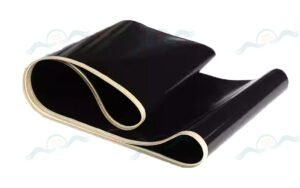
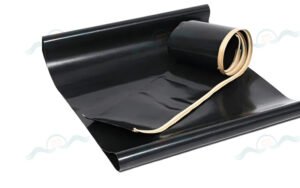
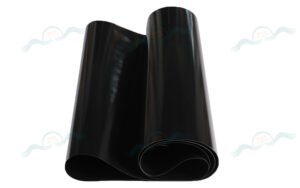
Heat Sealing Machinery: Used on high-temperature conveyor belt surfaces — the silicone-coated side provides moderate grip to move products, while the PTFE side prevents material residue buildup
Plastic Welding / Laminating Processes: Used as isolation gaskets — the silicone layer ensures tight conforming contact with the mold, while the PTFE face prevents molten material adhesion
High-Temperature Test Fixtures for Electronic Components: Provides an insulating, cushioning, and easily cleaned surface
All these applications rely on the deliberately different surface energy design on each side of the material.
Key Technical Parameters for Selection & Use
Silicone coating thickness: Directly affects adhesion strength and flexibility; typically measured in micrometers
PTFE film substrate thickness: Determines overall strength and puncture resistance
Operating temperature range: Must reference the limits of both the coating and the substrate simultaneously
Application: Clean the bonding surface before application; apply uniform pressure to ensure full silicone layer contact
Removal: Designed for peelability — avoid rapid pulling to prevent cohesive failure within the silicone layer
Durability & Aging Mechanisms
UV exposure: Long-term UV irradiation causes slow silicone layer oxidation — manifesting as slight surface tackiness or hardening
Sustained high-temperature operation: Continuous use at the upper temperature limit accelerates polymer chain thermal degradation
Strong solvent contact: Does not attack the PTFE substrate, but may cause the silicone layer to swell or lose structural integrity
Service life is not a fixed value — it depends on specific environmental stresses; under indoor, moderate-temperature, chemical-free conditions, performance is maintained for a significantly longer period
Conclusion
This material is not a replacement for any single material — it is an engineering solution that addresses specific interface requirements through physical compositing. Its value lies in creating a combination of contradictory properties that no single material can achieve: one side that adheres and the other that resists adhesion. The key judgment for the user is whether their specific application scenario genuinely requires this asymmetric interface functionality, and whether the cost premium of the composite manufacturing process is justified. For applications where this asymmetric property is not needed, a single-material tape may be a more economical and practical choice.