Understanding the Core Technical Factors Behind Industrial PTFE Tape Temperature Resistance
In high-temperature industrial environments such as chemical processing and electronics manufacturing, the temperature resistance of industrial tape is commonly treated as the primary performance indicator. However, users typically focus only on the temperature rating figure itself, overlooking the technical factors that truly determine long-term stability: backing material selection, substrate structure, and adhesive system formulation. Understanding these underlying design principles is essential for accurately evaluating suitability across different operating conditions.
Operating Principle & Core Structure Analysis
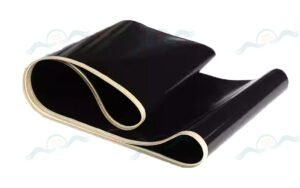
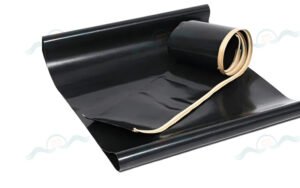
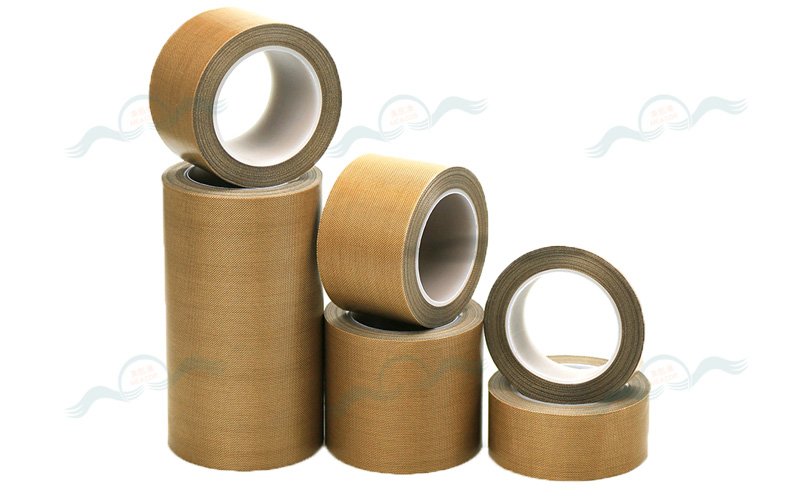
This product adopts a fabric-reinforced PTFE (Teflon) composite structure. The 0.13 mm PTFE film backing provides a chemically inert barrier layer, while the woven fabric substrate enhances mechanical strength. Its short-term 300°C / long-term 350°C temperature resistance capability originates from PTFE’s carbon-fluorine (C-F) bond energy — one of the highest in the industry. The 0.08 mm pressure-sensitive adhesive layer achieves high-temperature bonding stability through silicone modification. This sandwich composite structure retains PTFE’s inherent low friction characteristics while the fabric reinforcement resolves the tearing weakness of pure film constructions.
How Technical Differences Affect Real-World Applications
Compared to standard PET-based tape, the PTFE backing reduces the coefficient of thermal expansion (CTE) by approximately 60% — making it significantly more resistant to edge lifting during sudden temperature changes. The composite bonding process between the fabric and film layer directly influences tensile strength: this explains why pure film constructions in the same product category typically achieve less than one-third the elongation at break of fabric-reinforced grades. It is important to note, however, that a thicker adhesive layer (exceeding 0.1 mm) — while improving initial tack — may reduce cohesive strength at elevated temperatures.
Application Scenarios & Evaluation Framework
When evaluating this type of tape, focus on three key technical indicators:
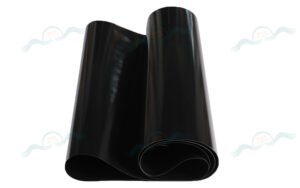
① Dynamic friction coefficient — directly affects conveyor belt application service life
② Dielectric strength — a critical electrical insulation parameter for electronic applications
③ Backing material crystallinity — determines long-term thermal aging performance
For example, sealing applications on chemical reactor vessels should prioritize verification of chemical media permeability resistance rather than temperature rating alone. For high-frequency reciprocating motion oven conveyor belt applications, the key test is the residual tack rate change after 100,000 motion cycles.