Material Characteristics, Operational Advantages, and Industrial Customization of PTFE Conveyor Belts
As modern industrial production evolves, standard conveyor belting often falls short under harsh processing constraints. Polytetrafluoroethylene (PTFE or Teflon) conveyor belts deliver superior thermal endurance and chemical resistance, serving as a high-performance continuous transfer carrier across demanding manufacturing sectors.
I. Key Material Attributes & Performance Advantages
- Extreme Thermal Endurance: Operates continuously up to +260°C without mechanical degradation, enabling stable thermal transport through industrial baking ovens, plastics processing, and metallurgy heat treatment.
- Universal Chemical Inertness: Resists attack from nearly all corrosive chemicals, strong acids, alkalis, and organic solvents, mitigating degradation in chemical processing and pharmaceuticals.
- Non-Stick Surface & Low Coefficient of Friction: Ultra-low surface energy prevents sticky material build-up, simplifies sanitation cycles, reduces driving torque consumption, and enhances throughput.
- Food Contact Compliance & Hygiene: Non-toxic and biosafe, fully meeting stringent food-grade and pharmaceutical sanitary standards for cleanroom and food production lines.
- Reduced Maintenance & Total Cost of Ownership: Exceptional mechanical durability and corrosion resistance minimize unscheduled downtime, belt replacement frequency, and ongoing operational costs.
II. Industrial Customization Capabilities
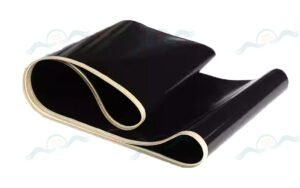
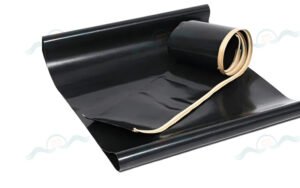
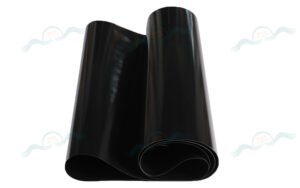
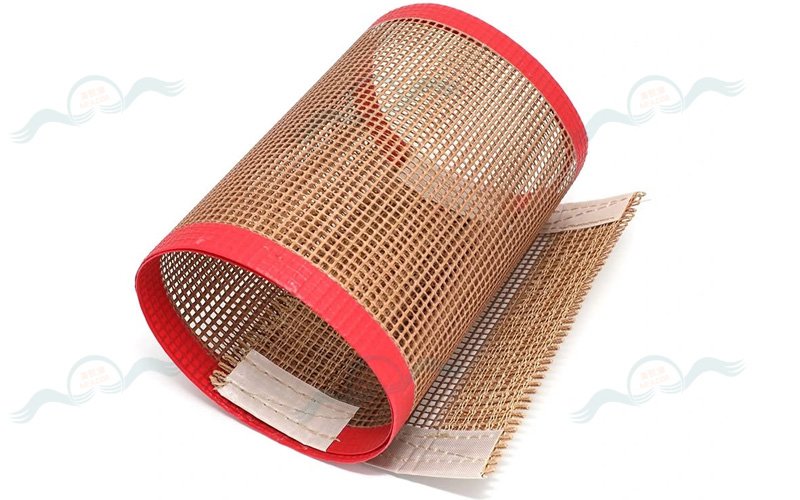
PTFE conveyor belts can be custom-engineered across various widths, lengths, thicknesses, joint styles (bullnose, clipper, or scived), and surface coatings (smooth film or open mesh) to meet exact operational configurations.