Specification Categories, Performance Attributes, and Application Sectors of PTFE Conveyor Belts
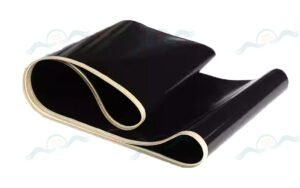
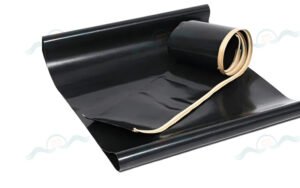
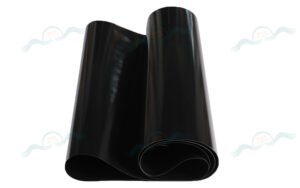
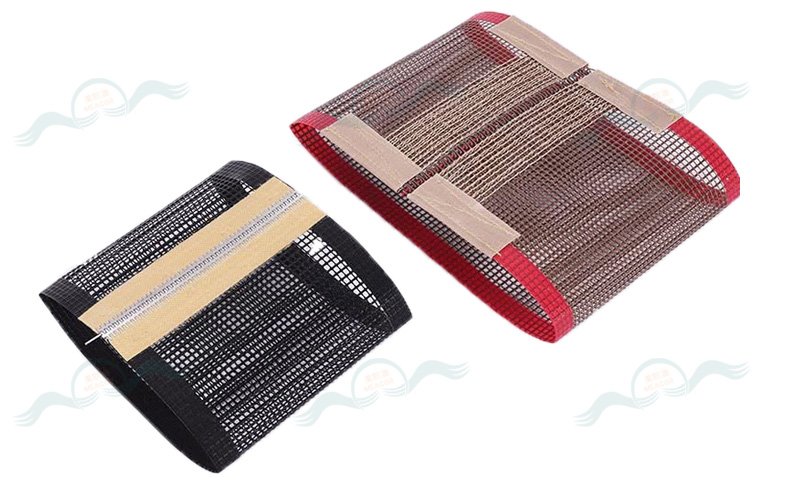
PTFE Conveyor Belts (polytetrafluoroethylene-coated fiberglass belts) are high-performance transport media engineered by coating high-strength woven fiberglass substrates with synthetic PTFE fluoropolymers. They are broadly categorized into PTFE Open Mesh Conveyor Belts and PTFE Solid High-Temperature Belts.
I. Specification Categories
- PTFE Open Mesh Conveyor Belts:
- Mesh Size Specifications: Commonly defined by aperture dimensions, including 1×1 mm, 2×2.5 mm, 4×4 mm, and 10×10 mm.
- Weave Variants: Classified into single-weft and double-weft construction depending on longitudinal and transverse yarn configurations.
- PTFE Solid High-Temperature Belts:
- Thickness Specifications: Differentiated by gauge thickness, ranging from 0.08 mm to 1.0 mm.
II. Key Performance Characteristics
- Thermal & Weather Endurance: Functions continuously across -70°C to +260°C with exceptional weatherability and anti-aging properties.
- Universal Chemical Resistance: Immune to attack from strong acids, alkalis, aqua regia, and organic solvents.
- Flame Retardancy & High Permeability: Features inherent fire resistance and superior gas/air airflow efficiency.
- Non-Stick Surface & Wear Resistance: Resists material adhesion for effortless cleaning, offering robust wear resistance under heavy mechanical loads.
- Dimensional Stability: High mechanical tensile strength with low thermal elongation (<5‰).
III. Primary Application Fields & Joint Customization
- Textile Printing & Dyeing: Open mesh belts promote efficient air circulation and prevent color contamination or fabric abrasion during drying.
- Food Processing: Solid PTFE belts ensure food-grade hygiene and non-stick release across automated baking and dehydration lines.
- Chemical & Electronics Sectors: Valued for extreme chemical inertness and high dielectric insulation properties.
- Joint Splice & Tracking Options: Custom joint configurations include straight overlap, scived overlap, bullnose pin joint, and metallic clipper pin joint, along with edge-tracking guide studs to prevent misalignment.