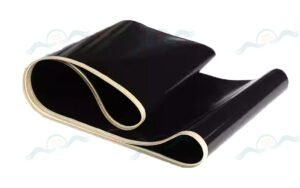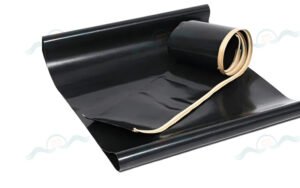
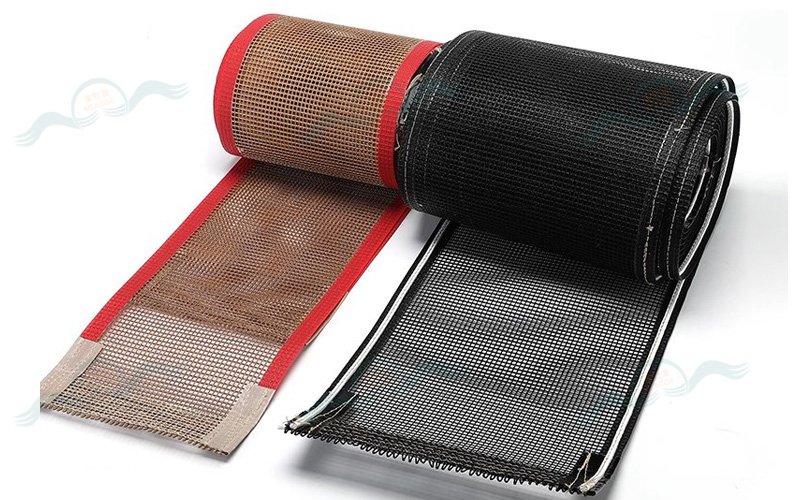
Conveyor belts serve as pivotal media for material transport in modern manufacturing. Among them, PTFE (Teflon) open-mesh belts are extensively deployed in thermal drying tunnels, food processing lines, and electronics manufacturing due to their superior heat resistance and anti-adhesion capabilities. Constructed from woven fiberglass substrates impregnated with polytetrafluoroethylene (PTFE) resins, these mesh belts offer broad thermal endurance (-70°C to +260°C) and robust chemical stability.
I. Core Performance & Structural Characteristics
- PTFE Surface Properties: Featuring ultra-low surface energy, PTFE prevents viscous materials like hot-melt adhesives, synthetic resins, and food ingredients from adhering, which minimizes residue buildup and reduces cleaning cycles.
- Chemical & Mechanical Resistance: Highly inert to strong acids, alkalis, and organic solvents, making it ideal for electroplating and chemical synthesis lines. High-tensile fiberglass substrates preserve dimensional stability without deforming under continuous thermal stress and mechanical tension.
- Structural Options: Available in single-sided or double-sided PTFE coatings with customizable mesh aperture sizes. The porous mesh configuration provides optimum air permeability for efficient hot-air recirculation drying and liquid drainage.
II. Application Scenarios & Special Grades
- Industry Applications: In food baking, the anti-stick surface prevents sugar and fat carbonization. In electronics, it transfers PCB boards through solder paste drying ovens without flux contamination.
- Specialized Formulations: Advanced manufacturing allows for custom grades, such as carbon-filled anti-static coatings and antimicrobial surface treatments.
III. Operational Limits & Maintenance Practices
- Operating Limits: Sustained temperatures above 300°C must be avoided to prevent fluoropolymer thermal decomposition and hazardous gas emission. Due to lightweight tensile constraints, mesh belts are unsuitable for heavy-duty impact loads.
- Preventive Care: Guard against sharp scratches that puncture the PTFE layer, inspect belt tension regularly to avoid mesh distortion, and ensure compatibility with local chemical environments.