A Technical Reference Guide for PTFE Teflon Conveyor Belt Selection in Industrial High-Temperature Conveying Applications
PTFE conveyor belts are widely used conveying components in industrial high-temperature conveying scenarios, compatible with various high-temperature drying, heat-setting, and curing production processes. Most production line operations and maintenance personnel and product selection engineers lack comprehensive understanding of this product’s fundamental performance characteristics and custom fabrication options. This article provides an objective overview of PTFE conveyor belt core performance and processing features as a reference for industry selection decisions.
Ⅰ. Fundamental Performance Characteristics
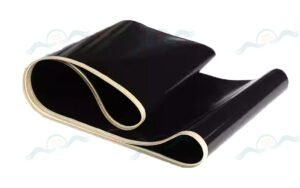
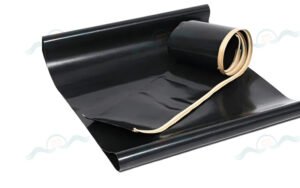
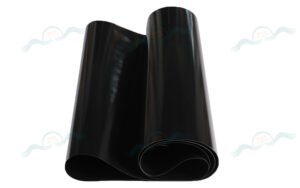
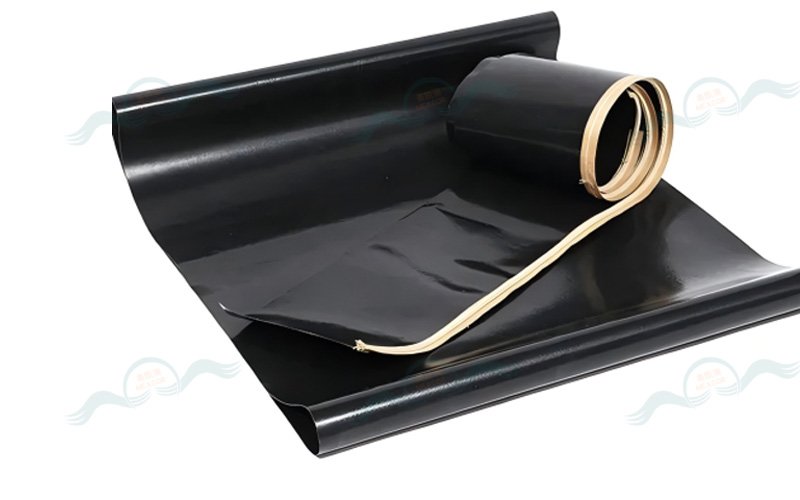
PTFE conveyor belts use fiberglass woven fabric as the substrate, with a PTFE (polytetrafluoroethylene) coating composited on the surface. The product covers a wide temperature resistance range — in production environments with alternating high and low temperatures, the belt structure maintains stable integrity.
The belt surface has inherent non-stick properties — sticky materials and paste-type materials do not adhere or accumulate easily. Surface cleaning is convenient, enabling long-term maintenance of a clean conveying state.
The material possesses stable chemical properties and is compatible with certain weak acid/alkali and solvent-type production environments. No particle shedding or dust generation occurs during operation — suitable for precision production and cleanroom conveying workstations.
The product is available in two fundamental types: solid flat belts and mesh belts. Mesh belts feature an open mesh structure that meets production line ventilation, heat dissipation, and breathable conveying process requirements.
Ⅱ. Mainstream Custom Fabrication Option
1. Guide Strip (Anti-Tracking Strip) Fabrication
Guide strips are bonded to the PTFE conveyor belt surface using a high-temperature heat-fusion bonding process. The fabricated guide strips form regular raised rib structures used for material positioning, flow control, and deviation prevention. Guide strip height and spacing can be customized to equipment parameters — suited for applications requiring controlled, orderly material conveying.
2. Button / Clip Fastener Joint Fabrication
Button clip joints are a convenient splicing fabrication method. Belt ends are joined using dedicated clip fasteners — the assembly and disassembly process is straightforward. Suitable for conveying equipment requiring frequent disassembly, maintenance, and belt replacement; ideal for daily operations and maintenance of small-to-medium-scale high-temperature conveying production lines.
3. Bull-Nose (Lace) Joint Fabrication
The bull-nose joint is a traditional and widely used splice joint method for PTFE conveyor belts. The belt ends undergo folding and compression processing to form a loop-type fastener structure that completes the joint. The joint profile conforms closely to the belt body — smooth operation, suitable for standard endless conveying equipment. This fabrication method is primarily applicable to mesh belts across a wide range of standard operating conditions.
4. Edge Binding (Edge Sealing) Fabrication
Edge sealing treatment is applied to both exposed lateral edges of the conveyor belt to seal the raw fiberglass substrate edges. This reduces edge fiber shedding, minimizes residue accumulation in edge areas, improves lateral edge integrity and use stability — particularly suited for food processing, precision electronics, and other cleanroom production environments.
5. Custom-Length Cutting Fabrication
Raw material is slit and cut to length based on actual equipment dimensional specifications. Finished product dimensions precisely match equipment specifications — compatible with the installation requirements of all types of custom conveying equipment.
Ⅲ. Objective Application Boundaries
PTFE conveyor belts have corresponding usage limitations that must be respected. High-impact mechanical loads, prolonged abrasion from sharp materials, and strongly corrosive or molten media environments will damage the belt coating and substrate. Once the coating is compromised, the belt’s non-stick and temperature resistance performance will degrade. For heavy-load, high-tension applications, substrate tensile strength compatibility must be verified before selection.
Summary
The comprehensive performance of PTFE conveyor belts is well-matched to the majority of industrial high-temperature conveying applications. Guide strips, button clip joints, bull-nose joints, edge binding, and other fabrication options can be matched to the specific process requirements of different production lines. Selecting the appropriate fabrication method based on actual site conditions and equipment parameters ensures smooth conveying equipment operation and maintains stable production line output.