
Advantages of PTFE High-Temperature Cloth for Industrial Conveyor Belts
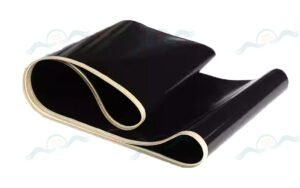
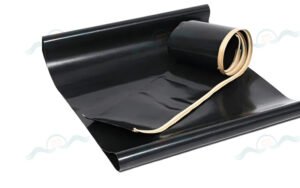
PTFE High-Temperature Cloth (also known as Teflon High-Temperature Cloth or PTFE-coated fiberglass fabric) features a composite structure of a PTFE coating and a fiberglass substrate. In extreme operating conditions, it exhibits comprehensive performance far exceeding traditional rubber or plastic belts, making it the preferred solution for rigorous scenarios involving high heat, corrosion, and sticky materials.
I. Extreme Temperature Resistance: Stable Operation Across Wide Ranges
- Core Advantage: Capable of long-term stable operation in an ultra-wide temperature range from -196°C to 300°C, with instantaneous peaks reaching 360°C–400°C.
- Performance Verification: Continuous use at 250°C for 200 days shows no loss in strength or weight; at 350°C for 120 hours, weight loss is only 0.6%. It remains flexible even at -180°C.
- Comparative Edge: Far surpasses the thermal limits of standard rubber belts (60°C–85°C), preventing issues such as high-temperature softening or low-temperature brittle cracking.
- Typical Applications: High-temperature drying, heat setting, cryogenic freezing, and metallurgical casting.
II. Non-Stick Surface Characteristics: Zero Residue Transfer
- Core Advantage: The PTFE coating provides extremely low surface energy, resisting adhesion from almost any substance, including highly viscous resins, adhesives, and food raw materials.
- Practical Value:
- Ensures easy material release, preventing product damage (e.g., in food or electronic components).
- Simplifies cleaning and maintenance, reducing downtime and boosting production efficiency.
- Prevents material accumulation that can cause transmission lag, ensuring continuous production line operation.
III. Superior Chemical Resistance: Robust Anti-Corrosion
- Core Advantage: Withstands erosion from almost all chemical media, including strong acids, alkalis, aqua regia, and organic solvents. It remains chemically inert to most substances.
- Comparative Edge: Unlike traditional rubber belts that prone to chemical corrosion and aging, PTFE cloth thrives in highly corrosive environments.
- Typical Applications: Chemical raw material handling, electroplating lines, and acid-alkali treatment processes.
IV. Excellent Mechanical Properties: High Strength & Dimensional Stability
- Core Advantage:
- The fiberglass substrate provides high tensile strength (reaching 2900–3100N/50mm) with excellent tear and stretch resistance.
- The elongation coefficient is less than 5‰, meaning it remains virtually undeformed under high heat and load, ensuring transmission precision.
- High flexibility and flexural fatigue resistance make it suitable for various roller and steering wheel layouts.
V. Low Friction & Self-Lubrication: Energy Efficiency
- Core Advantage: The coefficient of friction is as low as 0.05–0.1, making it an ideal oil-free self-lubricating material.
- Practical Value:
- Reduces frictional resistance between the belt and rollers, lowering motor energy consumption.
- Minimizes equipment wear, extending the service life of the belt and associated components.
VI. Multifunctional Features for Complex Needs
| Feature | Performance | Application Value |
| Insulation | Excellent electrical insulation with high dielectric strength. | Material handling in electronics and high-voltage environments. |
| Flame Retardancy | Non-combustible material, meeting UL94 V-0 standards. | Enhances safety in high-temp or explosive environments. |
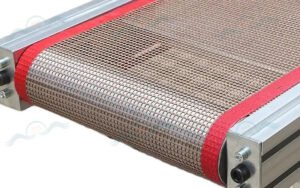
| Permeability | Mesh-type products allow for uniform ventilation. | Promotes heat transfer in drying and curing to improve efficiency. |
| Aging Resistance | UV and ozone resistant; stable for long-term outdoor use. | Outdoor production lines and material transport. |
| Hygiene/Safety | Complies with FDA food-grade standards. | Safe for food processing and pharmaceutical industries. |
VII. Comprehensive Cost Advantage: Long-Term Economy
- Extended Service Life: In harsh conditions, its lifespan can be 3 to 5 times longer than ordinary conveyor belts, reducing replacement frequency.
- Low Maintenance: Non-stick properties reduce cleaning costs, while chemical and aging resistance lower maintenance intervals.
- Energy Savings: The low friction coefficient results in significant electricity savings over time.
Summary
PTFE high-temperature conveyor belts solve the performance bottlenecks of traditional materials in extreme scenarios. By combining thermal stability, non-stick properties, and chemical resistance, they serve as a critical component for enhancing efficiency and quality in the electronics, food, chemical, textile, and printing industries.