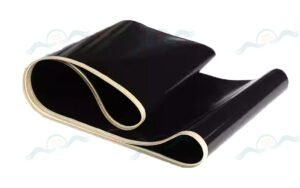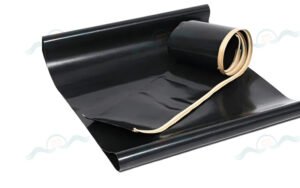
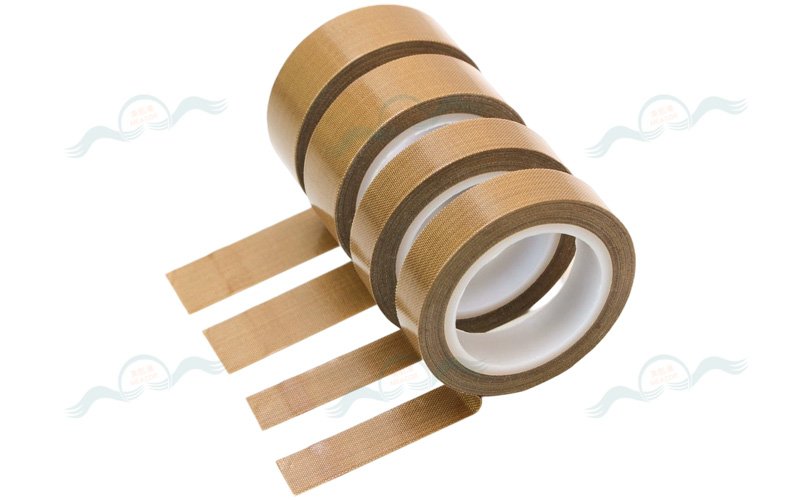
Anti-scalding PTFE (Teflon) tape is a specialized industrial composite engineered to provide localized surface modification, contact burn prevention, and thermal insulation across industrial equipment and domestic hardware.
I. Fundamentals of Heat Resistance vs. Thermal Insulation
- Fluoropolymer Molecular Stability: The foundation of PTFE (polytetrafluoroethylene) lies in its extremely strong Carbon-Fluorine (C-F) bonds, conferring superior thermal endurance that prevents structural decomposition or softening under sustained high heat.
- Low Thermal Conductivity Matrix: While PTFE possesses inherent heat endurance, true anti-scalding capacity depends on thermal conductivity. PTFE features a low thermal conductivity coefficient, which slows down heat flux transmission.
- Transient Burn Protection: When applied as a thin tape layer over hot rollers, steam lines, or iron soleplates, it introduces a localized thermal resistance boundary. This protection is optimized for mitigating instantaneous contact burns rather than serving as long-term bulk thermal insulation.
II. Composite Tape Architecture
- Carrier Substrate: High-density PTFE film or fiberglass-reinforced PTFE fabric providing mechanical shear strength and low friction surface release.
- High-Temperature Pressure-Sensitive Adhesive (PSA): Formulated with specialized silicone or modified acrylic pressure-sensitive adhesives engineered to maintain peel strength without outgassing, degrading, or leaving adhesive residue under elevated temperatures.
- Functional Integration: The combination of a low-friction/low-conductivity face with a high-tack, heat-resistant adhesive backing enables easy application onto curved pipes, heating element surfaces, and sealing jaws.
III. Regional Manufacturing Focus: Jiangsu Industrial Cluster
The prefix “Jiangsu” highlights a major industrial hub in China specialized in advanced fluoropolymer processing, precision adhesive synthesis, and roll-to-roll precision coating lines. Regional manufacturing clusters deliver high dimensional accuracy and scalable production capacity for industrial supply chains.
IV. Operational Scope and Home Appliance Integration
- Industrial Uses: Anti-sticking and burn prevention on hot-seal bars, packaging machinery rollers, drying cylinders, and high-heat conduits.
- Domestic Uses: Applied in household appliances (e.g., oven interior components, iron plates) to prevent food residue scorching and mitigate exterior metal hot-spots.
- Safety Limitations: The tape cannot alter the intrinsic thermal class of host appliances or replace dedicated heat management systems. Operations must strictly stay within specified continuous thermal limits.
V. Engineering Value
Anti-scalding PTFE tape delivers a customizable, retrofittable thermal barrier. It resolves localized contact-safety and anti-adhesion challenges by bridging basic polymer chemistry with flexible pressure-sensitive tape delivery formats.