Comparison Between Seamless Belts and Seamed Fusing Belts
- Seamless Belts
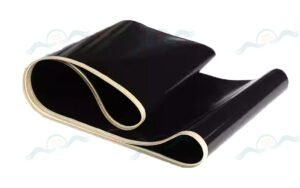
Seamless belts are typically manufactured using fiberglass or Kevlar yarn as the base material. The base fabric is woven into a cylindrical shape using circular weaving equipment and then coated with PTFE (Teflon) resin and dried. As a specialized type of high-temperature resistant conveyor belt, it is primarily used in fusing machines. It is the only truly “jointless” option within the PTFE conveyor belt category. - Seamed Fusing Belts
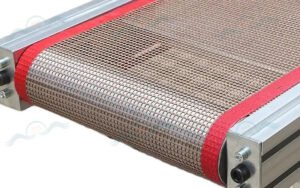
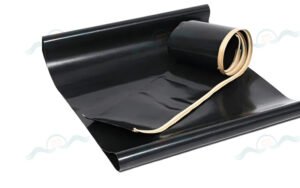
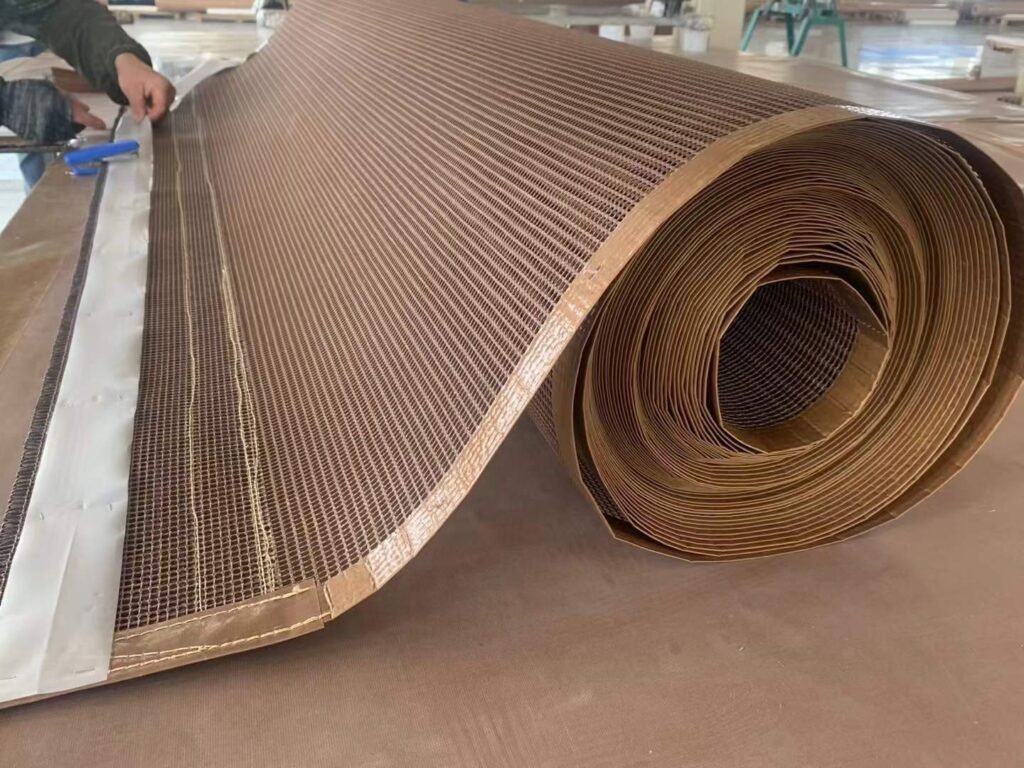
PTFE Belting Seamed fusing belts are made from self-woven and self-coated base materials. While the surface is bright, the presence of a joint often leads to issues such as poor running stability, tracking errors (drifting), and breakage at the connection point due to unequal circumferences at the seam. - Key Differences and Advantages
PTFE Belting Durability and Stability: Seamless belts overcome the inherent weaknesses of seamed belts. Their service life is typically more than three times longer than that of seamed belts, significantly reducing replacement frequency and labor costs.
Cost-Effectiveness: Although the initial procurement cost of a seamless belt is notably higher, its long-term operational cost is actually lower due to its extended lifespan and reduced downtime.
Performance Characteristics: Thanks to the PTFE coating, PTFE Belting seamless belts inherit excellent properties such as high-temperature resistance, non-stick surfaces, and superior flex-fatigue resistance. The surface is smooth and delicate.
PTFE Belting Size Limitations: * Seamless Belts: Limited in length, usually under 6 meters. Common specifications like 450, 500, 600, 1200, and 1500 refer to the width of the belt, not the length.
Seamed Belts: Can be customized to any length required by the application.