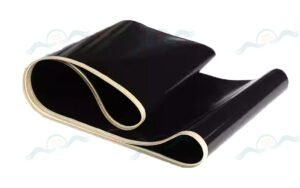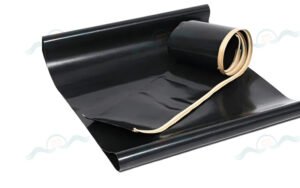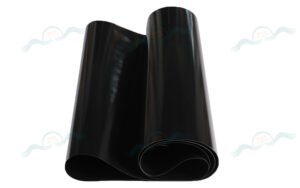
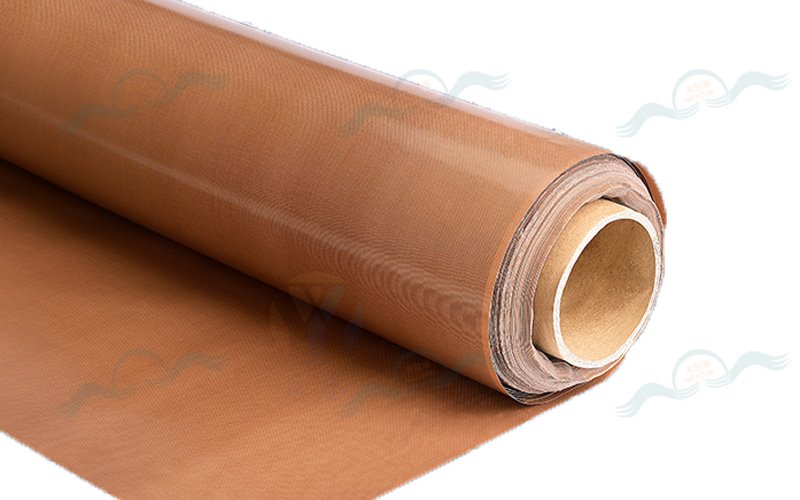
Teflon high-temperature conveyor belts—typically fiber fabric belts coated or impregnated with polytetrafluoroethylene (PTFE)—play a critical role in material transport across various industrial processes due to their high-temperature resistance, non-stick properties, and corrosion resistance. Custom manufacturers in this sector possess end-to-end customization capabilities, ranging from raw material selection and coating process design to final cutting and joint fabrication. Rather than merely producing standard models, these manufacturers supply non-standard products tailored to specific operational requirements, including temperature ranges, tension specifications, dimensions, and surface characteristics.
Regarding materials, the performance of a Teflon high-temperature conveyor belt relies on the synergy between the fiberglass base fabric and the PTFE coating. A manufacturer’s technical expertise is first evident in the selection of the base fabric’s weight and weave density; different tensile strength requirements dictate specific fabric specifications. The coating process determines surface smoothness, the coefficient of friction, and temperature limits. For instance, products made via the impregnation-sintering process feature higher PTFE content and a smoother, more durable surface, making them suitable for food-contact applications; conversely, knife-coating processes are better suited for applications requiring high thickness uniformity. Custom manufacturers typically employ various processing methods, allowing them to recommend optimal solutions based on the material being transported (e.g., powder, flakes, or liquid) and the operating environment (e.g., sustained temperatures above 200°C or short-term exposure around 260°C).
Structural design represents another core aspect of the customization process. While standard belts are usually continuous loops or open-ended strips, actual production lines often require irregular shapes, specialized joining methods (such as steel mechanical fasteners, finger splices, or seamless bonding), or added features like guide strips and cleats. Custom manufacturers are typically equipped with technologies such as laser cutting and high-frequency welding, enabling precision processing without compromising the integrity of the coating. Furthermore, for extra-wide (e.g., over 2 meters) or exceptionally long conveyor belts, manufacturers must resolve the trade-off between splice strength and surface flatness—a task that relies on stable hot-pressing equipment and extensive operational expertise.
Before selecting a product, several key parameters must be defined: maximum operating temperature, continuous operating temperature, medium corrosivity, tensile strength requirements, and permissible elongation. Manufacturers typically use these parameters to determine the appropriate coating thickness and base fabric type. For instance, conveyor belts used in photovoltaic cell drying processes require low outgassing, resistance to temperatures up to 260°C, and stable surface resistance; conversely, applications involving textile fusing machines prioritize non-stick properties and operational stability to prevent fabric wrinkling. Technical proposals from manufacturers often include sample testing or small-batch validation to ensure that mass-produced products align with actual production line cycle times.
In terms of application areas, manufacturers of custom high-temperature Teflon conveyor belts serve diverse industries, including food baking, electronic component soldering, automotive interior molding, and chemical drying. Requirements regarding cleanliness, chemical resistance, and fire safety ratings vary significantly across these sectors. For example, belts for the food industry must comply with FDA or EU standards for food-contact materials, requiring manufacturers to use food-grade raw materials and maintain contamination-free production processes. In contrast, applications involving corrosive chemicals prioritize resistance to strong acids and alkalis, potentially requiring an additional silicone rubber coating for enhanced protection. A manufacturer’s R&D capability is demonstrated by its ability to rapidly adjust formulations to meet complex, cross-industry requirements.
During daily use, users should monitor for common issues such as surface damage, edge wear, and loss of tension. Manufacturers typically provide installation guidelines and maintenance recommendations upon delivery, covering aspects such as proper tensioning ranges, cleaning methods (avoiding scraping with hard metal tools), and storage conditions (protection from light and moisture). To address localized wear that occurs after prolonged operation, some manufacturers offer on-site repair or refurbishment services to extend the belt’s overall service life. It is worth noting that quality control is crucial for custom-made products; reputable manufacturers conduct incoming inspections on every batch of raw materials and perform simulated temperature-resistance tests, dimensional verification, and visual inspections before the finished goods leave the factory—steps that directly impact production line stability.
Overall, the core value of manufacturers specializing in custom high-temperature Teflon conveyor belts lies in the deep integration of materials science, manufacturing expertise, and specific application scenarios. When selecting a product, users should not simply aim for the broadest possible parameter ranges; instead, they should focus on the critical conditions of their specific operating environment and communicate thoroughly with the manufacturer regarding details such as temperature fluctuations, frequency of contact with media, and equipment rotation speeds. High-quality custom solutions typically strike a balance between performance margins and cost, ensuring the conveyor belt maintains stable transport efficiency and surface characteristics throughout its service life. Understanding these principles helps industrial users make more rational purchasing decisions, rather than relying solely on price or advertising claims.