Fundamental Performance Attributes, Mainstream Processing Features, and Operational Boundaries of PTFE Conveyor Belts
PTFE conveyor belts are widely used transfer accessories in industrial high-temperature conveying scenarios. These products adapt to various high-temperature drying, heat-setting, and curing operating conditions. Many production line maintenance and selection personnel lack a comprehensive understanding of the basic performance and custom processing forms of these products. This article objectively summarizes the basic performance and processing features of PTFE conveyor belts to provide a reference for industry selection.
I. Basic Performance of PTFE Conveyor Belts
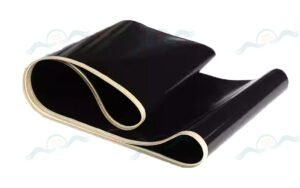
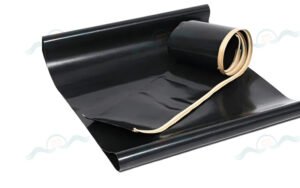
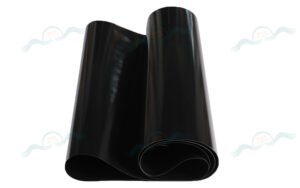
PTFE conveyor belts utilize fiberglass fabric as a base material, coated with a polytetrafluoroethylene (PTFE) surface layer. The product covers a broad temperature resistance range, maintaining structural stability in environments with alternating high and low temperatures.
The belt surface features non-stick characteristics, preventing sticky and pasty materials from adhering or accumulating. Cleaning operations are convenient, enabling long-term clean conveyance.
The material possesses stable chemical properties, adapting to processing environments with weak acids, weak alkalis, and solvents. It does not flake or drop dust during operation, making it suitable for precision manufacturing and clean handling stations.
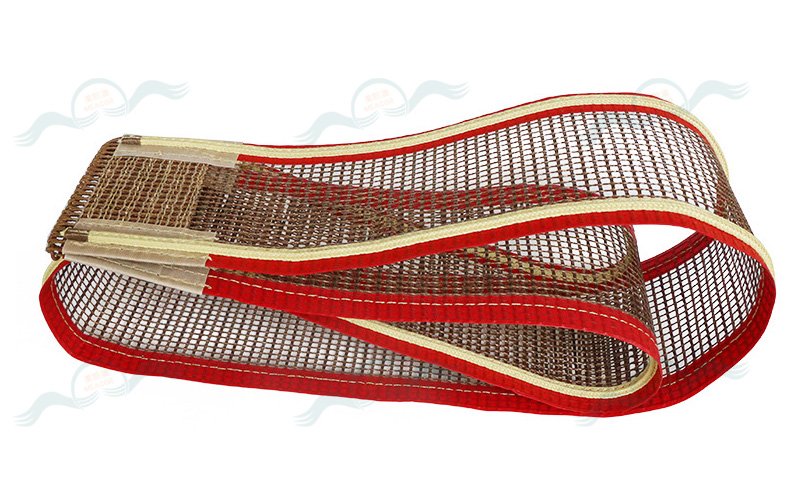
The product is categorized into two basic types: solid fabric belts and open-mesh belts. The open-mesh belt features a permeable mesh structure that satisfies process requirements for ventilation, heat dissipation, and breathable conveyance.
II. Mainstream Processing Features of PTFE Conveyor Belts
- Tracking Guide Studs (V-Guides)
Guide studs are fixed onto the PTFE conveyor belt via a high-temperature thermal fusion process. The processed guide studs form regular raised structures for material positioning, diversion, and anti-deviation. The height and layout spacing of the guide studs can be customized based on equipment parameters to meet orderly conveying demands. - Button Fastener Joints
The button fastener joint is a convenient splice processing technique. Utilizing dedicated button snaps to complete the docking of both ends of the belt, the assembly and disassembly procedures are simple. It is suitable for conveying equipment requiring frequent disassembly, inspection, and replacement, as well as daily operations in small and medium-sized high-temperature lines. - Bullnose Pin Joints
The bullnose pin joint is a traditional joint process commonly used for PTFE conveyor belts. By folding and pressing the ends of the belt body, a loop-shaped snap structure is formed to achieve docking. The joint stays flush with the belt body for smooth running, making it suitable for standard loop conveying equipment and various common mesh belt conditions. - Edge Reinforcement (Bordering)
Sealing treatment is applied to the exposed edges on both sides of the conveyor belt to encapsulate the underlying fiberglass base material. This reduces fiber shedding, minimizes residue accumulation, and enhances side neatness and operational stability, adapting to clean production scenarios such as food and precision electronics. - Custom Shearing & Cutting
Raw materials are slitted and cut to length based on actual equipment dimensions. The finished size closely fits equipment specifications, fulfilling installation needs for various custom conveying machines.
III. Objective Operational Boundaries
PTFE conveyor belts have defined operational limits. Heavy impact loads, prolonged scratching from sharp materials, and strongly corrosive molten media will damage the belt coating and substrate. Once the coating is damaged, the non-stick and thermal resistance performance will attenuate. For heavy-load, high-tension conditions, substrate strength compatibility must be verified prior to deployment.