High-Temperature Resilience, Application Sectors, and Structural Features of PTFE Conveyor Belts and Fabrics
PTFE (Teflon) conveyor belts and high-temperature fabrics are high-performance continuous conveyance components engineered for operation under extreme thermal conditions, chemical exposure, and adhesive environments.
I. Key Features of PTFE Conveyor Belts
- Thermal Range & Weight Retention: Functions effectively across -140°C to +360°C, with peak thermal resistance reaching over 380°C. Continuous operation at 250°C for 200 days maintains original mechanical tensile strength and mass without degradation.
- Non-Stick Surface & Chemical Resistance: Features exceptional release properties for resins, adhesives, and paints. Highly inert to strong acids, strong alkalis, aqua regia, and organic solvents.
- Structural Integrity: Dimensional stability with low thermal elongation (<5‰), excellent mechanical strength, bending fatigue resistance for smaller pulley diameters, flame retardancy, and high airflow permeability.
II. Industry Applications
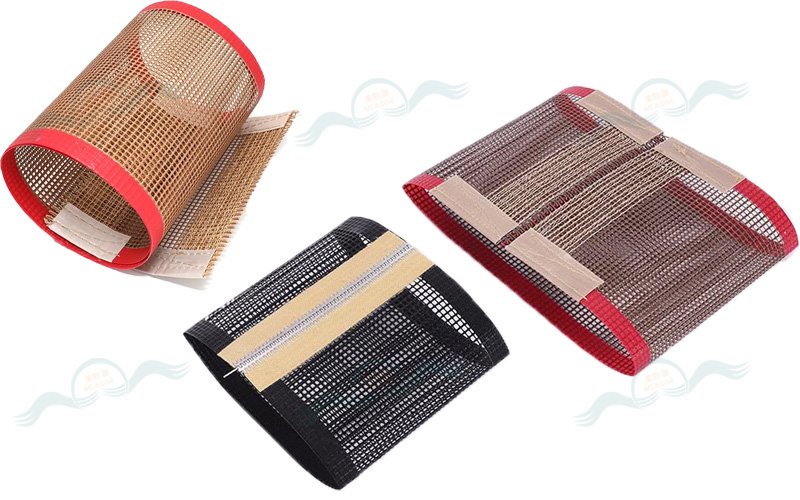
- PTFE Open Mesh Belts: Breathable mesh structure ideal for textile printing, screen printing drying, UV curing, offset printing, loose drying, non-woven drying, and food baking lines.
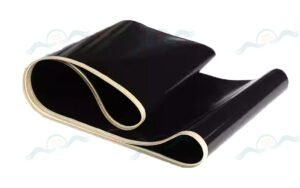
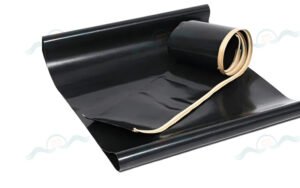
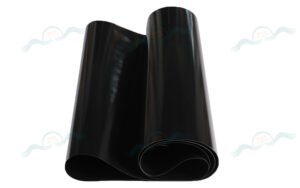
- Solid PTFE Belts: Applied in fusing machines and garment printing for their low friction coefficient, high dielectric insulation, and thermal stability.
III. Splice Joints, Edgings, and Structural Specifications
- Mesh Belt Joint Styles: Bullnose pin joints, metallic clipper joints, and Kevlar fabric joints. Double-weft weaving is recommended for ultra-wide mesh belts to reinforce lateral stability.
- Solid Belt Joint Styles: Scived overlaps, butt splices, and metallic clipper laced joints.
- Border Encapsulation Styles: PTFE turned-film edging, Kevlar fabric edging, and PTFE fiberglass fabric edging.
IV. Performance Characteristics of PTFE High-Temperature Fabrics
- Non-stick, self-lubricating surface with an ultra-low friction coefficient (0.05-0.1).
- Long-term endurance between -170°C and +260°C; exhibits no cracking at -180°C and suffers only 0.6% weight loss after 120 hours at 380°C.
- Completely non-toxic for food handling, resistant to microwave, high-frequency, UV, and IR radiation.