How to Properly Store PTFE High-Temperature Fabric to Extend Its Service Life?
Proper storage of PTFE high-temperature fabric requires controlling five core factors: environmental conditions, storage method, packaging protection, inventory management, and periodic inspection. Scientific management throughout the storage period can significantly reduce performance degradation and extend the product’s effective service life.
Ⅰ. Environmental Condition Control (Most Critical Factor)
Temperature Control
- Optimal storage temperature: 10–30°C
- Absolute prohibition: Temperatures above 40°C accelerate PTFE coating aging and adhesive (if present) softening; temperatures below 0°C cause fiberglass substrate embrittlement — fold and crease damage risk increases significantly
- Away from heat sources: Maintain at least 1 meter distance from boilers, heaters, direct sunlight, and other heat sources; avoid temperature fluctuations (temperature cycling accelerates coating-substrate interface micro-stress)
Humidity Control
- Recommended relative humidity: 40–65% RH
- High humidity hazard: Relative humidity > 75% causes fiberglass substrate moisture absorption — tensile strength decreases; PTFE coating may develop micro-blistering; if the product includes adhesive backing, high humidity causes adhesive layer tack degradation
- Low humidity hazard: Relative humidity < 30% in dry environments generates static electricity — dust and particles adhere to the PTFE surface, contaminating non-stick coating performance
- Dehumidification measures: Place silica gel desiccant in the storage area; replace quarterly
Light Protection
- Absolutely avoid: Direct sunlight and UV lamp irradiation — UV accelerates PTFE surface layer oxidative aging, causing surface powdering and loss of smoothness
- Storage environment: Closed warehouse or dark storage cabinet; if window storage is unavoidable, apply UV-blocking film to windows
Air Quality
- Keep away from corrosive gas environments (chlorine, ammonia, acid mist, solvent vapor) — even though PTFE itself is corrosion-resistant, prolonged exposure to corrosive gases at high concentrations causes micro-damage to the fiberglass substrate
- Maintain good ventilation; prevent volatile organic compound (VOC) accumulation
Ⅱ. Storage Method (Prevents Physical Damage)
Roll Storage — The Mandatory Standard Method
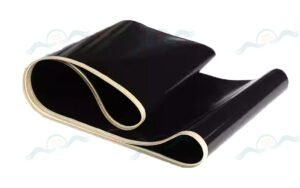
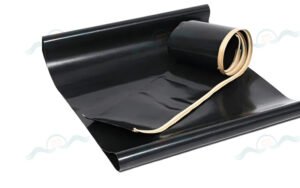
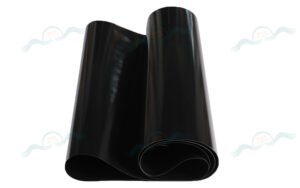
PTFE high-temperature fabric must be stored in roll form — this is a non-negotiable requirement:
- Minimum coiling diameter: Fiberglass-based PTFE fabric: ≥ 150 mm (standard thickness); for 0.50 mm and above thick specifications: ≥ 250 mm
- Coiling tightness: Uniform and moderately tight — not too loose (causes inner layer wrinkling) and not too tight (causes excessive interface pressure causing coating micro-cracking)
- Coiling direction: Keep the PTFE working surface (smooth non-stick side) facing outward when coiling — reduces inner-layer contact pressure on the coating
Strictly Prohibited Storage Methods:
- Folding storage: The most destructive storage error — even a single fold creates a permanent crease at the fold point; fiberglass filaments break irreversibly; the crease remains visible even after unfolding and cannot be repaired; the PTFE coating cracks at the crease line
- Flat stacking storage: Multiple layers stacked flat — lower layers sustain excessive compression; causes permanent deformation; especially for fabric widths > 500 mm (own weight pressure is significant)
- Random bundling: Tying with wire or rough rope causes localized indentation damage to the coating surface
Orientation During Storage
- Recommended: Store rolls in a horizontal (lying) position — prevents the roll from deforming under its own weight in a vertical position (especially for wide and heavy rolls)
- Vertical standing (rolls upright): Only acceptable for narrow-width (≤ 300 mm) and short-length fabric; place foam cushioning beneath to prevent edge compression damage
- Stack height limit: When multiple rolls are stacked horizontally, maximum 3 rolls per stack — place the heaviest roll on the bottom; lightest on top
Ⅲ. Packaging Protection (Prevents Surface Contamination)
Original Packaging Priority
- Unopened products: Maintain complete factory-sealed original packaging — do not open prematurely
- Original packaging functions: Prevents dust adhesion to PTFE surface; isolates external corrosive gases; provides UV protection; maintains dimensional stability
Re-Packaging After Opening
For products that have been partially used:
- Re-wrap the roll with clean polyethylene (PE) film (minimum 0.05 mm thickness) — ensure complete coverage with no exposed sections
- Seal with clean tape; mark with opening date, remaining length, and product specifications
- For rolls used in food processing applications: food-grade PE film wrapping is mandatory — prevent cross-contamination with industrial chemicals
Surface Protection Measures
- Place clean kraft paper or PE film as interleaving between rolls of different specifications to prevent surface scratching during storage
- Do not place heavy objects, sharp tools, or other materials on top of stored PTFE fabric rolls
Ⅳ. Inventory Management (Ensures Optimal Performance Upon Use)
First-In-First-Out (FIFO) Principle
- Establish a storage date registration system; use the earliest-received stock first
- Recommended maximum storage period: 18–24 months (standard conditions); beyond this period, conduct performance re-verification before use
- Mark storage date clearly on outer packaging; avoid using products with unknown storage dates
Lot Classification Management
- Store different product specifications (thickness, width, substrate type) in clearly labeled, separate zones
- Establish a storage ledger: record product batch number, specifications, storage date, storage location, and usage records
- Conduct monthly inventory checks: confirm no confusion between lots and no packaging damage
Ⅴ. Periodic Inspection (Early Detection of Storage-Related Degradation)
Inspection Frequency: Monthly visual inspection; comprehensive performance re-verification every 6 months
Inspection Items & Acceptance Criteria:
| Inspection Item | Inspection Method | Acceptance Criteria |
|---|---|---|
| Packaging integrity | Visual inspection | No tearing, dampness, or deformation |
| Surface appearance | Unroll 1 meter; inspect under fluorescent light | No discoloration, cracks, blistering, or white powder deposits |
| Surface non-stick performance | Touch test: PTFE surface should feel smooth and slightly slippery | No tackiness, roughness, or stickiness |
| Edge condition | Inspect edge area | No edge fraying, delamination, or cracking |
| Bending flexibility test | Gently bend a 30 cm sample at 90° | No cracking sound; no visible cracks at the bend |
| Tensile strength (sampling) | Cut specimen; tensile test per GB/T 1040 | Tensile strength retention ≥ 90% of initial value |
Handling of Abnormal Products:
- Minor surface dust contamination: wipe gently with clean soft cloth + alcohol; re-inspect before use
- Edge minor fraying (< 5 mm): trim edges before use; mark and track
- Surface discoloration or significant stiffness increase: performance re-verification required; discard if below standard
- Any signs of mold, odor, or significant deformation: discard immediately; do not use
Ⅵ. Special Storage Scenarios
Cold Chain / Refrigerated Environment Storage
For production facilities located in cold regions (winter temperatures regularly below 0°C):
- Transfer PTFE fabric from cold storage to a room temperature environment (≥ 15°C) at least 4 hours before use
- Allow the material to fully return to ambient temperature before unrolling — prevent brittle cracking from cold-state mechanical handling
- Monitor for surface condensation after temperature recovery; if condensation occurs, allow to dry naturally before use (approximately 30–60 minutes)
High-Temperature Workshop Adjacent Storage
For storage areas adjacent to kilns, ovens, or other high-temperature equipment:
- Install thermal insulation barriers (e.g., mineral wool panels); ensure storage area temperature ≤ 35°C
- Increase inspection frequency to every 2 weeks; focus on checking coating surface for early aging signs
Summary: PTFE High-Temperature Fabric Storage “Golden Rules”
- Temperature: 10–30°C; away from heat sources and cold environments
- Humidity: 40–65% RH; use desiccants
- Light: No UV; closed storage
- Method: Roll storage only; absolutely no folding
- Packaging: Original packaging intact; re-seal with PE film after opening
- Management: FIFO; 18–24 month shelf life; monthly inspection
- Pre-Use: Allow temperature recovery; inspect appearance; verify performance