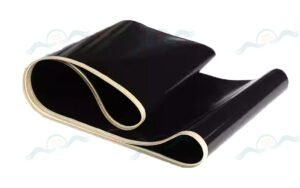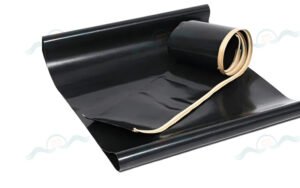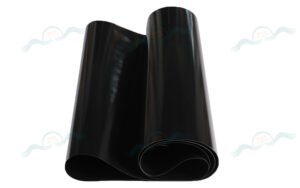
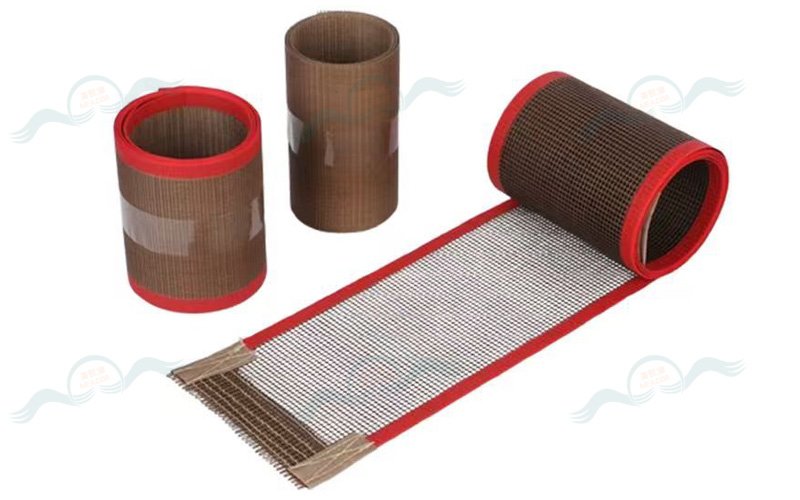
PTFE (polytetrafluoroethylene) heat-resistant conveyor belts represent a critical class of industrial handling components engineered for extreme continuous operating environments. Fabricated by dip-coating high-tensile fiberglass substrates with PTFE dispersions followed by high-temperature sintering, these composite belts combine superior thermal endurance, non-stick release, chemical inertness, and dielectric stability.
I. Polymer Chemistry and Material Dynamics
- Thermal Stability: The fundamental advantage of PTFE lies in its exceptionally high Carbon-Fluorine (C-F) bond dissociation energy. This matrix preserves physical and mechanical integrity from -70°C to +260°C without softening, thermal deformation, or toxic outgassing.
- Ultra-Low Surface Energy: Prevents adhesion when conveying sticky compounds (e.g., molten resins, hot-melt adhesives, food sludges), drastically cutting cleaning down-time.
- Universal Chemical Inertness: Resists degradation when exposed to concentrated acids, alkalis, and aggressive organic solvents in chemical processing lines.
II. Structural Configurations and Industry Deployments
- Open-Mesh Mesh Belts: Designed with customizable open-aperture ratios to facilitate airflow for hot-air drying, thermal curing, and flash cooling in textile stenter frames, food baking ovens, and PV cell sintering lines.
- Solid Flat Belts: Formulated for high surface planarity and heavy-duty load transmission, widely deployed in lithium battery electrode drying, rubber vulcanization, and electronic component curing.
III. Engineering Selection Parameters
- Thermal Safety Margins: While pure PTFE withstands 260°C, continuous long-term operation should be capped at ≤250°C to protect substrate integrity.
- Substrate Weight & Weave Density: Higher fiberglass fabric weight (g/m²) and tighter weave patterns determine tensile strength and maximum load capacity under stress.
- Coating Variations: Single-sided coating serves specialized stations requiring differential traction/release, whereas double-sided coating provides complete non-stick performance. Food contact tracks require verified compliance with FDA and regional food safety standards.
IV. Preventive Maintenance Protocols
- Cleaning: Clear dry dust using soft bristles or compressed air; wipe greasy residues with neutral detergents. Avoid aggressive solvents that degrade coating integrity.
- Mechanical Care: Maintain balanced tension—over-tensioning causes fiberglass fatigue fracture, whereas under-tensioning leads to slippage and tracking errors. Periodically audit edge wear and joint splice integrity.