PTFE Mesh Conveyor Belts — Application Examples in Food Dryers & Glass Drying Machinery
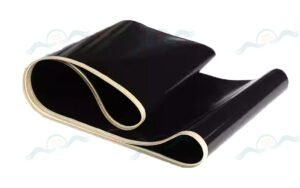
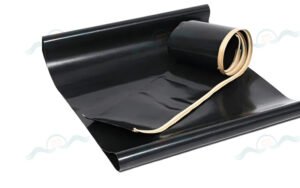
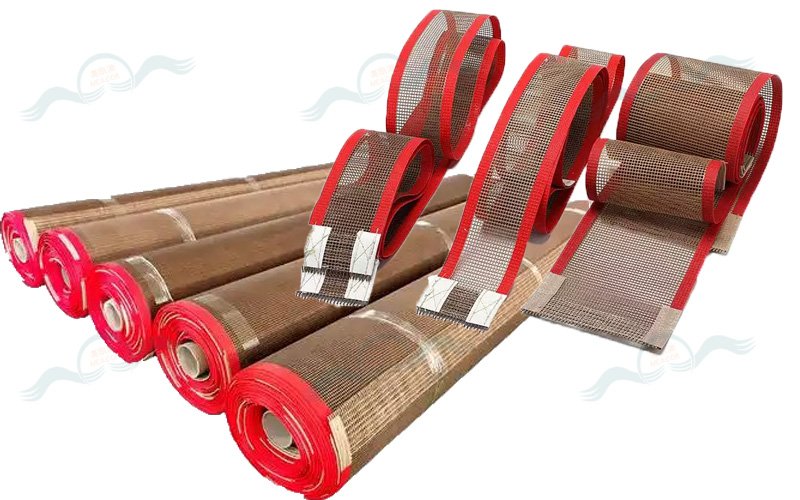
PTFE mesh conveyor belts are produced by impregnating fiberglass raw materials with PTFE resin. Valued for their stability, durability, and excellent cost-performance ratio, they are widely adopted across numerous industries. Below are the primary application examples of PTFE mesh belts in industrial use.
Key Application Areas
1. Food & Material Drying Food drying machines, vegetable and seafood dehydration & drying equipment, nonwoven fabric dryers, and heat-shrink film packaging machinery.
2. Industrial Sterilization & Drying Glass drying machinery, and sterilization & drying applications across food processing, LED manufacturing, agriculture, garment production, chemical fiber, textile printing & dyeing, pharmaceuticals, electronics, powder metallurgy, biotechnology, and furniture manufacturing.
3. Specialty Drying & Processing High-frequency drying, microwave drying, food freezing and thawing, baking, heat-shrink packaging, general moisture-content material drying, and rapid drying of solvent-based inks — all using mesh belt dryer configurations.
4. Textile & Printing/Dyeing Industry Print drying guide belts, bleached and dyed fabric drying, fabric pre-shrinking drying, and nonwoven fabric drying — conveyor mesh belts for drying tunnels and drying rooms.
Troubleshooting PTFE Mesh Belt Slippage
During operation, PTFE mesh belts may occasionally experience belt slippage. The following solutions address the most common causes:
1. Insufficient Belt Tension When tension at both edges of the belt is too low, insufficient tension at the drive drum contact point causes slippage — typically occurring at startup. Solution: adjust the belt tensioning device to increase friction between the mesh belt and the drive shaft.
2. Damaged Bearings on Passive Shafts or Carrier Rollers Bearing failure on passive shafts or upper/lower carrier rollers prevents rotation, increasing resistance and causing slippage. Root cause is typically excessive accumulation of debris at the tail end, with failure to promptly inspect and replace worn or seized components.
3. Excessively Rapid Jog-Start Speed Starting the belt too rapidly can induce slippage. Solution: implement a slow-start procedure, or install a speed reducer (gearbox) to effectively eliminate slippage at startup.
4. Belt Overloading Operating the mesh belt beyond its rated load capacity will cause slippage. While slippage in this case provides a degree of motor protection, prolonged overloading will ultimately result in burnout of the gearbox or drive motor.
5. Insufficient Friction Between Drive Shaft and Belt Typically caused by moisture on the belt surface or a humid operating environment. Solution: apply PVC adhesive tape to the surface of the drive drum to restore adequate friction.
Routine Maintenance & Care for PTFE Mesh Belts
Regular maintenance and preventive care maximize the service life of PTFE mesh belts, reduce operating costs, and improve production efficiency.
1. Periodically inspect the belt surface for flatness, debris accumulation, and oil contamination.
2. Periodically check that the belt is properly tensioned against both the drive pulley and the driven pulley; adjust as necessary.
3. Periodically inspect the belt for elongation or stretching beyond acceptable limits.
4. Periodically verify that the drive and driven pulleys of the mesh belt dryer rotate smoothly; apply lubricating oil at scheduled intervals.
5. Periodically inspect belt edge binding and splice joints to prevent joint damage and edge binding detachment caused by belt tracking deviation.
6. Periodically wipe the belt surface with alcohol or xylene to maintain surface cleanliness and non-stick performance.
7. In many cases, premature wear of PTFE mesh belts results from incorrect material loading practices. Always follow prescribed material placement procedures strictly during industrial production operations.