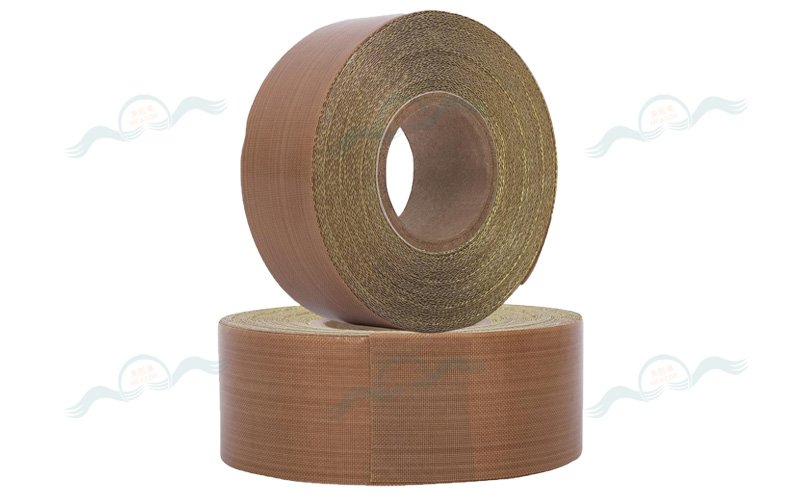
PTFE Teflon Tape Specifically for Laminating Machine Rollers
This is an industrial material commonly applied to the surface of roller equipment, valued for its unique combination of properties in specific applications. The material is primarily composed of a polytetrafluoroethylene (PTFE) substrate combined with a pressure-sensitive adhesive layer. Polytetrafluoroethylene is a perfluorocarbon polymer in which carbon atoms in the molecular structure are completely surrounded by fluorine atoms, forming strong carbon-fluorine (C-F) bonds. This chemical structure is the foundation of most of the material’s performance characteristics.
At the molecular level, the high bond energy of the C-F bond endows the material with outstanding chemical inertness. The vast majority of strong acids, strong alkalis, and organic solvents cannot disrupt its molecular structure. The high electronegativity of fluorine atoms results in extremely weak intermolecular forces — the origin of the material’s low surface energy. Low surface energy means that most substances have great difficulty adhering to its surface.
Non-Stick Performance on Rollers
This property directly enables one of its primary functions in roller applications: non-stick performance. In processes such as packaging, printing, and composite material production, materials tend to adhere to metal roller surfaces. After coating the roller with this material, the extremely low surface energy prevents tacky substances — such as hot melt adhesives and resins — from adhering and building up, thereby ensuring production continuity and reducing cleaning downtime.
Chemical Corrosion Resistance
Chemical inertness delivers another critical performance advantage: corrosion resistance. Rollers in industrial operating environments may be exposed to various chemical media — for example, contact with solvents during coating processes. Standard metal coatings may corrode or degrade under these conditions. PTFE Teflon Tape effectively isolates chemical media from attacking the base metal, extending the operational service life of the roller itself.
Wide Temperature Resistance Range
The material’s temperature resistance range is broad — typically capable of sustained use from several tens of degrees below zero up to above 200°C. This relates to the crystal melting point and thermal decomposition temperature of PTFE. In processes involving heat pressing or high-temperature baking, rollers wrapped with this material operate stably, avoiding coating failure or deformation caused by temperature fluctuations.
Low Coefficient of Friction
Low friction coefficient is another key physical property. Friction between the roller and the conveyed material affects conveying efficiency and the surface quality of the material being processed. The smooth surface and low friction coefficient of PTFE tape facilitate smooth material transfer and reduce the risk of surface scratching on sensitive materials — particularly important in textile, film processing, and similar industries.
Adhesive Layer Requirements
The adhesive layer in the composite structure must possess sufficient bond strength and cohesive strength. It must ensure that the tape adheres firmly to the metal roller surface, withstands shear forces during prolonged operation, and itself causes no adhesive residue transfer. Adhesive formulations typically require careful balancing of initial tack, sustained holding power, and clean removability upon final replacement.
Practical Selection Considerations
Practical selection requires attention to specific parameters. For example, thickness affects heat transfer efficiency and mechanical flexibility; surface finish may be designed as smooth or matte to suit different friction requirements; color — while commonly brown or black, and occasionally varied through added pigments — does not typically affect core performance.
Application Limitations
This material is not universally suitable for all scenarios. Its mechanical strength is limited — it is not suitable for extreme environments involving sharp impacts or severe abrasion. Installation requires professional surface preparation and application techniques; improper installation may cause edge lifting or complete detachment.
Summary of Key Points:
1. Core properties originate from PTFE’s molecular structure, manifesting as chemical inertness, low surface energy, and a broad operating temperature range.
2. Applications on rollers primarily address non-stick performance, corrosion resistance, friction reduction, and protection of the base metal substrate.
3. Actual performance effectiveness is constrained by multiple factors — including material thickness, adhesive performance, and professional installation technique — and must be assessed against specific operating conditions before selection.