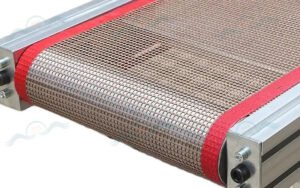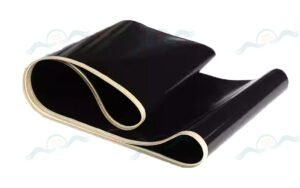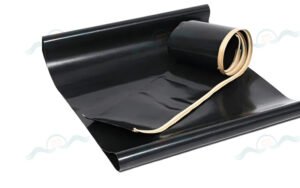
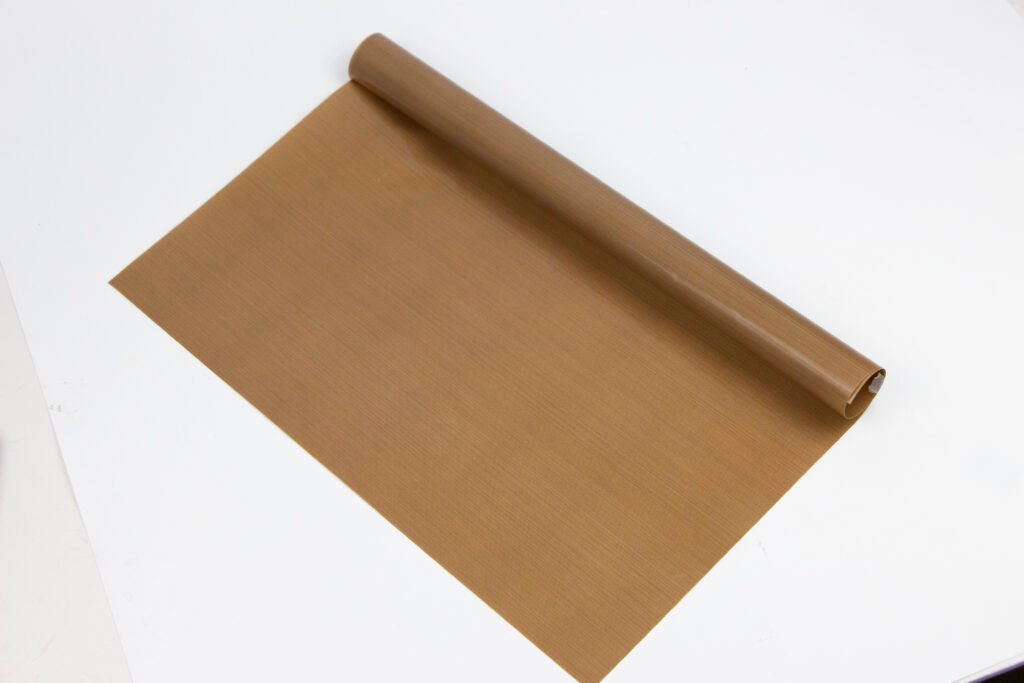
In modern industrial production, high-temperature resistant PTFE (Teflon) fabric is widely used due to its excellent heat resistance and chemical stability. Ensuring effective bonding so the fabric does not peel or break under extreme conditions is a critical challenge. This article summarizes common bonding methods to help you choose the best solution for your needs.
- Hot Pressing Method
Hot pressing is a standard industrial method that uses high temperature and pressure to create a firm bond between the PTFE fabric and the substrate. This typically requires a specialized heat press machine.
Process: The PTFE fabric is placed between two metal plates. The machine’s temperature and pressure are adjusted to specific parameters, creating a molten layer that fuses the materials together.
Pros: Extremely high bond strength; reliable in high-heat environments.
Cons: Requires specialized equipment; higher costs; less suitable for small or ultra-thin applications.
- Adhesive Bonding Method
This method uses specialized high-temperature adhesives to join the PTFE fabric to a substrate. It is relatively simple and does not require complex machinery.
Process: Apply the adhesive evenly to the contact surfaces of both the PTFE fabric and the substrate. Press them together and allow the adhesive to cure under heat and pressure.
Pros: Simple operation; low cost; versatile for various shapes and sizes.
Cons: Bond quality depends heavily on the adhesive’s performance. It is crucial to choose an adhesive with high-temperature stability and chemical resistance.
- Ironing (Manual Heat Sealing) Method
Ironing is a convenient method suitable for small-scale or thin PTFE fabric bonding. It uses the heat of a manual iron to melt the interface.
Process: Align the fabric and substrate. Place a flat, heat-resistant, non-conductive backing plate under the joint. Move a pre-heated iron back and forth over the seam to create a molten layer, then apply pressure to secure the bond.
Pros: Very simple; low cost; ideal for small-scale repairs or applications.
Cons: Requires precise control of temperature and pressure to avoid damaging the fabric or degrading its performance.
- Other Specialized Methods
Local Rubber Vulcanization: Used for repairing localized damage in PTFE fabric.
Rubber Repair Glue Covering: Suitable for repairing large areas of damage.
While less common, these methods are valuable for specific maintenance scenarios.